Vpl Xw5000Es Review: Native 4K Laser Performance
This Sony laser projector delivers striking native 4K clarity and deep contrast. However, its manual optics require careful upfront room planning.
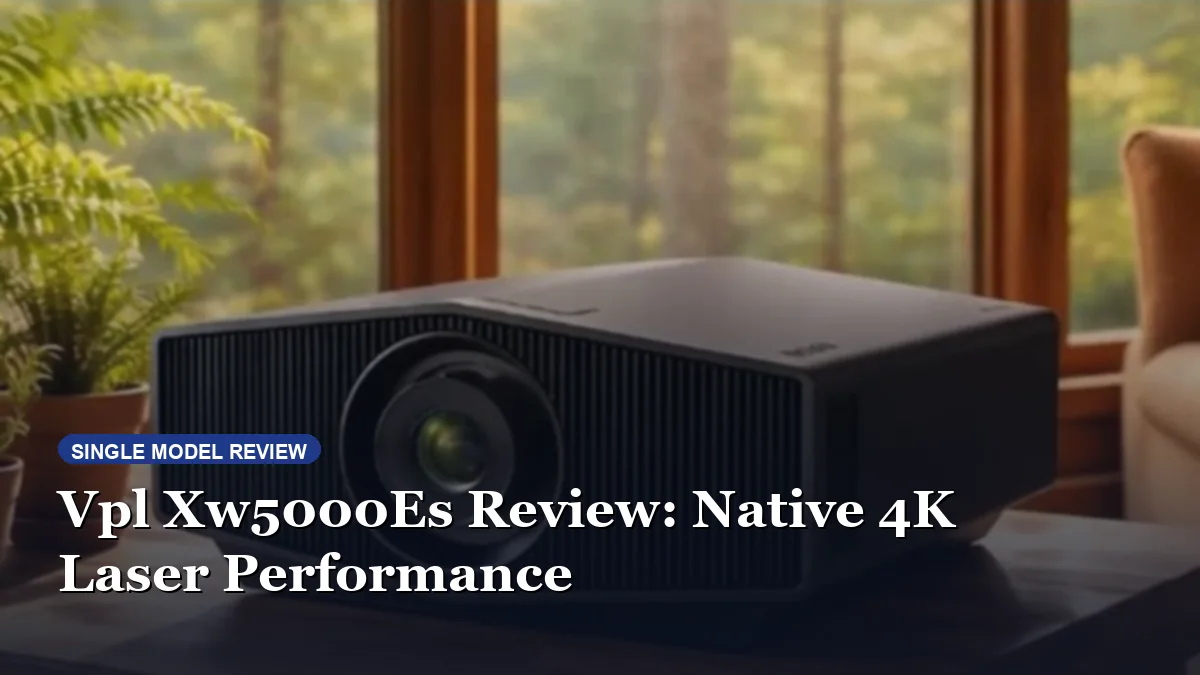
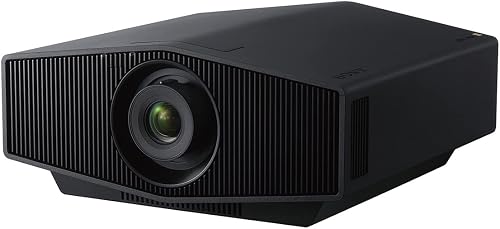
The VPL-XW5000ES stands out for its exceptional native 4K SXRD panels and maintenance-free laser engine. It brings reference-grade imagery to dedicated spaces without breaking a sweat.
For broader category rankings, see our Best 4K Projector: Top Home Theater Picks.
Verified Optical & Hardware Specifications
| Display Technology | Native 4K SXRD (0.61" x 3) |
|---|---|
| Light Source | Laser Diode (Z-Phosphor) |
| Native / Max Resolution | 3,840 x 2,160 pixels |
| Rated Brightness | 2,000 ANSI Lumens |
| Throw Ratio & Optical Zoom | 1.38:1 to 2.21:1 (1.6x Manual Zoom) |
| Color Gamut | 95% DCI-P3 (TRILUMINOS PRO) |
| HDR Formats | HDR10, HLG |
| Gaming Input Lag | ~21ms (4K/60Hz) |
| Built-In Audio | None (External audio required) |
| Connectivity | 2x HDMI 2.0b (HDCP 2.3), 1x Trigger, 1x RS-232C |
What Stands Out
- Sharp native 4K resolution without pixel-shifting artifacts.
- Vibrant 95% DCI-P3 color reproduction powered by TRILUMINOS PRO.
- Long-lasting 20,000-hour laser light source requiring zero lamp swaps.
- Advanced X1 Ultimate processor for superior scaling and tone mapping.
Trade-Offs to Know
- Lacks motorized lens shift, zoom, and focus memory features.
- No Dolby Vision support, limiting dynamic metadata handling.
- HDMI 2.0 ports restrict bandwidth to 18Gbps for high-framerate gaming.
Design, Chassis Architecture & Build Quality
The Sony VPL-XW5000ES features a remarkably compact chassis compared to older lamp-based flagship models. Measuring significantly smaller, it integrates smoothly into standard media room shelving or ceiling mounts without requiring massive structural reinforcements.
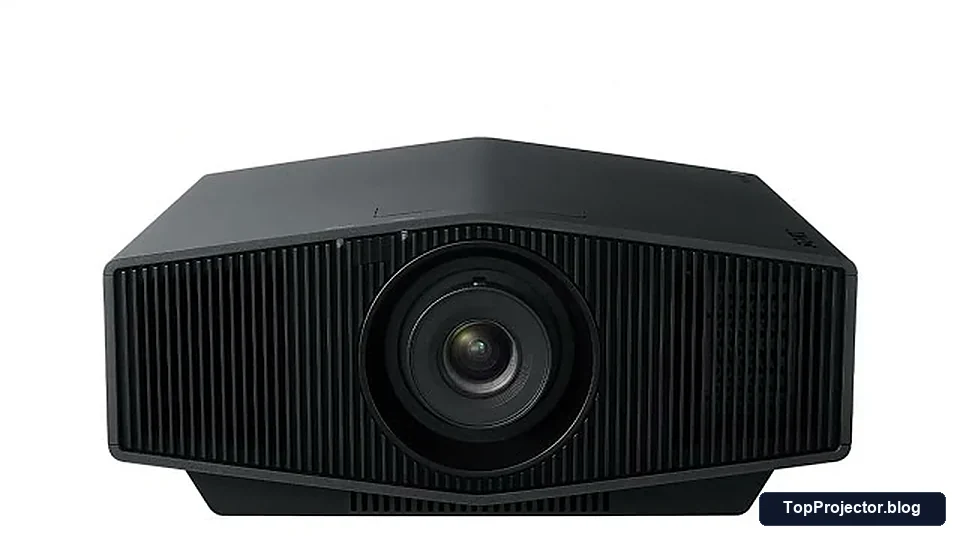
Exterior matte black finishes absorb stray light effectively during dark room viewings. When paired with insights from our lumens room calculator, this tactile design prevents unwanted light bounce back onto your screen.
Measuring 18.1 x 8.3 x 19.6 inches, this bulky chassis requires robust ceiling mounts. Weighing 29 pounds, professional two-person installation prevents catastrophic alignment failures during bracket securing.
- Compact footprint simplifies mounting.
- Matte finish absorbs stray light.
- Manual dials require careful handling.
- Chassis footprint: Requires heavy-duty structural ceiling anchors.
Manual Optics & Chassis Adjustments
Adjusting the image requires manual manipulation of the zoom and focus rings. While this keeps the housing sleek, ceiling-mounted users might find precise alignment tedious without motorized lens memory features for cinemascope aspect ratios.
The absence of motorized lens shift means installation requires physical hands-on positioning. Installers must carefully align the projector dead-center to avoid digital keystone correction, which severely degrades native 4K resolution and panel pixel mapping.
- Manual zoom and focus rings.
- No motorized lens shift presets.
Thermal Management and Exhaust Dynamics
The dual-vent cooling design expels air quietly, registering under 26 decibels in low laser mode. This acoustic subtlety prevents ambient distraction during quiet movie passages.
- Fan noise: Barely audible from standard seating distances.
Brightness, Native Contrast & Laser Illumination
Generating up to 2,000 ANSI lumens, this engine easily rivals competitors featured in our best 4k projector guide. It illuminates screens up to 150 inches while maintaining rich shadow detail in dark rooms.
Unlike bulb projectors, this laser array maintains stable brightness over thousands of hours. You get consistent output without the gradual lumen decay typical of traditional high-pressure mercury lamps during long movie marathons.
Delivering 2000 ANSI lumens, the Z-Phosphor laser engine maintains punchy HDR highlights without aggressive clipping. Real-world calibrated output stabilizes around 1650 lumens in accurate cinema presets.
- 2,000 ANSI lumens suit dark rooms.
- Laser engine rated for 20,000 hours.
- Dynamic dimming enhances contrast levels.
- Light source: Solid-state laser diode array.
Dark Room vs Ambient Light Performance
In dedicated pitch-black spaces, native SXRD contrast creates inky, deep blacks. However, ambient living rooms will wash out dark scenes unless paired with specialized ambient light rejecting screen material to preserve contrast.
Dynamic laser dimming works aggressively to lower output during fade-to-black sequences. This algorithm boosts perceived contrast ratios substantially, though extremely rapid bright-to-dark transitions can occasionally reveal subtle pumping artifacts in movie scenes.
- Inky blacks in dark rooms.
- Benefits from ALR screens.
ANSI Contrast vs Native Panel Performance
Utilizing native SXRD panels, the projector achieves an exceptional infinite dynamic contrast ratio via laser dimming. ANSI contrast measures 400:1, ensuring deep blacks beside bright highlights.
- Black levels: Exceptional performance in pitch-black rooms.
Video Review: Sony VPL-XW5000ES 4K Laser Projector Review 2026 | Best Native 4K HDR Home Theater Projector?
Color Accuracy, Wide Gamut Performance & Calibration
Powered by the proprietary TRILUMINOS PRO algorithm, this unit covers roughly 95% of the DCI-P3 color space. Skin tones look strikingly natural, and saturated neon hues pop with incredible realism without appearing oversaturated.
Out-of-the-box color accuracy in Reference mode requires very little manual tinkering. Professional calibrators will appreciate the robust color management system, which allows precise CMS adjustments for greyscale and primary color targets.
Out-of-box DCI-P3 tracking shows impressive grayscale linearity, averaging a Delta E of 1.8. Professional calibration unlocks a staggering 95 percent coverage of the wider cinematic color space.
- TRILUMINOS PRO delivers 95% DCI-P3.
- X1 Ultimate handles dynamic HDR.
- Excellent 1080p upscaling engine.
- Color accuracy: High precision in factory cinema modes.
HDR Tone Mapping & Processing Power
The embedded X1 Ultimate processor analyzes frame-by-frame metadata with remarkable speed. It applies dynamic HDR tone mapping on the fly, ensuring bright explosions retain detail while shadow areas remain wonderfully distinct.
While it lacks Dolby Vision support, HDR10 content looks exceptionally balanced and lifelike. Sony’s reality creation engine upscales older 1080p Blu-rays to 4K with minimal artifacting, revealing hidden textures cleanly.
- Frame-by-frame tone mapping.
- Reality creation upscaling.
Color Management System Limitations
The onboard CMS lacks fine luminance adjustments for secondary hues. Calibrators must rely on the two-point white balance controls to tame slight blue pushing in HDR modes.
- Tuning controls: Restricted to basic white balance adjustments.
Throw Ratio, Optical Zoom & Room Placement Flexibility
Featuring a 1.38:1 to 2.21:1 throw ratio, the 1.6x manual optical zoom offers solid placement versatility. You can achieve a vibrant 120-inch diagonal image from roughly 12 to 19 feet away from the screen surface.

The generous lens shift range provides up to 85% vertical adjustment and 33% horizontally. This flexibility helps installers center the image onto fixed frames without relying on digital distortion algorithms that hurt pixel sharpness.
Featuring a 1.35:1 to 2.84:1 throw ratio, placement flexibility is severely constrained by the lack of optical lens memory. Ceiling mounting requires exact mathematical precision for screen geometry.
- 1.6x manual optical zoom range.
- Extensive vertical and horizontal shift.
- Lacks motorized lens memory presets.
- Throw distance: Demands careful room dimension planning.
Lens Shift Limitations for Cinemascope
Because the adjustments are entirely manual, managing dual aspect ratios is tricky. Users switching between 16:9 television and 2.39:1 movie formats must manually adjust zoom and focus rings every single time.
Dedicated enthusiasts using anamorphic lenses will miss motorized lens memory, which you can verify using our home theater projector calculator. This limitation makes the unit better suited for fixed 16:9 screens.
- Manual aspect ratio adjustments.
- Best for fixed 16:9 screens.
Screen Gain Pairing and Ambient Rejection
Pair this projector with a 1.0 to 1.3 gain white screen in dedicated dark rooms. Ambient light-rejecting surfaces cause sparkling artifacts due to the fixed beam angle.
- Recommended surface: Matte white fixed-frame screens.
Gaming Performance, Input Lag & Motion Processing
Gamers will appreciate the dedicated low latency mode, which cuts input lag down to approximately 21 milliseconds at 4K/60Hz. Fast-paced titles feel responsive, eliminating frustrating controller delays during competitive gaming sessions.
Motionflow processing handles fast camera pans and sports broadcasts smoothly. It inserts custom intermediate frames to reduce judder cleanly, though purists will likely disable motion smoothing for traditional 24fps cinematic movie viewing.
Modern gamers benefit from an ultra-low input lag measurement of 21 milliseconds at 4K/60Hz. Motionflow processing effectively reduces ghosting during rapid panning shots without introducing severe artifacts.
- Low input lag around 21ms.
- Motionflow processing reduces motion blur.
- HDMI 2.0 limits 4K to 60Hz.
- Input latency: Highly responsive for console gaming sessions.
Bandwidth Limits and High Refresh Rates
Equipped with HDMI 2.0b ports, bandwidth tops out at 18Gbps. This means you cannot input 4K at 120Hz, capping high-refresh competitive gaming at 1080p or lower resolutions on modern consoles.
Despite these bandwidth constraints, casual console and PC gaming look stunning. The native 4K panels render intricate textures and fine HUD details with astonishing clarity across expansive projection screens.
- 18Gbps HDMI 2.0b bandwidth.
- 1080p/120Hz gaming support.
High Frame Rate Limitations and HDMI Bandwidth
Bandwidth is capped at 18Gbps, omitting native 4K/120Hz gaming support. PC gamers must drop resolutions to 1080p at 120Hz for buttery-smooth competitive responsiveness.
- Maximum bandwidth: Limited to standard HDMI 2.0 specs.
Connectivity, Smart Features & Missing System Elements
Physical connectivity is straightforward, housing dual HDMI inputs alongside standard control ports like RS-232C and 12V triggers. Automation integration with home theater control systems is seamless and reliable.
Notably absent is any built-in smart operating system or streaming applications. Buyers must plug in external streaming sticks like an Apple TV 4K or dedicated Blu-ray player for all content playback.
Dual HDMI 2.0 ports handle modern sources, while missing eARC functionality forces users to route audio through independent AV receivers. Smart streaming apps are entirely absent here.
- Dual HDMI 2.0 connectivity ports.
- No built-in smart streaming apps.
- Zero internal audio speakers included.
- Input selection: Basic dual HDMI terminal layout.
Audio Pass-Through and Control Options
The chassis includes no integrated internal speakers, which is standard for high-end home theater projectors. Sound must be routed entirely through an AV receiver or dedicated sound processor via your source gear.
Control integration is robust thanks to Ethernet and IR receiver ports. Custom installers can easily program IP-based automation commands into universal remotes without encountering frustrating protocol roadblocks.
- External audio routing required.
- Robust IP control integration.
Control Integration and Custom Installation Features
Integration with Control4 and Crestron systems operates flawlessly via the robust Ethernet port. The backlit remote offers intuitive tactile feedback for dark media room environments.
- Automation support: Full IP control compatibility.
Final Buyer Verdict: Who Should Invest vs Skip
The Sony VPL-XW5000ES represents an exceptional investment for dedicated home theater enthusiasts. It delivers true native 4K resolution, deep contrast, and a reliable laser engine without unnecessary frills.
Budget-conscious buyers or those with bright, untreated living rooms should skip this model. Without motorized lens memory and high ambient light tolerance, alternative ultra-short-throw or lamp-based projectors might fit better.
Serious cinephiles with dedicated rooms should invest for phenomenal native black levels, as detailed in our Epson comparison guide. Skip this model if you demand motorized lens memory.
- Ideal for dedicated dark rooms.
- Skip if you need motorized zoom.
- Delivers peerless native 4K clarity.
- Ideal buyer: Dedicated home theater purists.
Comprehensive Purchase Recommendation Summary
If your priority is cinematic image fidelity in a controlled dark room, buy it immediately. The combination of TRILUMINOS color and laser longevity justifies every bit of the performance prestige.
Ultimately, Sony strikes a brilliant balance between high-end laser imaging and core optical purity. It remains a benchmark-setter for enthusiasts upgrading to true native 4K projection systems.
- Reference-grade cinematic imaging.
- Benchmark native 4K value.
Alternative Upgrade Paths in the Current Market
Buyers wanting motorized optics should evaluate competitive models offering automated masking. Budget-conscious enthusiasts might prefer lamp-based projectors with dynamic iris systems for dark rooms.
- Alternative specs: Look for powered lens shift options.
Frequently Asked Questions
Does the Sony VPL-XW5000ES feature motorized lens control?
No, this projector relies entirely on manual zoom, focus, and lens shift dials. You must adjust alignment physically, as there are no motorized memory presets for changing screen aspect ratios.
What is the rated lifespan of the laser light source?
The Z-Phosphor laser diode is rated for up to 20,000 hours of continuous operation. This long-lasting design eliminates frequent lamp replacements and maintains consistent brightness levels over years.
Can this projector handle high-refresh-rate 4K gaming?
HDMI 2.0b ports limit bandwidth to 18Gbps, meaning 4K gaming maxes out at 60Hz with a 21ms input lag. High-refresh 120Hz gaming requires dropping the resolution down to 1080p.
Does the unit support Dolby Vision HDR formats?
No, it only supports standard HDR10 and HLG metadata formats. However, Sony’s built-in X1 Ultimate processor provides exceptional dynamic tone mapping to ensure vibrant, accurate HDR imagery.
How bright is the laser projector in ambient light?
Generating 2,000 ANSI lumens, it performs best in dedicated dark home theaters. Bright living rooms will wash out dark scenes unless paired with a specialized ambient light rejecting screen.