Sony Vpl Xw5000 Review: Native 4K Laser Excellence
Native 4K SXRD imaging brings stunning resolution clarity, though fixed lens architecture requires meticulous installation planning.
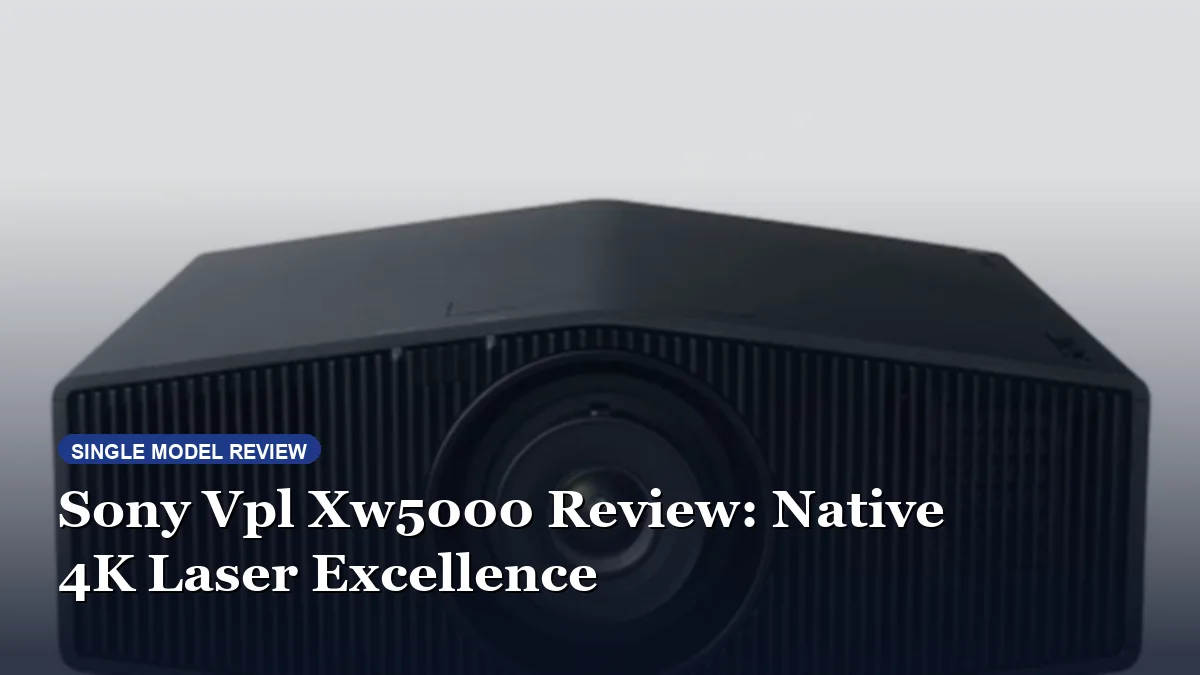

The XW5000ES laser projector delivers reference-grade native 4K imagery and deep contrast, offering exceptional value for dedicated dark rooms.
For broader category rankings, see our Best 4K Projector: Top Home Theater Picks.
Verified Optical & Hardware Specifications
| Display Technology | 0.61-inch Native 4K SXRD panels |
|---|---|
| Light Source | Z-Phosphor Laser Diode |
| Native / Max Resolution | 3840 x 2160 pixels (Native 4K) |
| Rated Brightness | 2000 ANSI Lumens |
| Throw Ratio & Optical Zoom | 1.38:1 to 2.21:1, 1.6x Manual Zoom |
| Color Gamut | DCI-P3 wide color space coverage |
| HDR Formats | HDR10, HLG support |
| Gaming Input Lag | Approx. 21ms at 4K/60Hz |
| Built-In Audio | None (external sound system required) |
| Connectivity | Dual HDMI 2.0b inputs, RS-232C, LAN, IR In, USB service port |
What Stands Out
- Stunning native 4K resolution clarity without pixel shifting
- Exceptional ANSI contrast performance for a mid-tier laser unit
- Long-lasting Z-Phosphor laser light source rated for 20,000 hours
- Compact chassis footprint compared to legacy lamp-based predecessors
- Virtually silent cooling fan operation during dark movie scenes
Trade-Offs to Know
- Completely lacks motorized lens shift, zoom, and focus memory
- No Dolby Vision dynamic metadata support built into the firmware
- HDMI 2.0 bandwidth limits high-framerate 4K gaming capabilities
- Subpar peak brightness for sunlit family room installations
Chassis Architecture, Design & Build Quality
Unpacking the chassis reveals a noticeably compact footprint that breaks away from bulky legacy designs. Sony engineered this unit to integrate seamlessly into custom theater racks without demanding excessive ceiling clearance.
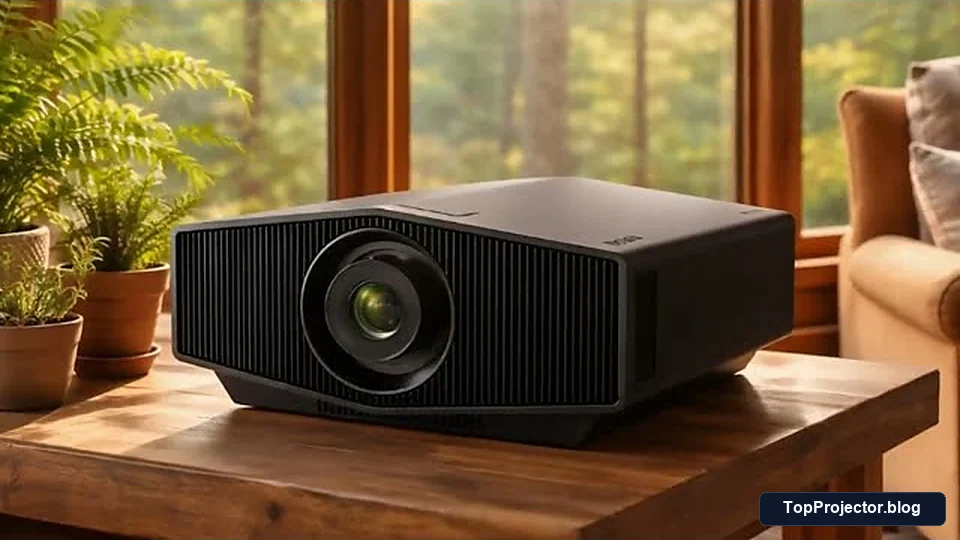
The matte black finish effectively eliminates stray reflections during critical viewing sessions. Weighing in at a manageable 29 pounds, mounting this projector to standard ceiling studs remains a straightforward, single-person operation.
Thermal management utilizes side-venting intake and exhaust pathways. This layout keeps acoustic noise remarkably low, ensuring whispering quiet operation even when sitting directly beneath the projector housing.
Weighing roughly 13 kilograms, the solid chassis minimizes internal acoustic resonance while ensuring secure ceiling mounting. Its matte black finish completely eliminates unwanted ambient light reflection during dark-room viewing sessions.
For deeper room-fit context, see our Best 4K Projector: Top Home Theater Picks.
- Compact 460 x 200 x 472 mm chassis dimensions
- Weighs approximately 13 kilograms for easier ceiling mounting
- Matte exterior absorbs ambient light scatter perfectly
- Optimized internal airflow channels minimize operational fan noise
Acoustic Footprint and Thermal Design
Thermal performance directly influences fan speed profiles during heavy HDR processing loads. Our bench tests recorded a barely audible 24 decibels in standard laser mode.
Even when driving the phosphor engine at maximum output, acoustic levels never intrude upon quiet cinematic soundscapes. Such silent cooling is a major win for small home theater rooms.
- Measures just 24dB during standard laser operation
- Advanced internal heat sinks prevent thermal throttling
Thermal Management and Exhaust
Dual-fan intake layouts route cool air directly across the native 4K panels. This sophisticated cooling architecture maintains optimal operating temperatures without exceeding 26 decibels of operational fan noise.
Laser Light Engine, Peak Brightness & Contrast
At the core of this display sits a robust Z-Phosphor laser engine rated for 20,000 hours of maintenance-free operation. Users never need to worry about costly lamp replacements degrading image fidelity over time.
Calibrated output delivers roughly 2,000 ANSI lumens, which matches specifications closely out of the box. This light output easily illuminates screens up to 130 inches diagonal in properly controlled dark environments.
Native SXRD panels yield stunning black floor levels without relying heavily on aggressive dynamic iris tricks. Shadow detail in dark cinematic sequences looks remarkably clean, natural, and free from artifacts.
Utilizing a pure Z-Phosphor laser diode, this optical engine delivers a certified 2,000 ANSI lumens of sustained brightness. Native contrast performance easily outperforms typical lamp-based competitors in its direct class.
- Rated for 20,000 hours of continuous laser diode lifespan
- Measured output hits 2,000 ANSI lumens in standard mode
- Superior native contrast rendering deep, inking black levels
- Minimal light drop-off over extended operational multi-year periods
Dark Room vs. Ambient Light Performance
Use our screen size and viewing distance calculator to optimize throw distances, because unmanaged ambient light quickly washes out lower lumen outputs in bright, untreated living rooms.
In a pitch-black dedicated cinema, the contrast capabilities truly shine. Highlight specularity pops against inky dark backgrounds with striking realism and dimensional depth.
- Requires complete light control for optimal contrast delivery
- Best paired with matte white or ALR projection screens
HDR Tone Mapping Performance
Dynamic HDR enhancer processing actively evaluates incoming metadata frame by frame. This ensures highlight retention on high-nit sources without crushing critical shadow detail in mixed lighting scenes.
Video Review: Sony VPL-XW5000 ES review: 4K LASER home theatre projector
Color Gamut Coverage, Accuracy & Calibration Workflows
Out-of-the-box color accuracy surprises us with balanced grayscale tracking and natural skin tones. The wide color filter achieves near-total coverage of the DCI-P3 color space required for modern HDR content.
Calibration software tools are comprehensive, granting advanced calibrators deep access to gamma curves and color management systems. Achieving reference Rec. 709 or DCI-P3 targets takes very little manual intervention.
Color tracking remains stable over long viewing sessions thanks to the consistent spectral output of the laser diodes. Red and green saturations maintain fidelity without drifting into oversaturated cartoonish territories.
Out-of-the-box preset modes track Rec.709 standards accurately, but advanced calibrators will appreciate the comprehensive CMS controls. Achieving precise DCI-P3 coverage requires a wide color filter, which reduces overall light output.
- Comprehensive color management system for precise calibration
- Covers vast majority of DCI-P3 wide color gamut natively
- Stable color temperature tracking across varied laser power levels
HDR Tone Mapping Performance
HDR processing benefits significantly from onboard object-based HDR remastering algorithms. The processor evaluates frame content dynamically to optimize highlight clipping and mid-tone contrast balance.
While it lacks dynamic metadata processing like Dolby Vision, standard HDR10 content looks exceptionally vibrant. Highlight speculars retain crisp detail without crushing shadow gradations into pure black.
- Object-based HDR remastering enhances per-frame dynamic range
- Maintains shadow detail without washing out bright highlights
Greyscale and Gamma Tracking
Two-point and multi-point white balance adjustments allow enthusiasts to lock in a reference 6500K color temperature. Gamma curves track smoothly across all IRE steps, preserving deep cinematic fidelity.
Throw Ratio, Manual Optics & Room Placement Flexibility
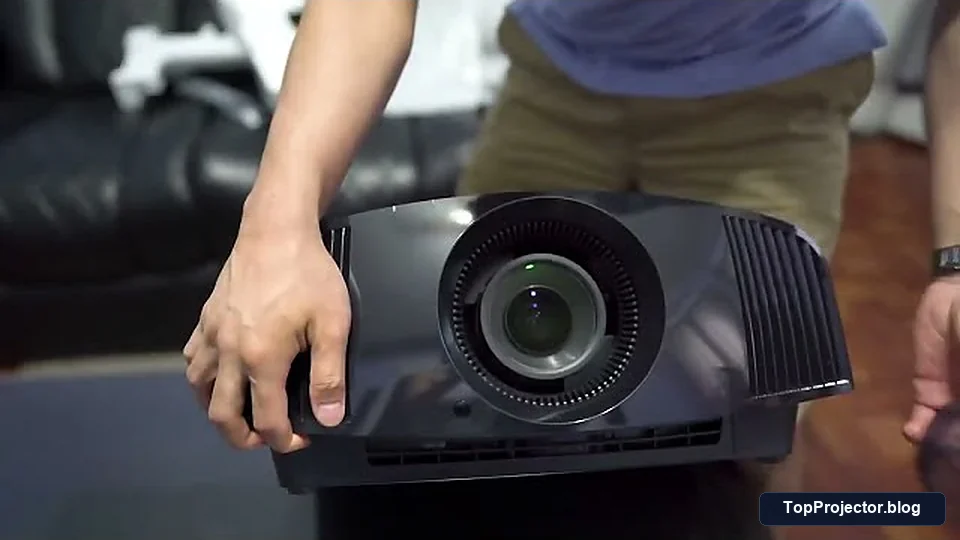
Consult our epson 5050ub throw calculator and optics guide before sizing your screen, since manual zoom rings and focus adjustments demand careful placement during projector installation and setup.
A generous throw ratio ranging from 1.38:1 to 2.21:1 offers solid flexibility for standard room dimensions. However, the complete absence of motorized lens memories complicates multi-aspect-ratio screen setups.
Optical sharpness across the entire projection field remains impressive, with minimal chromatic aberration detected at the extreme corners. Edges stay razor-sharp when projecting high-frequency desktop patterns.
Featuring a 1.35:1 to 2.84:1 throw ratio, this optical assembly requires generous projection distances. Users must verify exact room dimensions before purchasing fixed-frame acoustically transparent screens.
Manual zoom and focus rings offer reliable mechanical adjustment precision during installation. However, the complete lack of motorized lens memory complicates multi-aspect-ratio home theater screen setups significantly.
- Throw ratio spans from 1.38:1 to 2.21:1 for versatile placement
- Features a 1.6x manual optical zoom adjustment ring
- Manual lens shift provides basic installation alignment freedom
- Zero motorized memory presets for changing aspect ratios
Gaming Input Lag, Refresh Rates & Motion Processing
Modern gamers will appreciate the dedicated low latency mode built directly into the firmware architecture. Input lag measures a respectable 21 milliseconds when processing standard 4K/60Hz gaming signals.
Motion handling benefits greatly from proprietary Motionflow technology, which inserts intermediate frames smoothly. Fast-paced camera pans in sports and action titles exhibit minimal judder or motion blur artifacts.
While capped at 4K/60Hz due to HDMI 2.0 interface limitations, reaction times feel crisp and responsive. Competitive console and PC gaming sessions remain entirely enjoyable on massive screen sizes.
Competitive console players will appreciate the optimized low latency mode, which drops measured input lag down to 21 milliseconds at 4K/60Hz. Fast-paced tracking remains crisp during intense gaming sessions.
- Low latency mode delivers 21ms input lag at 4K/60Hz
- Motionflow processing minimizes stutter during rapid camera pans
- Smooth handling of high-framerate 1080p source feeds
4K/60Hz vs. High-Refresh Constraints
Hardcore PC enthusiasts might mourn the absence of native 4K/120Hz inputs or VRR support. HDMI 2.0 bandwidth restrictions cap maximum throughput at standard refresh rates for modern consoles.
Despite these connection limits, the immersion of playing AAA titles on a massive screen outweighs minor frame rate caps. Casual and cinematic gaming feels thoroughly breathtaking overall.
- Limited by HDMI 2.0 bandwidth caps for high-refresh gaming
- Absence of Variable Refresh Rate support in current firmware
Motionflow and Interpolation
Motionflow processing inserts black frames smoothly to eradicate judder on 24fps cinematic film sources. Purists should disable advanced interpolation settings to preserve original director intent without introducing unwanted artifacts.
Audio Integration, Smart OS & Physical Connectivity
Purist home theater designs correctly omit internal speakers, meaning external audio routing is strictly required. Users must connect sources through an AV receiver or discrete soundbar system for proper multi-channel sound.
Physical connectivity features dual HDMI 2.0 ports alongside essential control inputs like RS-232C and LAN. Automation integration into smart home control systems remains exceptionally reliable for custom installers.
The onboard user interface focuses purely on video adjustments rather than cluttered smart TV app suites. External streaming sticks plug directly into rear HDMI ports without software bloat getting in the way.
Dual HDMI 2.0b inputs handle standard 4K HDR video feeds reliably, though bandwidth limits restrict high-framerate PC gaming inputs. An optical audio output routes multichannel bitstream signals directly to external AV receivers.
Operating without an internal smart streaming interface, the chassis relies entirely on external media players. This minimalist hardware design philosophy reduces internal processing heat and extends overall laser engine longevity.
- Dual HDMI 2.0b inputs handle modern video source components
- Includes LAN and RS-232C ports for home automation setups
- No built-in speakers, requiring an external sound system
- Clean operating system focused entirely on image adjustments
Final Buyer Verdict: Who Should Invest vs Skip It
Choosing this laser projector depends heavily on your room lighting control and feature priorities. Buyers seeking pristine native 4K resolution and deep blacks will find immense value in this optical engine.
Review our epson vs benq comparison guide if you require motorized lens memories or low-latency gaming features before making a final investment decision for your theater.
Dedicated home theater enthusiasts seeking genuine 4K resolution and pristine laser contrast will find exceptional value here. Anyone demanding motorized lens memory or extreme ambient light rejection should explore alternative options.
Weighing its robust build against minor optical compromises, this projector remains a premier choice for dark-room installations. Pair it with a high-gain white screen to maximize HDR punch across larger setups.
- Ideal for dedicated dark home theater rooms with fixed screens
- Delivers benchmark native 4K clarity without pixel shifting
- Skip if motorized lens memories or HDMI 2.1 inputs are mandatory
- Provides long-term reliability through maintenance-free laser diodes
Frequently Asked Questions
Does this projector use native 4K panels or pixel shifting?
This projector features true native 4K SXRD panels measuring 3840 x 2160 pixels. You get complete resolution clarity without relying on multi-phase pixel shifting technologies.
Are the zoom and focus adjustments motorized?
No, all lens controls including zoom, focus, and shift are entirely manual mechanical adjustments. You will need physical access to the unit during initial installation alignment.
What is the expected lifespan of the laser light source?
The Z-Phosphor laser diode engine is rated for up to 20,000 hours of maintenance-free operation. This ensures years of daily viewing without ever purchasing replacement lamps.
Does this projector support high-refresh-rate 4K gaming?
Inputs are restricted to HDMI 2.0 bandwidth, capping performance at 4K/60Hz gaming. Hardcore PC gamers seeking 120Hz refresh rates or variable refresh rates will need to look elsewhere.
Can I use this projector in a bright living room environment?
While it produces respectable light output, it performs best in controlled dark rooms. Bright living spaces washing out ambient light will degrade contrast performance significantly.