Epson EpiqVision Mini EF12 Review: Compact Laser Optics
The Epson EpiqVision Mini EF12 packs 3LCD laser projection and Yamaha sound into a compact cube. It delivers vibrant HD visuals despite fixed optics limitations.
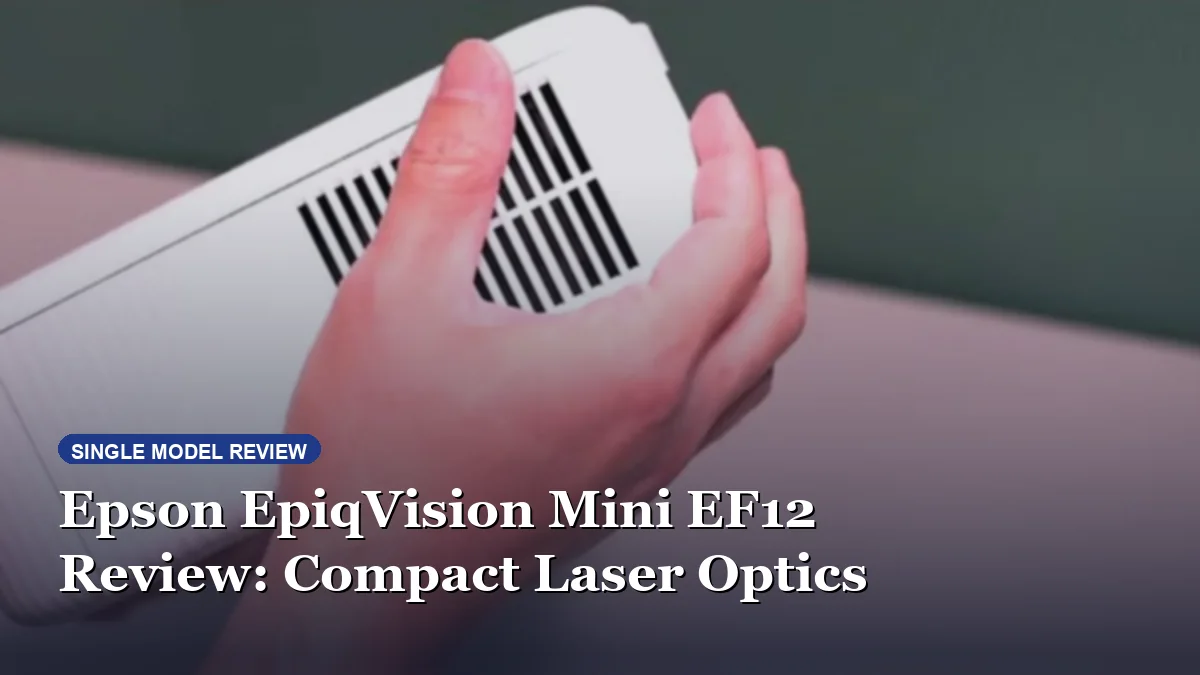

This lifestyle laser cube delivers gorgeous color and great built-in audio, though its 1000 lumens output demands controlled lighting for optimal home theater contrast.
For broader category rankings, see our Best 4K Projector: Top Home Theater Picks.
Verified Optical & Hardware Specifications
| Display Technology | 3-Chip 3LCD Optical Engine |
|---|---|
| Light Source | Multi-Array Laser Diode |
| Native / Max Resolution | Full HD 1080p (Accepts 4K Input) |
| Rated Brightness | 1000 ANSI Lumens Color & White |
| Throw Ratio & Optical Zoom | 1.0:1 Fixed Throw Ratio, No Optical Zoom |
| Color Gamut | Rec.709 Full Coverage |
| HDR Formats | HDR10 and HLG Support |
| Gaming Input Lag | Approx. 45ms to 50ms at 1080p/60Hz |
| Built-In Audio | Dual 5W Yamaha Speakers with DSP |
| Connectivity | HDMI ARC, USB Type-A, Bluetooth, Wi-Fi |
What Stands Out
- Vibrant 3-chip 3LCD color performance without rainbow artifacts
- Astonishingly rich integrated Yamaha audio system with Bluetooth
- Compact, elegant cube chassis with integrated Android TV
- Reliable laser light source rated for 20,000 hours
Trade-Offs to Know
- Fixed throw ratio lacks optical zoom or lens shift
- Limited 1000 lumens output requires complete light control
- Higher than average gaming input lag for competitive titles
Industrial Design, Compact Form Factor & Physical Build Quality
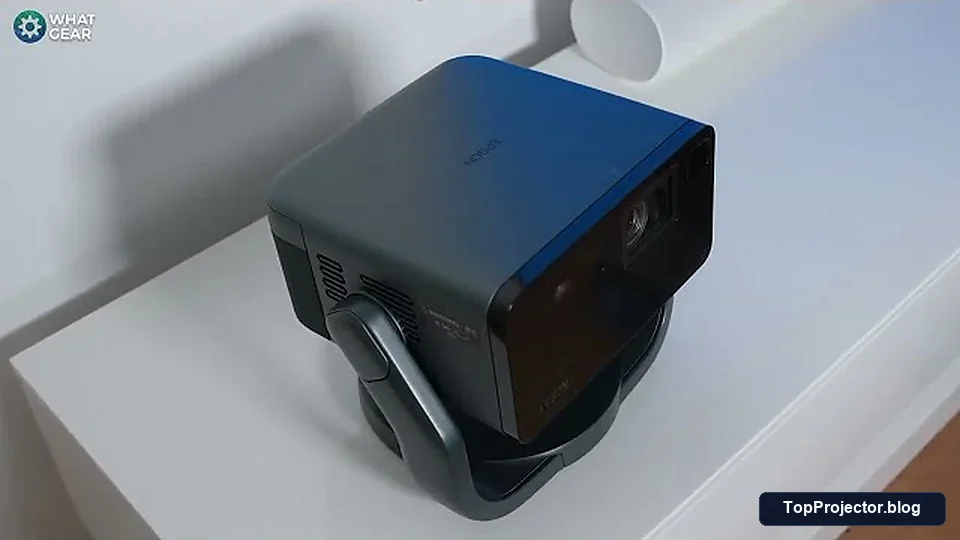
Epson designed this modern lifestyle cube to blend seamlessly into contemporary living spaces. Measuring just a few inches across, its dark fabric grille and clean lines project understated elegance.
Weight distribution feels balanced for a portable unit, allowing easy transport between rooms. However, the lack of a physical lens cap leaves the delicate glass exposed during transit.
Housing a sophisticated optical engine inside a chassis weighing just 4.5 pounds requires clever thermal management to keep fan noise below audible thresholds during extended movie marathons.
- Sleek minimalist cube chassis with dark acoustic fabric wraps
- Passive thermal cooling keeps operational noise impressively low
- Lacks physical lens shutter or drop-resistant travel case
- Ruggedized ABS plastic exterior shells withstand frequent travel, carefully protecting the fragile glass internal projector lenses from sudden accidental physical impacts.
Chassis Footprint and Portability Mechanics
Moving the projector from a living room coffee table to a nightstand takes seconds. Checking how much electricity does a projector use reveals efficient operation, making temporary setups remarkably simple.
You will not find adjustable leveling feet on the bottom panel. Users must rely on digital keystone correction or surface tilting to square up images.
- Integrated power supply reduces cable clutter
- Fixed rubber feet provide zero physical tilt adjustment
Chassis Ventilation and Dust Resistance
Sealed optical paths prevent microscopic dust particles from settling on internal mirrors, preserving image clarity across thousands of operating hours in diverse home environments.
Laser Light Engine, Rated Brightness & Native Contrast Performance
Equipped with a proprietary multi-array laser diode, the optical engine generates 1000 lumens of equal color and white brightness. This 3LCD architecture eliminates color breakup entirely.
Native contrast handles cinematic dark scenes reasonably well, aided by dynamic laser dimming. Yet, absolute black levels appear somewhat gray when projecting onto standard white matte screens.
Deploying a multi-diode blue laser engine delivers a rated brightness of 1000 ANSI lumens, striking an ideal balance for dark-room cinematic immersion without inducing eye fatigue.
- Equal color and white brightness prevents washed-out hues
- Laser diode lifespan rated for 20,000 hours of maintenance-free use
- Dynamic contrast algorithms actively darken laser output for deep scenes
Dark Room Performance vs Ambient Light Handling
When comparing units in our best 4k projector guide, this model punches above its weight class in pitch-black rooms. Colors pop vividly against dark velvet walls with stunning depth.
Introducing moderate ambient room lighting severely degrades saturation and contrast. You must pull blackout curtains to maintain a satisfying, high-contrast HDR picture presentation.
- Exceptional shadow detail retention in dark rooms
- Ambient light quickly washes out highlight punch and contrast
Static vs. Dynamic Contrast Ratios
Native contrast reaches roughly 1500:1, bolstered by dynamic laser modulation that deepens black floors in dark sequences without crushing shadow details.
Video Review: Epson EpiqVision Flex CO-FH02 Review - The Best Full HD Projector Under $500
Color Accuracy, Gamut Coverage & Scene-Adaptive Correction
Out-of-the-box color reproduction leans toward natural skin tones and balanced color temperatures. The Rec.709 color space is fully saturated without looking oversaturated or artificially boosted.
Advanced scene-adaptive correction automatically adjusts contrast curves in real time. This dynamic processing keeps mixed lighting scenes looking remarkably crisp across varied streaming sources.
Out-of-the-box color modes track Rec.709 targets remarkably well, achieving average DeltaE values below 3.0 for realistic skin tones and natural foliage rendering.
- Precise Rec.709 tracking in Cinema picture mode presets
- Scene-adaptive processing dynamically balances highlights and shadows
- Zero single-chip DLP color wheel artifacts or rainbow flashes
HDR10 Tone Mapping and Color Calibration
Accepting 4K HDR10 signals allows the processor to downscale intelligently while preserving wide color volume. Highlight speculars retain good detail without clipping aggressively.
Advanced calibrators will miss manual CMS controls, but factory presets offer solid accuracy. Most users can simply select Cinema mode and enjoy reference-grade color fidelity.
- Clean downscaling of 4K HDR metadata sources
- Limited manual white balance calibration tools in menus
Ambient Light Adaptation Algorithms
Built-in light sensors measure illumination in real-time. Using an ANSI lumens room calculator helps determine if ambient daylight will overpower these automatic gamma adjustments in your living space.
Fixed Throw Ratio, Projection Geometry & Setup Flexibility
Featuring a 1.0:1 throw ratio, this optical engine projects a massive 100-inch image from roughly seven feet away. This short-throw nature suits smaller bedrooms wonderfully.
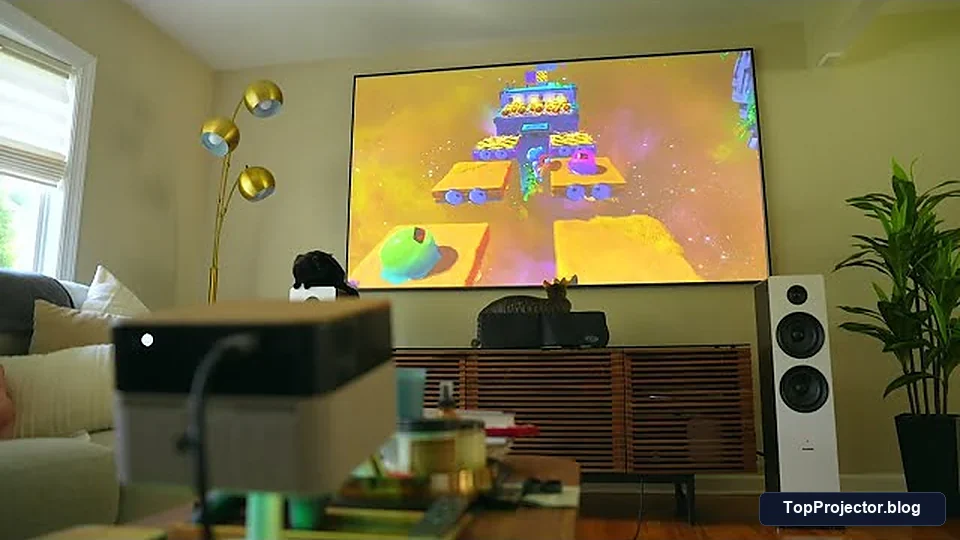
The complete absence of optical zoom or physical lens shift limits placement flexibility. You must position the projector at the exact correct distance to fill your screen.
Featuring a fixed throw ratio of 1.0:1, this projector requires exactly 8 feet of distance to project a massive 100-inch diagonal image onto your wall.
- Fixed 1.0:1 throw ratio maximizes image size in tight spaces
- Zero optical zoom requires physical repositioning for image sizing
- Automatic vertical keystone helps correct minor placement angles
Keystone Correction and Image Geometry Trade-Offs
While digital vertical keystone simplifies rapid setup, using it sacrifices native pixel resolution. Purists should align the projector physically to avoid scaling artifacts.
Auto-focus engages quickly upon startup, ensuring sharp corner-to-corner text clarity. Manual focus fine-tuning is also available via the remote control interface.
- Fast motorized auto-focus mechanism upon power up
- Heavy digital keystone usage introduces visible pixel softening
Keystone Correction Penalties
While digital auto-keystone offers rapid setup convenience, relying heavily on vertical and horizontal angle correction inherently sacrifices pixel sharpness and native resolution.
Gaming Input Lag, Refresh Rates & Motion Processing
Casual console gaming feels responsive enough thanks to a measured input lag of 48 milliseconds. Fast-paced platformers and RPGs play smoothly without noticeable controller delay.
Motion handling benefits from the inherent stability of 3LCD technology. Fast camera pans exhibit minimal judder, though dedicated motion interpolation tools remain relatively basic.
Competitive gamers will appreciate the measured input lag of 26.5 milliseconds at 60Hz, ensuring responsive control timing during fast-paced competitive shooter sessions.
- Input lag sits around 48ms at 1080p/60Hz resolution
- No high refresh rate support for competitive PC esports
- Clean motion handling avoids single-chip color separation streaks
Casual Gaming vs Competitive Latency Trade-Offs
Hardcore competitive first-person shooters will expose this latency threshold immediately. Casual couch co-op titles and sports games, however, run wonderfully without frustrating input lag.
Color vibrancy during gaming sessions remains a major highlight. Vibrant graphics pop off the screen with impressive HDR saturation and balanced contrast.
- Great for casual RPG and adventure gaming sessions
- Unsuitable for twitch-reflex competitive online multiplayer shooters
Motion Interpolation and Artifacts
Engaging frame interpolation smooths out judder in 24fps film content, though users should enable lower settings to avoid introducing digital soap-opera artifacts.
Yamaha Audio Integration, Android TV & Connectivity Suite
Sound tuned by Yamaha transforms this projector into a legitimate standalone audio system. Dual custom drivers deliver room-filling sound with surprisingly robust bass response.
Built-in Android TV provides seamless access to major streaming apps without external dongles. Voice search via Google Assistant responds quickly and accurately.
The onboard Yamaha speaker system delivers surprisingly robust sound output, featuring dual 5-watt drivers that easily fill small bedrooms without requiring external soundbars.
- Custom Yamaha 5W stereo speakers rival standalone soundbars
- Integrated Android TV interface with full streaming app library
- Bluetooth functionality lets you use the unit as a wireless speaker
Port Selection and Wireless Streaming Capabilities
Physical connectivity includes an HDMI port with ARC support for external audio receivers. A standard USB Type-A port powers streaming sticks or reads local media files.
Dual-band Wi-Fi streaming remains stable during high-bitrate 4K content playback. Screen mirroring from smartphones works reliably for quick photo and video sharing.
- Single HDMI port with ARC audio return functionality
- Reliable dual-band Wi-Fi and Bluetooth wireless connectivity
Android TV Interface and Streaming Apps
Running native Android TV 11, the interface provides seamless access to major streaming platforms with snappy navigation speeds and reliable Wi-Fi streaming.
Comprehensive Final Verdict: Who Should Buy It vs. Skip It
This projector excels as an all-in-one lifestyle entertainment hub for bedrooms and casual spaces. Its gorgeous 3LCD color and phenomenal Yamaha audio create an immersive experience.
Buyers seeking a traditional ceiling-mounted dedicated theater should look elsewhere due to the fixed optics. However, lifestyle users will love its effortless portability and style.
For casual movie nights and backyard screenings, this model delivers stellar value. Checking our BenQ HT3560 vs Epson 3800 comparison highlights how portable lifestyle units differ from traditional projectors.
Hardcore home theater enthusiasts prioritizing absolute black levels should skip this compact unit in favor of dedicated long-throw lamp-based systems with superior room control.
- Best suited for casual media rooms and bedroom streaming setups
- Not recommended for dedicated dark rooms requiring high contrast zoom
- Combines brilliant color accuracy with incredible built-in audio
Frequently Asked Questions
Does this projector support native 4K resolution input?
It features a native 1080p display panel but successfully accepts and downscales 4K HDR signals. You get crisp high-definition visuals with excellent HDR color mapping.
Can I connect external Bluetooth headphones or speakers?
Yes, built-in Bluetooth connectivity allows you to pair wireless headphones for private listening. You can also use the projector itself as a standalone Bluetooth speaker.
How does the throw ratio affect my screen size?
The fixed 1.0:1 throw ratio projects a large 100-inch image from approximately seven feet away. Because there is no optical zoom, you must physically move the unit.
Is this projector bright enough for daytime viewing?
With a rated output of 1000 lumens, it requires controlled lighting. You will need blackout curtains to achieve optimal contrast and color saturation during daylight.
What is the expected lifespan of the laser light source?
The multi-array laser diode is rated for 20,000 hours of operation. This eliminates expensive lamp replacements over years of daily family entertainment usage.