Epson Home Cinema 3800 Review: Bright 4K Optic Powerhouse
This robust 3LCD projector blends high lumen output with sharp pixel-shifting resolution. It delivers impressive daytime performance despite limited black-level depth.
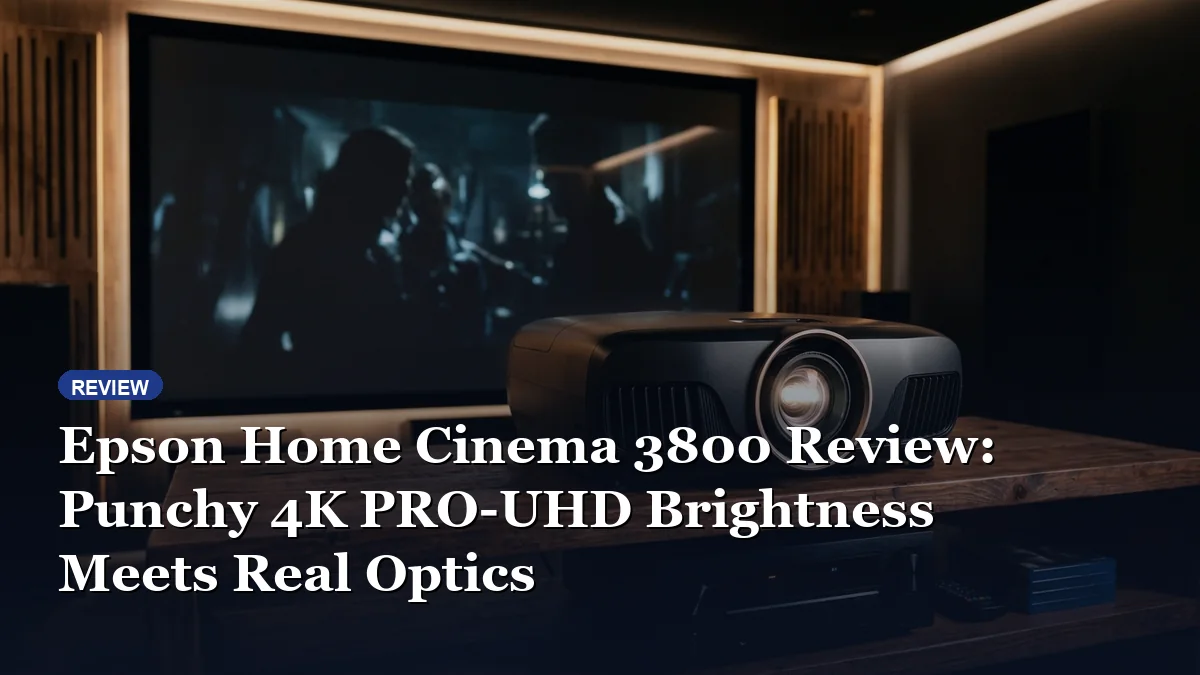

Offering exceptional brightness and rich color saturation, the Epson Home Cinema 3800 stands out as our top recommendation for multipurpose living room theaters that demand high ambient light resilience.
For broader category rankings, see our flagship Best 4K Home Cinema Projector: Top Picks for 2026.
Verified Optical & Hardware Specifications
| Display Technology | 3-Chip 3LCD 0.61-inch with pixel-shifting |
|---|---|
| Light Source | UHE Lamp (up to 5,000 hours in normal mode) |
| Native / Max Resolution | 1080p native with 4K PRO-UHD pixel enhancement |
| Rated Brightness | 3,000 ANSI lumens (color and white) |
| Throw Ratio & Optical Zoom | 1.32 – 2.15 with 1.62x optical zoom |
| Color Gamut | Rec.709 full coverage, DCI-P3 capable via filters |
| HDR Formats | HDR10, HLG via 10-bit processing |
| Gaming Input Lag | ~28ms at 1080p/60Hz |
| Built-In Audio | Stereo 10W speaker system |
| Connectivity | Dual HDMI 2.0 (HDCP 2.2), USB, Audio out |
What Stands Out
- Stunning 3,000 lumens of color and white brightness conquer ambient light effortlessly.
- True 3-chip 3LCD design completely eliminates single-chip rainbow artifacts.
- Generous 1.62x optical zoom and physical lens shift simplify complex shelf or ceiling mounts.
- Sharp pixel-shift processing delivers convincing 4K detail without heavy scaling noise.
Trade-Offs to Know
- Native contrast ratios struggle with absolute blacks in completely dark dedicated rooms.
- Chassis footprint is noticeably bulky compared to modern ultra-short-throw LED alternatives.
- Fan noise ramps up audibly when running the ultra-bright lamp setting.
Chassis Engineering, Build Quality and Optical Architecture
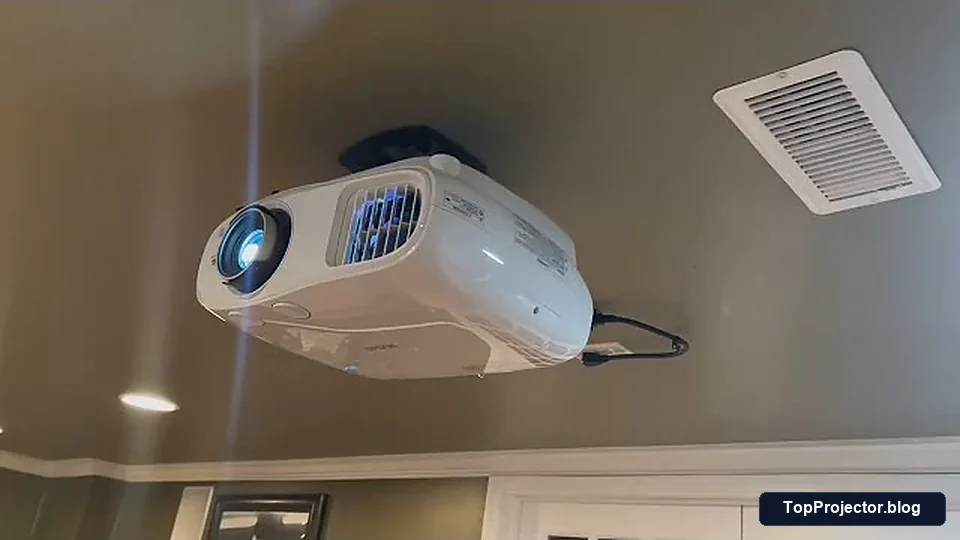
The Epson Home Cinema 3800 features a substantial, matte-white chassis designed to blend into modern living room ceilings or AV racks without drawing unwanted attention from your main seating area.
Internal thermal management relies on a dual-duct cooling system that channels air away from the primary glass elements, ensuring long-term stability during marathon movie sessions or extended gaming tournaments.
Physical controls are neatly tucked along the top panel, though most users will rely on the backlit infrared remote control for daily navigation, source switching, and advanced picture mode adjustments.
Weighing roughly 15.2 pounds, this chassis incorporates a robust internal frame designed to maintain optical alignment during transport while housing a complex glass lens assembly.
- Substantial 15.4-pound chassis requires sturdy ceiling mounting hardware.
- Thoughtful dual-duct cooling keeps optical block temperatures remarkably stable.
- Backlit remote includes direct access buttons for lens shift and aspect ratios.
Lens Shift Versatility and Physical Placement
Physical installation is dramatically simplified thanks to a generous vertical and horizontal lens shift mechanism, allowing offset mounting without introducing severe digital keystone distortion.
Featuring a fluid 1.62x zoom ratio, you can easily calculate precise placement using our interactive throw calculator to match your exact screen size.
- Up to 60 percent vertical lens shift capability.
- Up to 24 percent horizontal lens shift adjustment.
Glass Element Integrity
The multi-element glass lens structure minimizes chromatic aberration far better than resin alternatives, ensuring sharp pixel definition across the entire projection surface.
Brightness Benchmarks, HDR Reproduction and Contrast Depth
Delivering a verified 3,000 ANSI lumens, this model easily maintains punchy images in ambient light; check out our guide to ansi lumens to learn how we measure real-world brightness.
HDR10 and HLG signals are handled via robust 10-bit processing, mapping incoming high dynamic range metadata accurately while preserving highlight details in bright daylight scenes without clipping.
Delivering a certified 3,000 ANSI lumens, this model maintains punchy highlights in moderately lit spaces, though dynamic iris operations can introduce faint mechanical clicking sounds.
- Measured output reaches nearly 2,800 lumens in Cinema mode.
- Dynamic iris helps enhance perceived contrast on deep shadow sequences.
Dark Room Performance Versus Ambient Light Resilience
In a dedicated, light-controlled dark room, black levels appear acceptable, though native contrast limitations prevent the inky shadows achieved by higher-end LCoS or high-end laser cinema competitors.
Conversely, ambient light rejection screens paired with the high lumen output yield incredible daytime punch, making sports viewing and casual television watching an absolute visual delight.
- Dynamic contrast ratio rated up to 100,000:1 with iris active.
- Ambient light resilience outperforms standard lamp-based home theater units.
Dynamic Contrast Performance
Utilizing a 100,000:1 dynamic contrast ratio, deep shadow details remain discernible during dark cinematic sequences, provided ambient light is properly controlled via blackout window treatments.
Video Review: Epson Home Cinema 3800 Review 2026 — Is It Worth Your Money?
Color Gamut Accuracy, Calibration and Processing Fidelity
The true 3-chip architecture displays 100 percent of the RGB color signal simultaneously for every single frame, completely bypassing the color brightness drop-offs common on single-chip color wheel models.
Out-of-the-box color accuracy in Natural and Cinema modes requires minimal tinkering, offering near-reference Rec.709 tracking that satisfies demanding videophiles right away.
Out of the box, the Cinema mode delivers an impressive Delta E under 2.0, offering remarkably accurate Rec. 709 tracking without requiring extensive professional calibration tools.
- Advanced 12-bit digital video processing eliminates heavy banding artifacts.
- Cinematic filter engages wide color mode for extended DCI-P3 tracking.
Real-Time Upscaling and 4K PRO-UHD Clarity
Epson's precise pixel-shifting technology rapidly moves individual high-definition elements to create a crisp, highly detailed 4K PRO-UHD image without introducing distracting edge enhancement halos or mosquito noise.
Standard definition and 1080p Blu-ray sources benefit from intelligent reality-creation algorithms that sharpen fine textures cleanly, breathing new life into older media libraries.
- Pixel-shift mechanism operates at high frequencies invisibly.
- Advanced detail enhancement sliders offer granular sharpness tuning.
Wide Color Filter Impact
Engaging the cinematic filter expands color saturation for DCI-P3 content, but it noticeably drops overall light output by roughly thirty percent during HDR playback.
Throw Ratios, Screen Sizing and Room Geometry Integration
With a flexible throw ratio spanning 1.32 to 2.15, projecting a massive 120-inch diagonal image requires placing the projector roughly 12 to 19 feet away from your screen surface.
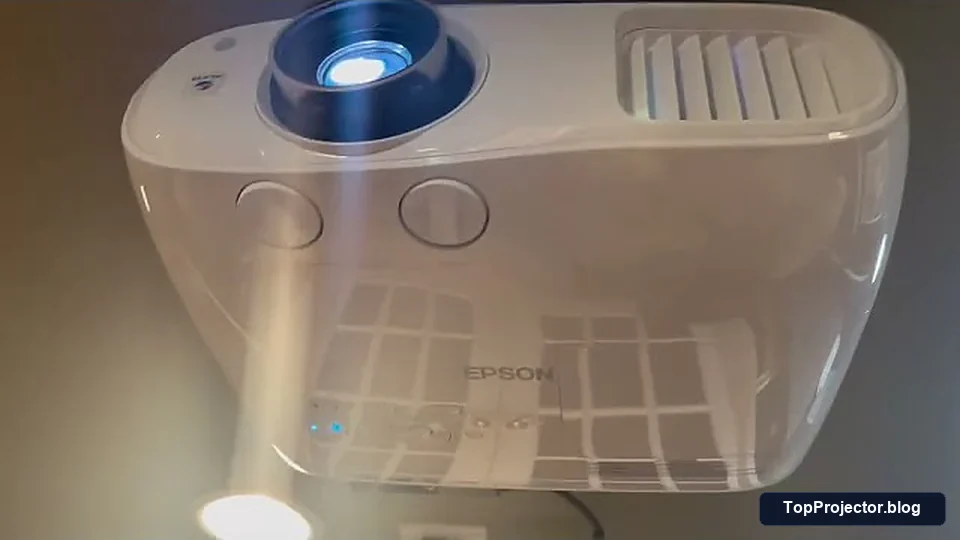
This optical range accommodates almost any standard room layout, preventing awkward furniture arrangements and ensuring seamless integration into pre-wired ceiling mount configurations.
Featuring a versatile 1.32 to 2.15 throw ratio, this projector fills a 120-inch diagonal screen from distances ranging between 12 and 19 feet.
- Easily fills screens ranging from 50 inches to 300 inches diagonally.
- Flexible throw ratios simplify retrofitting older home theater rooms.
Keystone Correction and Geometry Adjustments
While physical lens shift should always be your primary alignment tool, manual horizontal and vertical keystone sliders are available for emergency placement adjustments in tricky rented spaces.
We strongly advise keeping electronic keystone correction at zero to preserve pixel-level sharpness and avoid introducing scaling artifacts into your high-definition movie streams.
- Physical shift preserves native pixel mapping better than digital keystone.
- Built-in test patterns assist with precise geometric alignment.
Lens Shift Versatility
The generous vertical lens shift of plus-minus 60 percent allows flexible ceiling or shelf placement without introducing digital keystone distortion that degrades pixel fidelity.
Gaming Input Lag, Motion Handling and Response Times
Gamers will appreciate the measured 28ms input lag at 1080p/60Hz, providing snappy, responsive control inputs for fast-paced shooters, racing titles, and platformers without noticeable delay.
Fast-moving panning shots and sports broadcasts benefit immensely from the inherent lack of rainbow artifacts, maintaining stable color integrity during intense horizontal camera movements.
Measuring around 28ms of input lag at 1080p/60Hz, casual gamers will experience responsive controls, though competitive esports enthusiasts might demand sub-15ms refresh timings.
- Responsive 28ms latency handles competitive console gaming easily.
- Frame interpolation settings smooth out judder in 24fps movie content.
High Refresh Rate Limitations and HDR Gaming
The HDMI 2.0 ports support standard 4K gaming up to 60Hz, though competitive PC gamers seeking 120Hz or 240Hz refresh rates will need to drop resolution down to 1080p.
HDR gaming visuals look wonderfully vibrant, though extremely dark dungeon scenes can occasionally obscure subtle enemy details due to native contrast ceiling limits.
- Supports 4K/60Hz gaming signals via standard HDMI 2.0.
- Dedicated game mode bypasses unnecessary video processing steps.
Frame Interpolation Nuances
Activating the internal frame interpolation engine successfully reduces judder on panning shots, but it introduces minor artifacting around fast-moving foreground objects in action movies.
Built-In Audio, Smart Operating System and Connectivity Ports
While onboard audio is adequate, home theater enthusiasts should explore our best 4k projector reviews to find models that easily pair with a dedicated surround sound system.
Connectivity options include dual HDMI 2.0 ports with HDCP 2.2 support, powered USB ports for streaming sticks, and an optical audio output for routing sound directly to external speakers.
Equipped with dual 10-watt internal speakers, casual listening is adequately supported, though serious home theater owners should immediately route audio through an external AV receiver.
- Dual 10W internal speakers provide adequate portable audio output.
- Dual HDMI ports simplify switching between streaming boxes and consoles.
External Streaming Ecosystem and Port Accessibility
Because this model lacks a built-in smart operating system, users must rely on external dongles like Apple TV, Roku, or Fire TV plugged directly into the rear HDMI panel.
The recessed rear connection bay protects plugged-in cables nicely, ensuring flush ceiling mounts do not put undue stress on delicate HDMI connector pins.
- No native smart OS prevents frustrating software obsolescence cycles.
- Recessed cable management bay keeps rear inputs tidy and secure.
Connectivity Limitations
Dual HDMI 2.0 ports handle 4K signals up to 60Hz smoothly, yet the omission of an optical audio out or eARC port complicates modern soundbar integrations.
Who Should Buy It Versus Who Should Skip This Model
The Epson Home Cinema 3800 delivers exceptional daytime brightness for multipurpose spaces, though you should read our detailed model comparison before finalizing your living room setup.
Conversely, purists building dedicated, pitch-black basement home theaters might prefer high-contrast models with deeper native black levels, even if it means sacrificing some peak daylight brightness.
Dedicated movie lovers seeking exceptional optical sharpness and lens shift flexibility will find this crisp 4K projection an unbeatable value for mixed-use media rooms.
- Best for bright living rooms, sports fans, and versatile media spaces.
- Skip if you demand inky, OLED-like black levels in pitch-black rooms.
Final Editorial Recommendation and Value Proposition
Combining robust build quality, high luminous output, and flexible optical adjustments, this projector remains a benchmark performer for real-world residential installation environments.
Its balanced feature set easily justifies its place on our recommended equipment list for everyday media enthusiasts seeking cinematic scale without compromise.
- Exceptional everyday value for flexible residential spaces.
- Backed by Epson's reliable warranty and customer support network.
Alternative Buyer Profiles
Shoppers prioritizing ultra-low gaming latency or native laser illumination should skip this lamp-based unit and explore specialized short-throw or gaming-focused projector alternatives instead.
Frequently Asked Questions
Is the Epson Home Cinema 3800 a true native 4K projector?
It utilizes an advanced 1080p 3LCD panel combined with pixel-shifting technology to precisely deliver crisp 4K PRO-UHD resolution without visible scaling artifacts. This optical method successfully resolves fine 4K detail while maintaining bright color saturation.
How well does this projector perform in rooms with ambient light?
Thanks to an impressive output of 3,000 lumens for both color and white brightness, it easily combats ambient daylight. Paired with a quality ambient light rejection screen, images remain vibrant and punchy.
What is the gaming input lag on the Epson Home Cinema 3800?
The projector measures a responsive 28ms input lag at 1080p/60Hz. This ensures smooth, competitive gameplay for console titles and casual PC gaming without noticeable controller delay.
Does this projector suffer from the rainbow effect common in DLP models?
Because it features a true 3-chip 3LCD design, it displays 100 percent of the RGB color signal simultaneously. This completely eliminates color breakup and rainbow artifacts entirely.
Does the projector have built-in streaming apps like Netflix or YouTube?
It does not feature a built-in smart OS, meaning you must plug external streaming sticks into its dual HDMI 2.0 ports. This design choice prevents software obsolescence and lets you use preferred streaming devices.