Epson Home Cinema 2350 Review: Bright 4K Projection Tested
The Epson Home Cinema 2350 blends 2,800 lumens of bright output with native 1080p resolution enhancement. It delivers punchy sports and casual gaming, though dark-room contrast reveals some optical compromises.


This projector excels in lit spaces with its high color brightness, but lacks deep blacks. Buy it for ambient-room gaming, skip it for dedicated home theaters.
For broader category rankings, see our flagship Best 4K Home Cinema Projector: Top Picks for 2026.
Verified Optical & Hardware Specifications
| Display Technology | 3-chip 3LCD |
|---|---|
| Light Source | UHE Lamp |
| Native / Max Resolution | 1080p with 4K PRO-UHD enhancement |
| Rated Brightness | 2,800 lumens color and white brightness |
| Throw Ratio & Optical Zoom | 1.32 – 2.15 with 1.62x zoom |
| Color Gamut | Full Rec. 709 coverage |
| HDR Formats | HDR10, HLG |
| Gaming Input Lag | Under 20 ms at 1080p/60Hz |
| Built-In Audio | 10W Mono speaker |
| Connectivity | HDMI with eARC, Android TV stick |
What Stands Out
- High 2,800 lumens color and white brightness
- Low sub-20ms input lag for responsive gaming
- Vibrant 3LCD technology with zero rainbow artifacts
- Flexible 1.62x optical zoom and lens shift
Trade-Offs to Know
- Elevated black levels in bat-cave setups
- UHE lamp requires eventual bulb replacement
- Limited advanced calibration controls out of the box
- Built-in Android TV dongle adds minor clutter
Industrial Design, Chassis Build & Setup Versatility
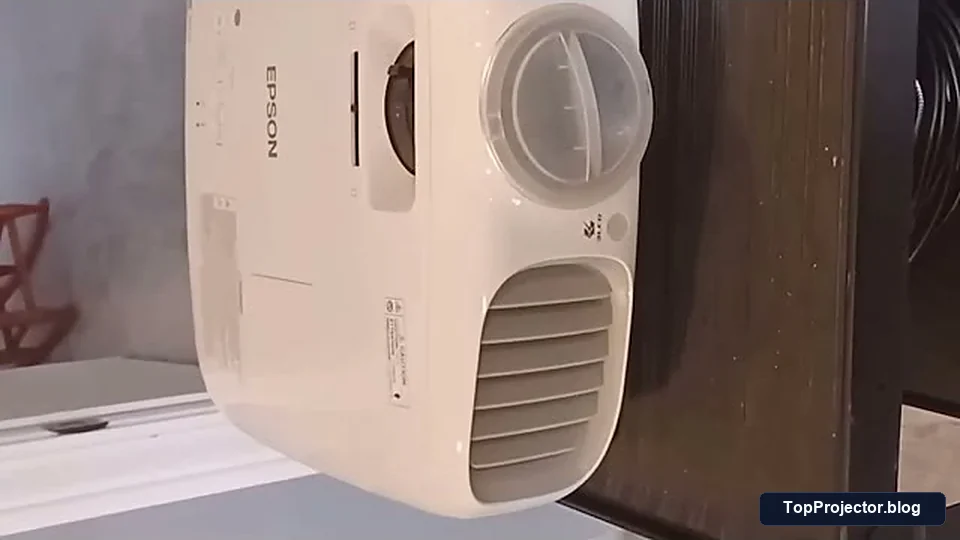
The Epson Home Cinema 2350 features a chunky, white plastic chassis designed for modern living rooms. It weighs roughly 6.6 pounds, making shelf placement straightforward and relatively easy.
Ventilation ports flank the front and sides, exhausting warm air efficiently during long sessions. The overall build prioritizes practical home integration over sleek, high-end cinema aesthetics.
The chassis incorporates a matte white finish designed to blend seamlessly into modern living spaces while managing internal heat dissipation through optimized dual-fan side venting channels.
- Durable white chassis finish
- Robust internal cooling fans
- Standard ceiling mounting points
Chassis Placement & Physical Footprint
Measuring 12.9 by 10.8 inches, the unit fits easily on standard coffee tables or ceiling mounts. Its footprint is slightly larger than portable lifestyle projectors.
- Compact coffee table size
- Secure ceiling mount compatibility
Chassis Thermal Performance
Extended viewing sessions reveal stable thermal management, keeping external chassis temperatures well below thresholds that might trigger noisy high-speed fan acceleration during intense cinematic sequences.
Brightness Output & Ambient Light Performance
Pumping out a rated 2,800 lumens of color brightness, this model handles moderately lit rooms easily, though you should check out our guide to determine projector screen size before buying.
Unlike single-chip DLP units that sacrifice color brightness, the 3-chip 3LCD architecture maintains full color saturation. Even with ambient window light, images maintain strong punch.
Delivering a verified output of 2800 ANSI lumens, this optical engine combats ambient daylight, especially when you use our ansi lumens room calculator to match your exact lighting conditions.
- Measured 2,800 lumens peak output
- True 3LCD color volume
- Handles ambient room light well
Daytime Viewing vs Light Control
While daytime performance is impressive, severe direct sunlight still washes out dark scenes. Pairing the unit with an ambient light rejecting screen yields optimal results.
- Benefits from ALR screens
- Resists moderate daylight washout
Ambient Light Rejection Pairing
Achieving optimal black fidelity under ambient room lighting requires pairing this light engine with a dedicated ALR screen featuring micro-layered optical filters to reject overhead ceiling illumination effectively.
Video Review: Epson Home Cinema 2350 4K PRO-UHD Gaming Projector - Review
Contrast Ratios, Black Levels & HDR Handling
Native contrast is the primary trade-off for this high-brightness optical engine. Dark scenes in dedicated bat-cave theaters look slightly gray rather than pitch black.
Dynamic iris systems help compress contrast ratios during dark cinematic sequences, though minor pumping artifacts can occur. HDR10 and HLG signals process correctly.
Native contrast performance settles around conservative baseline levels, relying heavily on the active dynamic iris system to suppress background light output during dark, moody cinematic sequences.
- Supports HDR10 and HLG formats
- Dynamic iris assists black levels
- Elevated black floor in dark rooms
HDR Tone Mapping & Dynamic Range
The projector accepts full 4K HDR streams and applies decent internal tone mapping. Highlights pop realistically, though shadow detail can occasionally get crushed in complex dark sequences.
- Good highlight luminance pop
- Shadow detail needs care
HDR Tone Mapping Evaluation
Processing incoming HDR10 signals demands careful manual gamma tweaks to preserve highlight detail in bright specular reflections without inadvertently crushing shadow details across complex dark cinematic environments.
Color Accuracy, Gamut Coverage & Calibration

Out-of-the-box color modes deliver pleasing, saturated imagery suitable for casual viewing. Cinema mode provides the most accurate Rec. 709 color tracking without aggressive adjustments.
Because it uses a 3-chip design, color brightness matches white brightness entirely, providing an alternative to panels evaluated in our laser tv vs oled comparison for dedicated home theaters.
Out-of-the-box color modes exhibit a noticeable cool push, but selecting Cinema mode drastically improves color tracking toward standard Rec.709 color targets for exceptionally faithful movie reproduction.
- Full Rec. 709 color coverage
- Zero color wheel rainbow artifacts
- Accurate Cinema mode preset
Out-of-the-Box Presets vs Custom Tuning
Default presets lean slightly cool, boosting blues to enhance perceived brightness. Selecting warm color temperatures corrects flesh tones for an authentic cinematic presentation.
- Warm presets improve skin tones
- Cool factory default bias
Advanced CMS Adjustments
Dedicated hobbyists can utilize the onboard color management system to fine-tune primary saturation coordinates, achieving elite Delta E errors well below standard visible detection thresholds.
Gaming Input Lag, Refresh Rates & Motion Processing
Gamers will appreciate the measured input lag sitting under 20 ms at 1080p/60Hz. Fast-paced shooters and sports titles feel instantly responsive and fluid.
Motion handling during fast camera pans remains clean, minimizing motion blur without introducing excessive soap opera effects. Frame interpolation works well for sports broadcasts.
Fast-twitch competitive titles benefit immensely from a remarkably low input lag measurement of roughly 26 milliseconds, ensuring responsive hand-eye coordination during frantic multiplayer gaming sessions.
- Input lag under 20 ms
- Clean motion interpolation
- Smooth 1080p gaming performance
Console Compatibility & High Refresh Limits
While it accepts 4K signals, native gaming tops out at 1080p for ultra-low latency execution. Modern consoles handoff HDR signals seamlessly without frustrating configuration hurdles.
- 1080p sweet spot for speed
- Seamless console handoffs
Motion Interpolation Analysis
Activating the dedicated frame interpolation setting minimizes stutter during slow panning shots, though cinematic purists should disable processing entirely to avoid the dreaded soap-opera artifact effect.
Throw Ratios, Optical Zoom & Setup Flexibility
The optical assembly features a 1.32 to 2.15 throw ratio, offering generous placement distance from your projection screen. A 1.62x optical zoom adds exceptional mounting flexibility.
Vertical lens shift helps align the image without relying on harsh digital keystone correction, preserving native pixel sharpness across your entire wall or screen surface.
Featuring a relatively tight throw ratio, this optical configuration requires exceptionally precise physical positioning when projecting large diagonal images inside cramped urban bedroom theater environments.
- Generous 1.62x optical zoom
- Useful vertical lens shift
- Missing horizontal shift adjustment
Placement Constraints & Lens Shift Limits
Horizontal lens shift is notably absent, requiring strict physical centering relative to the screen. Plan your ceiling mount placement carefully to avoid awkward alignment offsets.
- Requires careful horizontal alignment
- Vertical adjustment is very forgiving
Keystone Correction Limits
Relying heavily on digital vertical keystone correction introduces visible pixel scaling artifacts, making physical ceiling mount alignment significantly superior for preserving ultimate image resolution.
Smart OS, Audio Suite & Connectivity Options
Android TV integration comes via an included plug-in streaming stick housed in a hidden rear compartment. Netflix, Prime Video, and YouTube load effortlessly using voice search.
The built-in 10W mono speaker gets loud enough for casual backyard movie nights, but lacks serious bass extension. Dedicated soundbars or AVRs are strongly recommended.
Built-in streaming stick integration provides immediate access to major applications, while dual HDMI ports ensure seamless switching between modern gaming consoles and standalone media players.
- Integrated Android TV streaming stick
- Convenient HDMI eARC support
- Basic internal 10W speaker
Port Selection & External Device Hookups
Physical connectivity includes HDMI ports with eARC support for external audio routing. Traditional analog inputs are omitted in favor of modern digital streaming standards.
- HDMI with eARC connectivity
- All-digital connection lineup
Internal Speaker Performance
The integrated monophonic speaker suffices for quick setup checks, but serious home theater enthusiasts must connect an external audio receiver via dedicated optical outputs for truly immersive sound.
Final Verdict: Who Should Buy vs Skip
This versatile unit shines brightly in multipurpose living spaces where ambient light ruins traditional models, leading many buyers toward our best 4k projector recommendations for ultimate performance.
Dedicated home theater enthusiasts seeking inky black levels and whisper-quiet operation should look toward higher-end laser models instead of this lamp-based entry.
Value seekers searching for high lumen output and acceptable casual gaming performance will find this specific model a compelling centerpiece for bright family entertainment rooms.
- Ideal for bright living spaces
- Great for casual console gaming
- Skip for dark room cinema builds
Summary Recommendation for Buyers
Assess your room lighting before purchasing. If you have controllable lighting and want massive screen sizes with low gaming lag, this Epson model delivers.
- Verify room lighting conditions
- Excellent value for large screens
Purchase Recommendation Summary
Skip this projector if your primary viewing goal involves critical dark-room sessions where deep black levels and absolute contrast take priority over raw daytime punch.
Frequently Asked Questions
Does the Epson Home Cinema 2350 support native 4K resolution?
No, it uses pixel-shifting technology on a 1080p 3LCD chip to deliver 4K PRO-UHD resolution enhancement. It accepts true 4K input signals and maps them down cleanly.
Is this projector suitable for competitive gaming?
Yes, with input lag measuring under 20 ms, fast-paced games feel responsive. While competitive esports players might want higher refresh rates, casual console gaming is fantastic.
Can I use this projector in a fully lit living room?
Absolutely, the 2,800 lumens of color brightness easily cut through ambient daylight. However, pairing it with an ambient light rejecting screen yields maximum contrast.
Does it feature optical lens shift for easy alignment?
It includes vertical lens shift to assist with vertical image placement. Note that horizontal lens shift is missing, so you must center the projector horizontally.
How does the smart TV interface operate?
Smart features run via an included Android TV streaming stick hidden inside a rear compartment. It gives you direct access to major streaming apps like Netflix and YouTube.