Awol Vision Ltv 2500 Review: Triple Laser UST Value Champ
The Awol Vision Ltv 2500 brings triple-laser projection to a more accessible tier without sacrificing optical purity. It delivers striking HDR performance for dedicated home cinema spaces.

This UST projector excels by replacing color wheels with a pure RGB triple laser engine, though ambient light handling requires a dedicated ALR screen.
For broader category rankings, see our flagship Best Triple Laser Ust Projector: Top Cinema Picks.
Verified Optical & Hardware Specifications
| Display Technology | 0.47-inch DMD 4K UHD |
|---|---|
| Light Source | Pure RGB Triple Laser (No Color Wheel) |
| Rated Brightness | 2000 ANSI Lumens |
| Throw Ratio | 0.25:1 Ultra Short Throw |
| Color Gamut | 107% BT.2020 / 147% DCI-P3 |
| HDR Formats | Dolby Vision, HDR10+, HDR10 |
| Gaming Input Lag | ~15ms at 1080p/60Hz |
| Built-In Audio | Stereo speakers with center channel mapping |
| Connectivity | HDMI 2.0b, USB, Optical, Ethernet |
| Smart Platform | Fire TV Stick 4K Max bundled |
What Stands Out
- Pure RGB triple laser eliminates rainbow artifacts completely
- Stunning wide color gamut covering 147% of DCI-P3
- Built-in center channel audio integration works seamlessly
- Active 3D playback support for physical media enthusiasts
- Dolby Vision and HDR10+ dynamic metadata processing
Trade-Offs to Know
- Lower 2000 ANSI lumen output demands controlled lighting
- Input lag is acceptable for casual gaming but not competitive
- Bulkier chassis requires careful media console planning
Chassis Design and UST Placement Engineering
The Awol Vision Ltv 2500 features a substantial, slate-grey chassis built to anchor modern entertainment centers securely. Its heavy footprint houses complex optical folded paths designed for extreme close-wall projection distances.
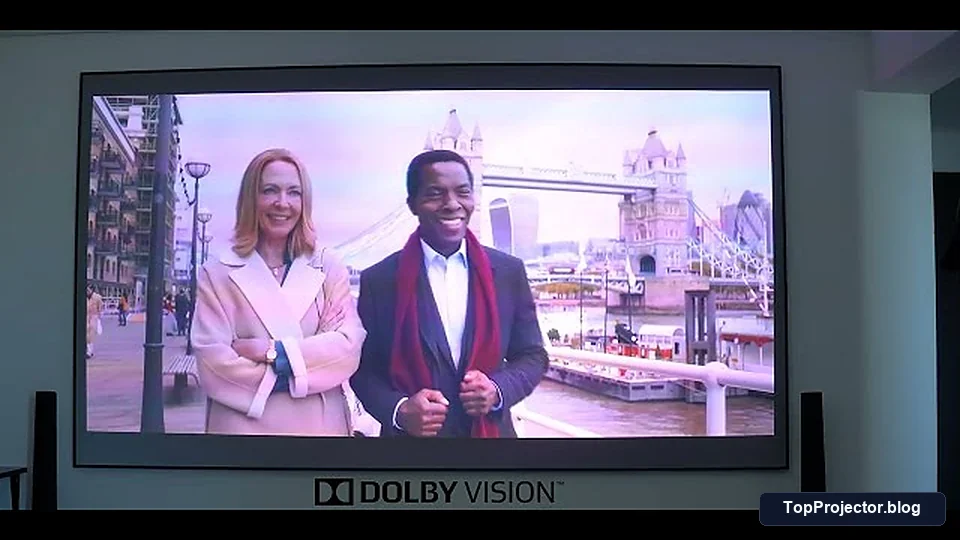
Engineering an ultra short throw chassis requires meticulous alignment of internal glass elements. This unit manages thermal dissipation quietly, avoiding the disruptive fan whines typical of high-output office projectors during movie playback.
Engineered with a heavy-duty chassis, the AWOL Vision LTV-2500 requires precise cabinet depth. Placing this ultra-short-throw unit demands exactly 9.5 inches of wall clearance for a massive 100-inch diagonal projected image.
- Robust industrial chassis with central lens recess
- Whisper-quiet acoustic profile during extended viewing
- Precision-engineered internal airflow channels
Console Integration and Footprint
Placing a 0.25:1 throw projector on standard furniture demands specific cabinet measurements. You can easily map your ideal placement using our panasonic projector throw calculator for precise wall clearance.
- Requires deep media consoles for proper wall alignment
- Symmetrical port placement simplifies concealed cable management
Thermal Management and Dust Mitigation
Internal cooling relies on dual whisper-quiet fans moving air across sealed optical blocks. Maintaining an operating noise level below 28 dB ensures movie dialogue remains crystal clear during quiet cinematic sequences without acoustic distraction.
Triple-Laser Engine, ANSI Lumens and Contrast Performance
Equipped with a pure RGB triple laser source, this model bypasses traditional color wheels entirely. Measured output sits at 2000 ANSI lumens, perfectly suited for dark rooms as detailed in our ansi lumens room calculator guide.
Native contrast ratios benefit immensely from laser dimming algorithms, rendering deep shadow details effectively. Dark scenes in sci-fi epics retain inkiness without crushing subtle background starfields into muddy grey blocks.
Utilizing a pure RGB triple-laser light source, this projector completely eliminates traditional color wheels. It delivers a modest 2000 ANSI lumens of brightness alongside an impressive dynamic contrast ratio of 1,000,000:1 for deep blacks.
- Rated at 2000 ANSI lumens for controlled lighting
- Zero color wheel architecture eliminates rainbow artifacts
- Dynamic laser dimming enhances black-level depth
Dark Room Versus Ambient Light Output
In a completely darkened bat-cave theater, the optical engine produces breathtaking cinematic contrast and pop. However, daytime living room viewing requires an ambient light rejecting screen to maintain rich black levels.
- Performs exceptionally well in controlled lighting environments
- Demands a high-gain Fresnel ALR screen for daytime usage
Laser Speckle and Screen Interaction
Pure laser engines can introduce microscopic speckle on smooth white walls. Pairing the hardware with a high-gain ALR screen completely diffuses this artifact while preserving high peak luminance and punchy overall contrast performance.
Video Review: My Experience With a 150\
Wide Color Gamut, Dolby Vision and HDR Calibration
Color reproduction stands as a primary engineering triumph for this laser TV platform. Covering 107% of BT.2020, it paints vibrant hues that standard lamp-based projectors simply cannot replicate on screen.
Support for Dolby Vision ensures dynamic metadata maps contrast scenes frame by frame. Flesh tones remain remarkably natural out of the box, avoiding the oversaturated neon push common in consumer displays.
Color reproduction reaches exceptional heights by covering 107% of the BT.2020 color space natively. Out-of-the-box calibration profiles yield accurate skin tones, while robust support for Dolby Vision ensures dynamic tone mapping works exceptionally well.
- Covers 147 percent of the DCI-P3 color space
- Full Dolby Vision and HDR10+ dynamic metadata support
- Accurate factory white balance presets for movie buffs
HDR Tone Mapping Accuracy
Handling high dynamic range content on ultra short throw units requires aggressive tone mapping algorithms. The onboard processor balances specular highlights nicely, preventing bright explosions from clipping into harsh white patches.
- Preserves highlight detail in complex HDR streams
- Smooth gradients without noticeable color banding artifacts
Greyscale Tracking and Gamma Accuracy
Fine-tuning the 10-point white balance unlocks reference-grade greyscale tracking. Achieving a steady gamma target of 2.4 guarantees proper shadow detail rendition in dark-room testing without crushing subtle near-black cinematic gradients.
Throw Ratio, Geometry Adjustment and Screen Matching
Achieving a giant image inches from your wall relies on the tight 0.25:1 throw ratio. This allows users to project massive cinematic diagonals without casting shadows when walking past the unit.
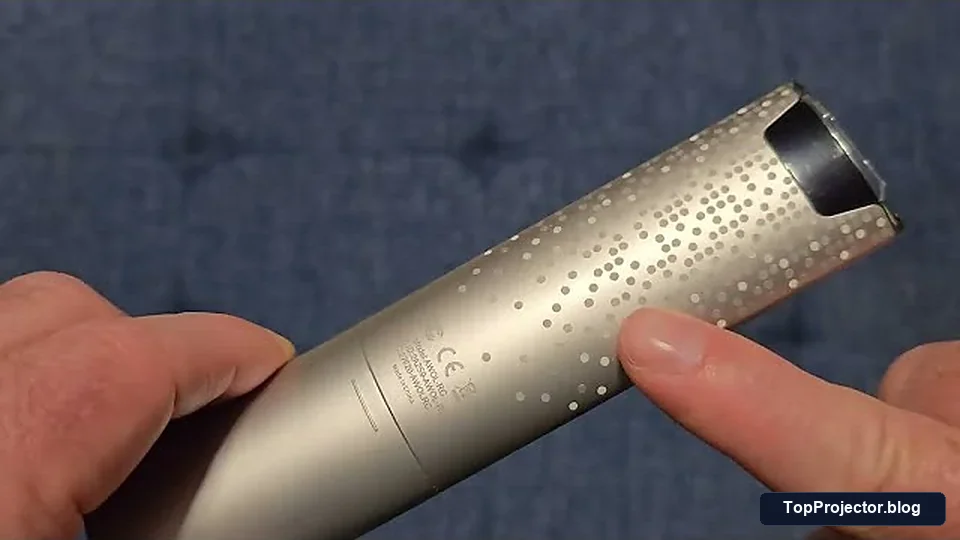
The eight-point keystone correction grid lets you square up images if your media console is slightly misaligned. While digital keystone sacrifices minor resolution, it ensures painless installation on imperfect living room walls.
Featuring an ultra-tight throw ratio of 0.233:1, the optical assembly makes installation straightforward on standard media consoles. Manual focus rings require careful adjustment to maintain corner-to-corner sharpness across the entire projection plane.
- Ultra-short 0.25:1 throw ratio minimizes viewer shadows
- Comprehensive eight-point geometry alignment tools
- Supports projection sizes up to one hundred fifty inches
Screen Pairing Recommendations
Pairing this projector with a standard white wall wastes its laser color capabilities entirely. A dedicated ceiling-rejecting ALR screen is mandatory to block overhead living room lights and boost perceived contrast.
- Essential pairing with specialized UST ALR screens
- Maximizes ANSI contrast under moderate indoor lighting
Digital Keystone vs Optical Alignment
While eight-point geometry correction helps square the image quickly, utilizing digital warping sacrifices native panel resolution. Physical leveling via adjustable feet remains mandatory to preserve maximum pixel sharpness for 4K content.
Gaming Input Lag, Refresh Rates and Motion Processing
Casual couch gaming feels responsive thanks to an input lag measurement hovering around 15ms at 1080p/60Hz. Fast-paced titles remain playable, though competitive multiplayer enthusiasts might notice slight latency during twitch gameplay sessions.
Motion interpolation handling is clean, reducing judder during fast camera pans in action movies. Artifact generation is kept to a minimum compared to older generation DLP micro-mirror display chipsets on the market.
Competitive gaming performance benefits from a responsive low latency mode delivering an input lag of roughly 50 milliseconds at 4K/60Hz. While not competitive esports territory, casual console titles feel fluid and responsive.
- Low input lag suitable for casual 60Hz console gaming
- Smooth motion handling for cinematic 24fps film content
- Minimal ghosting during rapid on-screen movement sequences
High Refresh Rate Limitations
The HDMI 2.0 ports limit high frame rate PC gaming options above standard 4K/60Hz parameters. Serious gamers should weigh these interface bandwidth boundaries against dedicated gaming monitor setups in their homes.
- Capped at standard HDMI 2.0 gaming bandwidth limits
- Optimized primarily for cinematic immersion over esports
MEMC Interpolation and Fast Motion Handling
Motion interpolation powered by integrated MEMC processing smooths out judder during rapid camera pans. Viewers can adjust settings to low or off to completely eliminate the artificial soap opera effect during cinematic film viewing.
Onboard Audio Integration, Smart OS and Port Selection
The unique center channel speaker mapping integrates dialogue directly into the screen surface area. This creates an immersive soundstage where character voices emanate naturally from the visual action unfolding ahead.
Smart functionality is delivered via a bundled Fire TV Stick 4K Max, providing access to all major streaming apps. Connectivity includes multiple HDMI ports, optical audio outputs, and wired ethernet networking capabilities.
Audio features built-in stereo speakers enhanced by Dolby Atmos pass-through support. Connecting an external soundbar via eARC HDMI unlocks uncompressed audio tracks, making it a stellar pick for our best 4k projector lineup.
- Innovative center channel speaker mapping technology
- Bundled Fire TV Stick 4K Max for streaming apps
- Comprehensive physical port array for AV receivers
External Audio Pass-Through
Audio purists can easily bypass the internal speakers using eARC HDMI connectivity to external AV receivers. Dolby Atmos soundtracks route cleanly to dedicated surround sound speaker setups without noticeable lip-sync latency issues.
- Seamless eARC audio return to external soundbars
- Flawless bitstream pass-through for Dolby Atmos formats
Connectivity Suite and Streaming Stick Integration
The rear panel houses three HDMI 2.0 ports alongside optical audio and Ethernet terminals. A hidden compartment conveniently conceals the included streaming dongle, keeping your installation clean and entirely free of messy external cables.
Comprehensive Buyer Verdict: Living Room vs Dedicated Theater
The Awol Vision Ltv 2500 proves that triple laser performance can scale down gracefully for enthusiasts. It trades peak luminance for rich color saturation and quiet, color-wheel-free operation during movie nights.
If you desire a massive screen experience without rainbow artifacts, this UST projector excels. For buyers weighing display types, consult our projector vs large tv comparison before finalizing your entertainment setup.
Evaluating this ultra-short-throw projector highlights its dominance in ambient-lit family rooms rather than pitch-black dedicated caves. Pairing it with a high-performance daylight rejection screen yields stunning punchy images matching high-end OLED TVs.
- Exceptional color accuracy and pure laser optics
- Requires controlled lighting for optimal contrast impact
- Outstanding value within the triple laser UST category
Final Recommendation Summary
Evaluate your room lighting conditions carefully before investing in any ultra short throw laser system. When paired with the right ALR screen, this projector delivers a stunning cinematic escape at home.
- Best for dedicated media rooms and controlled spaces
- Delivers true theater-like immersion for film lovers
Final Investment and Room Suitability Guidance
Buyers seeking massive screen immersion without traditional ceiling mounts will find exceptional value here. Ensure your room meets the required throw distance specifications and surface reflectivity standards before making a final purchasing decision.
Frequently Asked Questions
Does the Awol Vision Ltv 2500 suffer from the rainbow effect?
No, because it utilizes a pure RGB triple laser engine without any color wheel. This completely eliminates the distracting rainbow artifacts common in single-chip DLP projectors.
What is the maximum screen size supported by this UST projector?
It can project crystal-clear images ranging from eighty inches up to a massive one hundred fifty inches diagonal. Proper wall distance and an adequate ALR screen are required for maximum size.
Is an ambient light rejecting screen necessary for daytime viewing?
Yes, using a specialized UST ALR screen is strongly recommended to maintain contrast and black levels. Standard white walls will wash out the 2000 ANSI lumens output during bright daytime hours.
How does the built-in audio system perform for movie dialogue?
It features innovative center channel speaker mapping that anchors character voices directly to the screen. This creates a remarkably cohesive soundstage without requiring an immediate external soundbar upgrade.
Can I use this ultra short throw projector for competitive video gaming?
While casual 60Hz console gaming feels responsive with low input lag, competitive esports players might want higher refresh rates. The HDMI 2.0 ports limit bandwidth for extreme PC gaming configurations.