What Is Rainbow Effect DLP?
Discover how sequential color wheel rotation causes visual artifacting in home theater displays and how to identify your sensitivity threshold.

The rainbow effect stems from sequential color wheel rotations on single-chip DLP projectors, projecting red, green, and blue frames rapidly rather than simultaneously.
Ready to compare verified models? Start with our Best Mini Dlp Projector: Top Portable Picks (2026).
Practical Quick-Reference Table
| Projection Technology | Color Separation Method | Rainbow Effect Risk | Typical ANSI Brightness |
|---|---|---|---|
| Single-Chip DLP | Rotating color wheel or laser phosphor wheel | High | 1,500 to 4,000 ANSI lumens |
| 3-Chip DLP | Prism color separation (simultaneous RGB) | None | 5,000 to 30,000+ ANSI lumens |
| 3LCD | Dichroic mirrors (simultaneous RGB panels) | None | 2,000 to 5,000 ANSI lumens |
| LCoS (SXRD / D-ILA) | Reflective liquid crystal panels | None | 1,500 to 3,000 ANSI lumens |
| Laser-Phosphor Single DLP | High-speed wheel with blue laser pump | Moderate to High | 2,000 to 5,000 ANSI lumens |
| RGB Laser Single DLP | Direct diode pulsing without physical wheel | Low to Moderate | 2,000 to 4,000 ANSI lumens |
Mechanics of Single-Chip Digital Light Processing
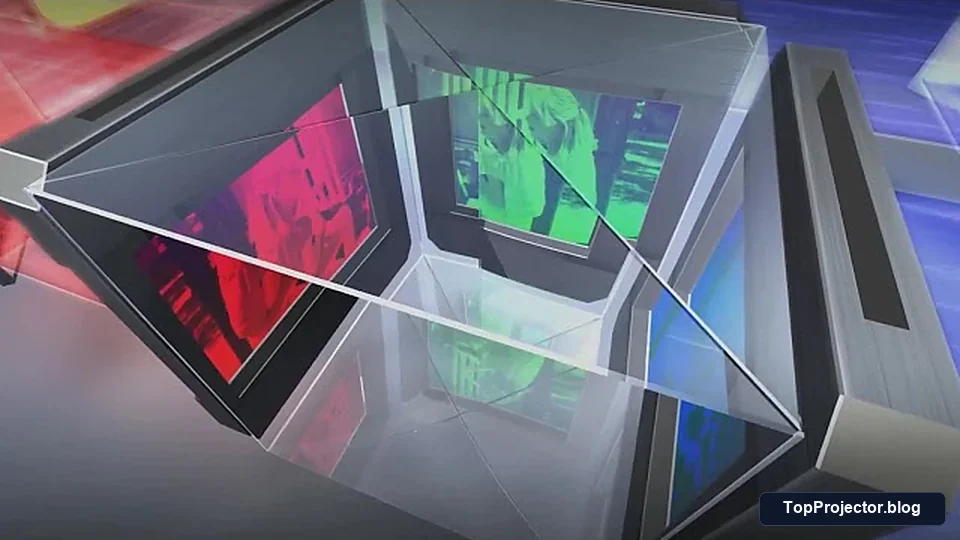
Digital Light Processing relies on an array of microscopic mirrors called a Digital Micromirror Device. Each individual mirror tilts thousands of times per second to create grayscale pixel information.
To achieve full color images, manufacturers place a spinning color wheel between the lamp and the mirror chip. The wheel divides white light into red, green, and blue segments sequentially.
While evaluating visual setups, remember that pairing your display with the best speakers for projector enhances immersion. Your projector outputs rapid sub-frames that merge into a single full-color picture.
When your eyes move quickly across the screen or when high-contrast elements appear, the rapid color sequential flashing separates. This physical separation creates visible flashes of red, green, and blue trailing edges.
Single-chip architecture relies on a microscopic DMD chip utilizing over 8 million pivoting mirrors. Each mirror switches at speeds exceeding 10kHz, modulating sequential color pulses rapidly across your screen.
- Single-chip DLP architectures use a single micromirror chip for all pixel data.
- Color wheels spin at speeds ranging from 2x to 8x standard frame rates to mitigate artifact visibility.
- High-contrast moving white objects against dark backgrounds maximize the visibility of color separation.
- Faster color wheel rotation speeds significantly reduce the physical separation perceived by human eyes.
- Verify frame rate synchronization matches native source input
- Avoid cheap HDMI extenders inducing clock jitter
Color Wheel Speed and Segment Variations
Early single-chip projectors featured slow double-speed color wheels that made artifacts obvious to most viewers. Modern units employ six-segment or eight-segment color wheels running at higher speeds.
Adding clear or yellow segments increases overall ANSI brightness output, but this optimization often degrades color saturation. Manufacturers must balance perceived brightness against artifact reduction during optical design.
- Double-speed wheels display severe artifacts across standard film content.
- Six-segment RGBRGB wheels double the flash frequency to suppress visible flashing.
- Clear segments boost lumen output at the expense of natural color fidelity.
PWM Bit-Depth Timing Tolerances
Pulse-width modulation governs intermediate gray shades by controlling mirror duty cycles. Tighter microsecond tolerances prevent temporal artifacts from bleeding into high-contrast black-and-white cinematic transitions.
- Check EDID handshake stability
- Ensure source output matches display refresh capabilities
Biological Factors and Human Visual Perception
Not every home theater enthusiast perceives the rainbow effect equally during movie viewing sessions. Human visual physiology dictates whether you experience distracting color flashes or see normal images.
Viewers with fast saccadic eye movements track moving objects across the projection screen rapidly. This rapid ocular motion breaks the sequential color sequence apart across retinal photoreceptors.
Fatigue, screen size, and viewing geometry heavily influence visual comfort. You can test your placement ratios using our throw distance calculator to optimize seating and reduce personal susceptibility threshold risks.
Children and younger adults often report seeing color flashes more frequently than older demographics. Your brain learns to filter minor visual anomalies over time through habituation and neural adaptation.
Human foveal and peripheral vision react differently to rapidly moving high-contrast edges. Fast eye saccades across a 120Hz frame expose color separation anomalies much faster than stationary focus.
- Saccadic eye movements cause the brain to register individual color sub-frames.
- Viewing in completely dark rooms enhances contrast and highlights trailing color artifacts.
- Larger projection screen sizes widen your field of view, increasing peripheral artifact visibility.
- Personal sensitivity varies drastically across different members of the same household.
- Monitor viewer fatigue during extended dark scenes
- Track individual visual sensitivity variations
The Role of Ambient Light and Contrast
High native contrast ratios make bright white objects pop dramatically against dark cinematic backgrounds. Unfortunately, this extreme dynamic range accentuates sequential color separation in high-contrast scenes.
Introducing controlled ambient light or using an ambient light rejecting screen reduces perceived contrast extremes. This environmental adjustment helps suppress the visible impact of color trailing.
- High contrast ratios create sharper edges that expose color separation easily.
- Ambient light washing out deep blacks inadvertently masks rapid color flashing.
- ALR screens preserve image contrast while minimizing extreme perceptual transitions.
Saccadic Eye Movement Triggers
When your eyes dart rapidly across bright subtitles on dark backgrounds, individual color flashes decouple on the retina. Susceptible viewers notice cyan and magenta fringes trailing moving white text.
- Keep focal points centered during high-action sequences
- Reduce subtitle brightness settings if adjustable
Video Walkthrough: What Is DLP Projector Rainbow Effect / RBE? How To Remove It?
Evolution of Color Wheels and Laser Light Sources
Traditional lamp-based projectors relied on mechanical motors spinning glass color filters continuously. Solid-state illumination has transformed how manufacturers generate red, green, and blue laser wavelengths.
Modern laser-phosphor engines use a blue laser diode combined with a spinning phosphor wheel. While this eliminates fragile lamps, many designs still rely on mechanical color wheels downstream.
Advanced triple-laser architectures utilize distinct red, green, and blue laser diodes without color wheels. These systems flash primary diodes simultaneously, effectively eliminating sequential color artifacting entirely.
Evaluating modern laser projectors requires checking whether the optical engine uses a phosphor wheel or true RGB laser diodes for color generation.
Modern multi-segment RGBRGB wheels operating at 6x speed spin at 3600 RPM. This quadruples the color cycling frequency compared to legacy 2x speed models, effectively reducing visibility.
- Laser-phosphor engines offer extended operational lifespans exceeding 20,000 hours.
- Mechanical phosphor wheels can still produce artifacts similar to traditional lamp units.
- Triple-laser architectures eliminate physical color wheels for zero rainbow risk.
- Solid-state diode pulsing provides precise control over color timing intervals.
- Inspect wheel segment configurations on spec sheets
- Prioritize higher RGBRGB multipliers over basic RGBW
Understanding Laser-Phosphor Versus Triple-Laser Design
Laser-phosphor projectors generate green and yellow light by shining blue lasers onto a spinning phosphor segment. A secondary segment splits these wavelengths into primary RGB components for the DLP chip.
True RGB laser projectors bypass phosphors entirely by pulsing discrete red, green, and blue diodes. This eliminates moving mechanical filters and provides wider color gamuts without artifacts.
- Phosphor wheels convert blue laser light into broader spectrum illumination.
- RGB diode systems project pure laser wavelengths directly onto the micromirrors.
- True RGB lasers eliminate mechanical wear points inside the optical block.
Solid-State Phosphor Wheel Dynamics
Laser phosphor engines replace traditional glass segments with segmented phosphor wheels. Utilizing a dual-blue laser architecture achieves wider color gamuts while minimizing noticeable color separation artifacts.
- Verify laser diode reliability metrics
- Check dynamic dimming implementation speed
Practical Evaluation Methods Before Buying
Before buying a single-chip DLP display, consider reading our Hisense PX2-PRO review for insights. Specification sheets rarely disclose individual viewer sensitivity to sequential color separation artifacts.
Borrow a demonstration unit or evaluate the projector in a dedicated showroom environment. Play challenging content featuring high-contrast credit rolls or fast action sequences against dark backgrounds.
Intentionally move your eyes quickly across the projection screen while subtitles or bright objects appear. This deliberate tracking movement quickly exposes whether you suffer from severe rainbow artifact sensitivity.
Consult enthusiast communities and professional reviews that measure actual color wheel segment speed and rotation frequency before making your final selection.
Testing a projector requires playing high-contrast black-and-white media like credits or subtitles. Intentionally dart your eyes quickly across the frame to trigger saccadic artifact visibility before purchasing.
- Test projection units using high-contrast credit sequences and black-and-white scenes.
- Move your eyes rapidly across the screen to trigger perceptual separation.
- Check manufacturer specifications for color wheel rotation speeds exceeding 4x.
- Ensure return policies accommodate home testing for sensitive household viewers.
- Request dark demo room conditions matching home setup
- Test with various frame rate inputs like 24p and 60p
Recommended Test Material and Scenarios
Movie credit rolls featuring white text on solid black backgrounds provide the ultimate stress test. The sharp contrast exposes subtle color trailing instantly across your peripheral vision.
Action movies with explosions, starry night skies, and flashing lights also reveal optical limitations. Watch these scenes closely for faint red or blue ghosts trailing moving objects.
- White movie credits on black backgrounds offer the harshest evaluation metric.
- Starfields and space battles highlight slow color wheel refresh limitations.
- Fast-paced sports broadcasts test motion handling and color synchronization.
In-Store Evaluation Checklist
Disable all artificial motion smoothing and dynamic contrast modes during testing. Set ambient lighting to match your exact room lumen targets to evaluate real-world color flashing.
- Bring familiar reference test discs
- Evaluate sensitivity over a sustained viewing window
Video Walkthrough: Does the XGIMI Horizon 20 Max Have the Rainbow Effect? Honest Review \u0026 Real Footage
Alternative Display Technologies and Mitigation
If you discover high personal sensitivity, consult our guide on understanding ANSI lumens for optimal lighting balance. The market also offers alternative projection technologies featuring zero artifact risk.
3LCD projectors use dichroic mirrors to split white light into three simultaneous color channels. Each channel passes through dedicated liquid crystal panels, ensuring continuous simultaneous color display.
LCoS technology found in Sony and JVC projectors utilizes reflective liquid crystal panels similarly. These systems deliver exceptional contrast and black levels while completely eliminating color wheel flashing.
Selecting the right display technology guarantees a comfortable, fatigue-free viewing experience for your entire household during long cinematic movie sessions.
Three-chip LCoS and 3LCD projectors completely eliminate single-chip artifacts by projecting all primary colors simultaneously. These systems deliver zero rainbow effect regardless of rapid eye movement.
- 3LCD projectors project red, green, and blue simultaneously without spinning wheels.
- LCoS technology provides incredible native contrast and zero color separation.
- Three-chip DLP systems offer extreme brightness for commercial and large home theaters.
- Alternative technologies completely remove the risk of perceiving rainbow flashes.
- Compare native contrast tradeoffs across technologies
- Assess installation throw distance requirements
Weighing DLP Benefits Against Perceptual Drawbacks
Single-chip DLP projectors deliver exceptional pixel sharpness, high ANSI contrast, and rock-solid convergence. For viewers immune to artifacts, they offer incredible value and image clarity.
Weighing optical sharpness against visual comfort helps you choose the ideal projection system. Prioritizing viewer physiological compatibility ensures long-term home theater satisfaction without eye strain.
- DLP offers pixel-perfect alignment without manual convergence calibration.
- Sensitivity remains subjective, meaning many viewers notice zero artifacts.
- Matching display technology to your visual profile prevents costly purchasing mistakes.
Mitigation Strategies for Sensitive Viewers
If you already own a single-chip DLP, increase ambient room lighting slightly. Raising background illumination reduces retinal contrast ratios, effectively masking subtle color separation during fast sequences.
- Use bias lighting behind your projection screen
- Select high-gain screens to boost perceived black levels
Frequently Asked Questions
What causes the rainbow effect on DLP projectors?
The artifact occurs because single-chip DLP projectors display red, green, and blue color frames sequentially rather than simultaneously. Rapid eye movements across high-contrast images separate these flashes on your retina.
Does every home theater enthusiast see the rainbow effect?
No, susceptibility varies drastically based on individual eye physiology and saccadic movement speed. Many viewers never notice any color flashing during normal movie viewing sessions.
Do laser projectors eliminate the rainbow effect entirely?
Not automatically, because many modern laser models still use spinning phosphor wheels to generate color. Only true RGB laser projectors utilizing separate laser diodes eliminate the mechanism entirely.
What projection technologies are completely immune to color separation?
Technologies utilizing simultaneous color projection like 3LCD and LCoS produce zero rainbow artifacts. These systems project all three primary colors simultaneously across dedicated internal panels.
How can I test myself for rainbow effect sensitivity before buying?
Watch a projector demo featuring white credits rolling against a dark background while moving your eyes quickly. If you perceive distracting red or blue flashes, choose an LCD or LCoS alternative.