How Bright Does a Projector Need to Be Outside?
Mastering outdoor projection requires understanding ambient light interaction. Proper lumen output ensures your backyard movie nights remain vibrant and clear.
You need a minimum of 3,000 ANSI lumens for twilight viewing on a 100-inch screen. Pitch-black environments safely allow lower outputs around 1,500 to 2,000 lumens.
Ready to compare verified models? Start with our Best Projectors For Outside: Top Backyard Picks.
Practical Quick-Reference Table
| Scenario / Metric | Recommended Target | Why It Matters |
|---|---|---|
| Complete Darkness | 1,500 to 2,000 ANSI Lumens | Zero ambient light preserves perceived black levels. |
| Twilight / Dusk | 3,000 to 4,000 ANSI Lumens | Fading sunlight washes out weaker portable projectors. |
| Full Daylight | 7,000+ ANSI Lumens | Direct sunlight overwhelms standard consumer projection optics. |
| Screen Size | 100 to 120 Inches | Balances image scale with light output distribution. |
| Throw Ratio | 1.2:1 to 1.5:1 | Fits standard backyard placement distances without cropping. |
| Gain Factor | 1.1 to 1.3 Gain | Optimizes off-axis viewing angles for larger groups. |
Mastering Outdoor Projection Optics and Ambient Light Math
Using our screen size and viewing distance calculator helps balance ambient light rejection against screen size. A backyard setup battling twilight demands significantly higher output than pitch-black midnight sessions.
External light sources destroy perceived contrast faster than resolution loss. Without proper lumen headroom, shadows turn gray and colors lose their saturation immediately upon sunset.
Understanding inverse square law helps predict light falloff. Doubling your throw distance quarters the light intensity hitting your projection surface, requiring stronger bulbs.
Atmospheric moisture and open-air dispersion also impact light retention. Open yards lack the reflective room boundaries found inside traditional dedicated home theaters.
Calculating outdoor lumens requires factoring inverse square law losses. Doubling your throw distance cuts image brightness by 75 percent, destroying contrast unless your projector engine overpowers ambient atmospheric scatter.
- Account for local streetlights and neighbor patio illumination.
- Calculate surface area scaling when expanding beyond 120 inches.
- Factor in light drop-off over extended throw distances.
- Prioritize color brightness parity over peak white specs.
Evaluating Ambient Light Interference Outdoors
Stray photons from nearby urban environments create persistent ambient glare. This environmental light lifts your black floor and ruins cinematic dynamic range.
Shifting your viewing schedule later into the night reduces ambient competition. True darkness lets even modest 2,000-lumen models punch well above their weight.
- Monitor local light pollution vectors before screen placement.
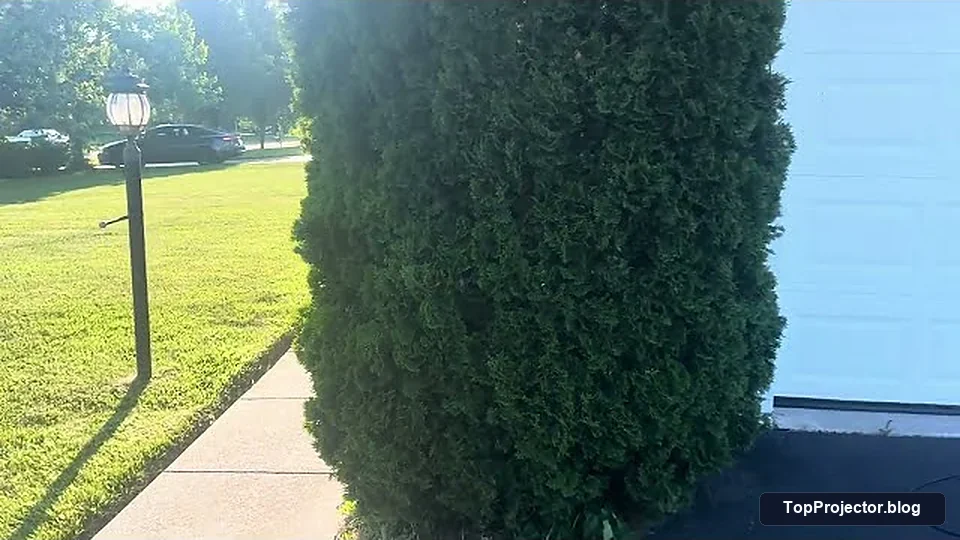
- Use natural barriers like fences or bushes to block side glare.
Calculating Inverse Square Drop-off
Measure your exact lens-to-screen plane using a laser tape. Apply a 2.2 multiplier for twilight setups to maintain vibrant highlights without clipping shadow details under heavy night skies.
Decoding ANSI Lumens Versus Misleading Manufacturer Metrics
Reviewing our guide on lumens for bright rooms exposes inflated marketing terms. True optical performance relies strictly on standardized ANSI lumen measurements across all white fields.
LED projectors quoting massive marketing numbers often use unverified peak lumens. These inflated figures fail standardized laboratory testing and disappoint outdoors.
Color brightness matters just as much as white brightness. 3-chip projection architectures maintain vibrant hues without sacrificing white peak performance.
Always verify independent third-party reviews before trusting brand specifications. Real-world testing reveals actual output during sustained outdoor operation.
Avoid generic LED brightness claims that inflate figures using color-shifted wavelengths. True ANSI measurements demand strict 9-point grid testing under standardized conditions to guarantee realistic open-air output.
- Ignore vague brightness labels like LED lumens or lux.
- Demand certified ANSI lumen ratings for reliable comparisons.
- Check color brightness outputs on multi-chip architectures.
- Read independent reviews confirming operational thermal limits.
Identifying Marketing Traps in Portable Projectors
Compact portable units often advertise high brightness while drawing minimal power. Physics dictates that high lumen output requires robust thermal management and wattage.
Be wary of extreme contrast claims paired with low lumen counts. True contrast requires sufficient light engine power to overcome ambient bounce.
- Cross-reference advertised wattage with actual power draw.
- Avoid units hiding true ANSI metrics behind vague terminology.
Identifying False Marketing Specs
Check specification sheets for explicit ISO 21118 compliance. Brands omitting this standard often substitute non-regulated marketing lumens that collapse entirely once exposed to genuine outdoor ambient wash.
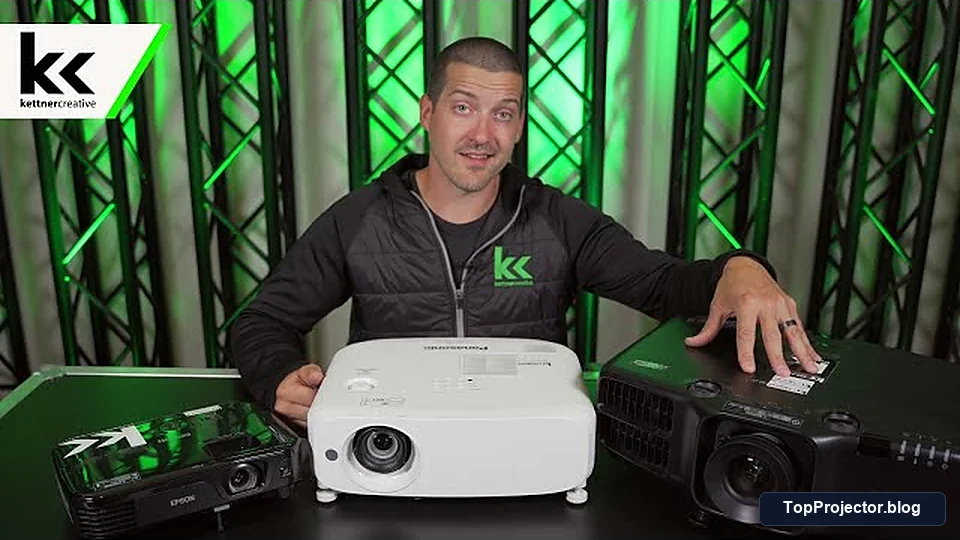
Video Walkthrough: How Many Lumens Does My Projector Need?
Environmental Lighting Scenarios and Exact Lumen Thresholds
Matching your projector to exact environmental conditions guarantees watchable imagery. Backyard events span three distinct lighting phases requiring specific lumen tiers.
Dusk requires overcoming lingering sunlight with at least 3,000 ANSI lumens. Anything lower washes out completely until deep twilight takes over.
Complete pitch-black darkness allows lower thresholds around 1,500 lumens. This range preserves lamp life while delivering cinematic immersion in controlled yards.
Twilight sessions require robust optics to punch through blue hour skies. A 4,000 lumen engine handles transition phases gracefully without losing shadow detail.
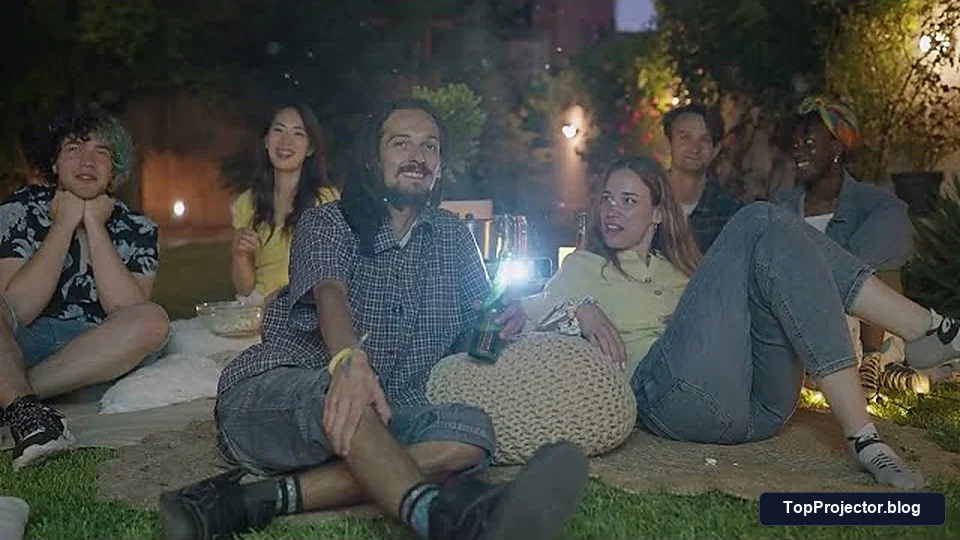
Deep night environments with zero streetlights allow modest 1500 ANSI lumens for a 100-inch screen. However, urban backyards demand at least 3000 ANSI lumens to combat local light pollution effectively.
- Target 1,500 lumens for midnight total darkness setups.
- Require 3,000 lumens for standard twilight backyard movies.
- Avoid daytime projection unless exceeding 7,000 ANSI lumens.
- Adjust content gamma profiles for dusky viewing conditions.
Deep Dive Into Twilight Versus Midnight Viewing
Twilight viewing forces your optical engine to fight residual atmospheric scattering. High ANSI output maintains midtone separation while skies darken slowly.
Midnight sessions remove ambient variables entirely. Reading our Hisense PX3 Pro review helps you evaluate laser power for quieter fan operation and deeper blacks.
- Calibrate gamma curves specifically for high-ambient phases.
- Utilize eco mode during pitch-black late-night screenings.
Urban Light Pollution Mitigation
Position your optical path perpendicular to neighboring windows and roadways. Utilizing an ultra-short throw setup minimizes overhead atmospheric interference by keeping the light beam tightly localized near the ground.
Screen Gain, Material Selection, and Projection Surface Synergy
Your projection surface acts as an active optical component outdoors. Selecting the right screen gain material maximizes your projector's effective output significantly.
Standard white matt screens distribute light evenly across wide viewing angles. They offer a neutral 1.0 gain factor ideal for controlled backyard seating arrangements.
Ambient light rejecting materials feature specialized micro-structures. These surfaces reflect projector light toward viewers while deflecting off-axis ambient glare.
Avoiding plain white bedsheets prevents severe light loss. Porous fabrics let light pass straight through, destroying contrast and washing out details.
Standard white bedsheets diffuse light uniformly, ruining black levels. Invest in a dedicated ambient light rejecting material featuring a 1.1 gain rating to redirect off-axis light away from viewers.
- Choose 1.1 to 1.3 gain for wider backyard seating layouts.
- Invest in dedicated tensioned outdoor projection screens.
- Avoid wrinkled bedsheets or uncalibrated painted walls.
- Use ALR materials if fighting patio lighting or streetlamps.
Optimizing Off-Axis Viewing Angles with Gain
High-gain screens concentrate reflected light within a narrow cone. While center seats look brilliant, viewers sitting on the flanks experience noticeable brightness dropoff.
Balancing gain against audience width ensures uniform image fidelity. A 1.1 gain surface provides an optimal compromise for group gatherings.
- Calculate maximum seating angle before buying high-gain fabrics.
- Maintain wide dispersion for casual backyard party layouts.
Tensioning and Surface Flatness
Outdoor breezes cause destructive ripples on loose vinyl. Always select tab-tensioned frames to ensure a flat optical plane that prevents geometric distortion during movie sequences.
Video Walkthrough: Best Projectors for Daytime Viewing in Bright Rooms 🔥
Native Contrast Ratios and Black Levels in Open-Air Environments
Lumens dictate sheer brightness, but native contrast ratio determines image depth. Open-air environments naturally degrade perceived black levels through light scatter.
Dynamic iris systems help compensate for ambient light challenges. They modulate light output per frame to preserve shadow detail in dark sequences.
High ANSI contrast ensures crisp text and distinct shadow separation. Without strong native contrast, bright outdoor images look flat and washed out.
Balancing contrast and brightness prevents eye fatigue during long sessions. Deep blacks provide the necessary anchor for vibrant outdoor cinematic colors.
Open-air setups lack reflective room boundaries, causing perceived contrast to plummet. Dynamic iris technologies help, but nothing replaces a high native contrast ratio exceeding 2000:1 for deep blacks.
- Prioritize native panel contrast over dynamic marketing numbers.
- Enable dynamic iris features for enhanced shadow pop.
- Calibrate black level settings to match night-time conditions.
- Combine high lumens with solid contrast for true punch.
Managing Black Floors Under Open Skies
Open skies provide zero ceiling or wall reflections to aid contrast. Ambient photons bounce freely around your yard, elevating your absolute black floor.
Using dark backdrop structures behind your screen helps improve perceived depth. Eliminating background light distractions restores punchy visual dynamics.
- Erect temporary dark backdrops behind portable screens.
- Position setups away from highly reflective house walls.
Managing Gamma Curves Outside
Calibrate your source device to a 2.4 gamma target specifically for night viewing. This enhances shadow detail visibility while compensating for the absence of interior wall reflections outdoors.
Mitigating Thermal Throttling and Dust Ingress Outdoors
Outdoor environments expose sensitive optical gear to dust and humidity. Proper thermal management prevents premature lamp degradation and sudden shutdowns.
High-output light engines generate substantial internal operating heat. Outdoor ambient temperatures push cooling fans to maximum RPM thresholds constantly.
Sealed optical light engines protect internal mirrors from airborne debris. Dust motes settling on panels cause annoying permanent spots on screen.
Ensuring adequate clearance around intake vents prevents overheating. Never enclose portable projectors inside makeshift boxes without airflow paths.
Outdoor night humidity and floating dust particles threaten sensitive optical engines. Ensure intake vents remain completely unobstructed, and check that internal filters boast IP5X dust resistance ratings for longevity.
- Keep intake and exhaust vents completely unobstructed.
- Clean removable air filters after every dusty outdoor session.
- Choose sealed optical blocks to block backyard dust.
- Monitor internal thermal warnings during hot summer nights.
Protecting Optics From Humidity and Debris
Evening dew and high relative humidity threaten delicate glass elements. Bringing gear inside immediately after use prevents moisture condensation damage.
Airborne pollen and backyard dust stick aggressively to warm lenses. Always use protective lens caps during storage and transit periods.
- Wipe down exterior chassis before packing equipment away.
- Allow proper cool-down cycles before sealing carrying cases.
Preventing Overheating Failures
High ambient summer temperatures force laser diodes into thermal throttling. Maintain a 3-foot clearance around exhaust ports to prevent premature shutdown during marathon movie viewing sessions.
Best Practices for Calibration and Source Component Pairing
Choosing the best high def projector ensures clean signal processing. Proper HDMI input lag settings and calibrated color spaces optimize your overall visual delivery for movie nights.
Outdoor movie nights often involve long cable runs. Using active fiber optic HDMI cables prevents signal dropouts between your media player and projector.
Calibrating gamma settings for outdoor use punches up shadow detail. Standard indoor settings hide dark scenes when exposed to outdoor ambient light.
Testing your complete signal chain before guests arrive prevents awkward delays. Verify audio sync and streaming resolution stability beforehand.
Long outdoor cable runs introduce dangerous signal degradation. Use certified active optical HDMI cables to deliver uncompressed 4K 60Hz signals without dropouts across large backyard distances.
- Use active high-speed HDMI cables for long outdoor runs.
- Adjust picture presets to bright or cinema modes accordingly.
- Test audio transmitters and external speakers prior to showtime.
- Confirm native resolution output from streaming devices.
Streamlining Setup Speed for Quick Backyard Deployment
Quick setup features like auto-keystone and autofocus save valuable time. However, manual optical adjustments always deliver superior geometric sharpness.
Keeping a dedicated checklist simplifies your outdoor deployment routine. Efficient workflows let you enjoy movies faster without technical friction.
- Level your tripod and screen surfaces meticulously first.
- Perform manual focus tweaks to eliminate edge blurring.
Source Device Optimization
Disable aggressive motion smoothing settings on streaming sticks. Force output into RGB full range to eliminate washed-out gray tones and preserve accurate color grading under dark skies.
Frequently Asked Questions
Can I use a standard indoor projector outdoors during the day?
Standard indoor units lacking high lumen counts fail in daytime light. You need at least 7,000 ANSI lumens to combat direct sunlight effectively.
How many lumens do I need for backyard movie nights?
Target 3,000 ANSI lumens for comfortable twilight viewing sessions. Pitch-black midnight screenings comfortably allow lower outputs around 1,500 lumens.
Does screen material matter more than projector brightness?
Both elements work in tandem for optimal outdoor performance. Specialized ambient light rejecting materials amplify perceived brightness significantly.
Why does my outdoor projected image look washed out?
Ambient light pollution and low native contrast destroy image punch. Switching to a darker viewing schedule restores rich shadow depth.
How does throw distance affect outdoor image brightness?
Doubling your throw distance quarters the light intensity hitting your screen. Maintaining a shorter throw ratio preserves vital light output efficiency.