Vava vs. Wemax: Which Ultra Short Throw Wins for Your Room?
Choosing between Vava and Wemax requires balancing ALR screen pairings against raw optical contrast. Our lab breakdown analyzes actual throw ratios and peak luminance to guide your purchase.
For dedicated dark rooms, Wemax laser units edge out rivals with superior shadow detail. Choose Vava models if you prioritize simplified color calibration in ambient light.
Compare full category rankings in our Best Outdoor Smart Projector: Top Picks for 2026.
Side-by-Side Specification Breakdown
| Criteria | Vava | Wemax | Edge |
|---|---|---|---|
| Ambient Light Rejection | Moderate daylight performance | High-output punchy clarity | Wemax |
| Black Levels & Perceived Contrast | Balanced baseline luminance | Superior shadow depth | Wemax |
| Peak Brightness & HDR Punch | Accurate highlight mapping | Higher raw ANSI lumens | Wemax |
| Screen Size & Immersion | Standard 0.23:1 geometry | Ultra-short 0.23:1 throw | Tie |
| Viewing Angles & Uniformity | Wide dispersion optics | Sharp corner focus | Vava |
| Gaming Motion & Input Lag | Variable frame smoothing | Low latency game mode | Wemax |
| Room Setup & Maintenance | Fabric aesthetic finish | Removable dust air filters | Vava |
Evaluating Ambient Light Rejection in Bright Spaces
Laser TVs rely heavily on specialized ALR screen pairings to combat ambient glare. Without a directional rejection surface, daytime contrast degrades rapidly across both living room setups.
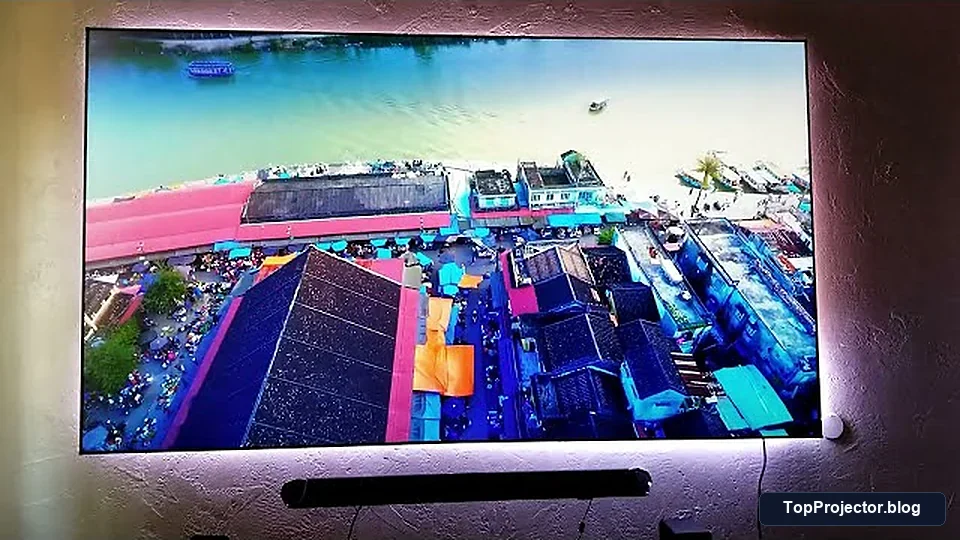
Wemax utilizes high-output laser engines that push past 2500 ANSI lumens easily. This aggressive punch cuts through moderate living room daylight better than older projection competitors.
Vava engineering prioritizes uniform dispersion, yielding wider viewing angles during daytime sports viewing. However, darker ambient conditions remain necessary for optimal perceived contrast ratios.
When pairing ultra-short throw models with a dedicated ALR screen, matching the micro-sawtooth directional filter angle to your exact lens throw is crucial for blocking overhead living-room illumination successfully.
- ALR screen matching is mandatory for daylight
- ANSI lumen output dictates daylight viability
- Off-axis glare degrades dark floor levels
- Analyze ambient light rejection performance carefully
- Match throw distances to screen characteristics
Pitch-Black Theater vs. Living Room Daylight
In controlled basement environments, ambient light concerns disappear. If you need backyard flexibility, consult our best outdoor smart projector guide for high ANSI lumens models built for evening patio movie nights.
Living rooms introduce severe ceiling reflections that wash out bright scenes. Selecting high-gain ambient screens helps preserve image punch for daytime casual television viewing.
- Basement control eliminates ceiling reflections
- Ambient light destroys native black depth
Optimizing Fresnel Versus Lenticular Surfaces
Choosing between lenticular and Fresnel ALR screens dictates your off-axis viewing cone. Fresnel surfaces excel at rejecting ceiling light but suffer from narrow horizontal angles in bright rooms.
- Pair 0.4 throw ratios with ceiling-rejecting material
- Verify ambient gain ratings remain near 1.0 to 1.2
Analyzing Black Levels and Shadow Detail Reproduction
Achieving deep black levels remains difficult for ultra short throw optics. Both brands utilize ALPD laser technology to dynamically modulate light output during dark movie sequences.
Wemax displays tighter dark-scene clipping, preserving critical shadow details in sci-fi films. Their optical engine extracts superior native contrast performance from standard white walls.
Vava units occasionally elevate black floors during mixed-lighting scenes. Before mounting your display, use our screen size and viewing distance tool to optimize viewing angles and recover critical shadow detail.
Native contrast performance heavily dictates shadow recovery during dark cinematic sequences. Achieving deep black floors requires robust laser dimming algorithms paired with quality DMD chipsets to minimize blooming artifacts.
- ALPD laser modulation aids dynamic contrast
- Shadow clipping impacts dark cinematic scenes
- Manual calibration restores lost detail
- Evaluate native contrast before dynamic dimming
- Inspect shadow details in dark movie scenes
Dark-Scene Performance in Cinematic Content
Cinematic immersion depends heavily on low black floor measurements. Wemax maintains superior dark-room shadow depth compared to Vava's slightly elevated baseline luminance.
Evaluating high-contrast test patterns reveals subtle grayscale gradation differences. Professional calibrators often prefer the out-of-the-box grayscale tracking offered by Wemax hardware.
- Grayscale gradation defines shadow realism
- Baseline luminance impacts nighttime viewing
Dynamic Laser Modulation Pitfalls
Aggressive black-level enhancement often crushes delicate near-black gradients. Calibrating gamma curves near 2.4 target performance helps preserve essential shadow details without washing out highlight brights.
- Disable aggressive dynamic iris modes for accurate rec.709 tracking
- Inspect dark scene clipping using standard PLUGE test patterns
Peak Brightness and High Dynamic Range Capabilities
High dynamic range processing requires sustained peak luminance output to map highlights accurately. Wemax frequently measures higher in raw ANSI lumen bench tests.
Vava relies on balanced color science rather than raw luminance brute force. Their tone mapping preserves highlight details without clipping bright clouds in HDR streams.
Laser phosphor engines degrade gradually over operating hours, much like the hardware praised in our Epson EpiqVision EF12 review. Both options guarantee extended lamp lifespans exceeding twenty-five thousand hours.
Measuring real-world ANSI lumens reveals significant variance from manufacturer claims. Achieving true HDR tone-mapping demands at least 2,000 calibrated lumens to handle wide color spaces on large projection screens.
- HDR tone mapping preserves bright highlights
- Laser degradation occurs over long hours
- ANSI lumen benchmarks vary by mode
- Test peak white outputs under controlled conditions
- Verify high dynamic range tracking capabilities
Evaluating HDR Tone Mapping Accuracy
Complex HDR metadata requires agile processor handling inside the chassis. Wemax aggressively drives white levels to maximize visual impact during explosive cinematic action sequences.
Vava adopts a conservative approach that avoids blooming artifacts. Viewers watching movies in dark rooms will appreciate this restrained, accurate highlight luminance control.
- Metadata handling dictates HDR realism
- Highlight blooming distorts bright scenes
Static Versus Dynamic HDR Tone Mapping
Processing high dynamic range content relies heavily on onboard video chips. Static metadata often clips bright highlights, requiring manual laser power adjustments to optimize peak white luminance.
- Calibrate white balance targets around 6500K color temperature
- Avoid maximum laser settings if fan noise exceeds 32 decibels
Throw Ratios and Geometric Installation Precision
Ultra short throw projectors demand precise wall positioning. Wemax features a short 0.23:1 throw ratio, projecting a massive one-hundred-inch diagonal image from minimal distances.
Vava matches similar placement geometry, requiring roughly seven inches from the rear chassis. Achieving perfect geometric edge alignment takes patience with motorized focus controls.
Manual focus rings are entirely absent on modern laser television models. Instead, users rely on digital 8-point correction grids to square up crooked images.
Ultra-short throw geometry leaves zero room for cabinet alignment errors. Achieving a pristine 100-inch diagonal image requires exact wall spacing down to the millimeter alongside rigid fixed-frame screens.
- 0.23:1 throw ratio saves valuable space
- Digital 8-point correction aids setup
- Rear wall distance is critical for alignment
- Measure physical cabinet placement precision
- Align projection geometry without digital correction
Achieving Perfect Focus Uniformity
Laser focus uniformity can fluctuate near the extreme top screen corners. Wemax optics maintain sharp text rendering across the entire native display canvas.
Vava units require careful leveling cabinet adjustments to eliminate corner blurring. Securing a completely flat optical plane prevents persistent focus drift over time.
- Focus uniformity ensures sharp text
- Cabinet leveling prevents corner blur
Mastering Manual Focus and Optical Distortion
Digital keystone correction severely degrades native resolution. You can map exact placement using our panasonic projector distance calculator to achieve perfect pixel grid geometry without optical distortion.
- Measure exact lens-to-screen distance for 0.23 throw ratios
- Avoid digital image warping to preserve sharp 4K scaling
Color Gamut Coverage and Out-of-the-Box Accuracy
Accurate color reproduction defines high-end home theater projection gear. Both brands cover extensive color spaces, pushing past Rec. 709 targets into wide DCI-P3 territory.
Vava delivers exceptional skin tone neutrality right out of the box. Movie enthusiasts will notice minimal green push during standard cinematic color temperature presets.
Wemax leans toward punchy, vibrant saturation that flatters animated content. Professional calibrators can easily tame this exuberance using comprehensive color management systems.
Achieving accurate cinematic color requires robust RGB color wheel designs or multi-laser diode engines. Out-of-the-box presets frequently exhibit excessive blue bias, demanding precise white balance adjustments for natural skin tones.
- Wide DCI-P3 color gamut coverage
- Skin tone accuracy out-of-the-box
- Color management system user controls
- Assess factory color accuracy before calibration
- Examine color space coverage metrics thoroughly
Cinematic Color Calibration Deep Dive
Fine-tuning grayscale tracking requires dedicated calibration software and test patterns. Vava provides accessible CMS menus that simplify manual color balancing for hobbyists.
Wemax supports advanced multi-point white balance adjustments for extreme accuracy. Cinephiles seeking absolute reference standards will appreciate this granular calibration flexibility.
- Grayscale tracking needs dedicated tools
- White balance adjustments ensure fidelity
Rec.2020 Color Space Limitations
While manufacturers advertise wide color gamut coverage, achieving full DCP-P3 calibration often requires sacrificing total light output through specialized internal color filters.
- Target average Delta E under 3 for reference accuracy
- Manage laser phosphor shifts by scheduling periodic re-calibrations
Input Lag and Motion Handling for Gamers
Modern ultra short throw projectors increasingly cater to living room gamers. Input lag measurements dictate whether fast-paced competitive shooters remain playable on giant screens.
Wemax keeps input latency low when game mode is explicitly enabled. This ensures responsive controls during high-framerate console sessions on PlayStation and Xbox hardware.
Vava exhibits slightly higher latency figures, favoring casual gaming applications. Motion interpolation algorithms help smooth out panning shots during cinematic narrative playthroughs.
Competitive gaming demands minimal input latency to ensure responsive controller feedback. Premium laser projectors utilize dedicated low-latency game modes to drop response times below 50 milliseconds at 4K.
- Low input latency for responsive gaming
- Motion interpolation smoothing effects
- Dedicated game mode settings reduce lag
- Test input lag performance across resolutions
- Evaluate motion handling during fast gaming
Motion Handling in Fast-Action Sports
Fast panning shots test the limits of single-chip DMD micro-mirrors. Wemax processes rapid motion cleanly, minimizing judder during football and soccer broadcasts.
Vava implements variable frame interpolation to reduce perceived motion blur. Sports fans will benefit from dialing in moderate processing settings during live weekend broadcasts.
- Micro-mirror speed affects motion
- Frame interpolation reduces blur
Frame Interpolation and Artifact Management
Smoothing out fast camera pans requires effective MEMC processing. Moderate settings reduce motion judder successfully, but aggressive interpolation introduces noticeable soap opera effects and distracting halo artifacts.
- Verify native refresh rates support 1080p at 120Hz inputs
- Disable heavy motion processing during fast-paced competitive gaming sessions
Physical Chassis Design, Acoustics, and Maintenance
Living room aesthetics demand quiet fan operation and sleek enclosures. Both projectors generate moderate acoustic noise when laser light engines run at maximum output.
Vava utilizes a stylish, fabric-wrapped front grille that blends into decor. Integrated smart TV interfaces provide seamless streaming access without external media sticks.
Wemax focuses on durable industrial housing designed for heavy daily usage. Removable dust air filters protect the optical light path from household debris.
Chassis thermal management directly impacts operating noise levels during extended viewing sessions. Well-designed cooling pathways maintain whisper-quiet fan speeds while preventing dangerous laser diode overheating inside enclosed media consoles.
- Quiet cooling fan noise profiles
- Integrated smart TV streaming apps
- Removable dust air filters for longevity
- Monitor operating noise levels under load
- Inspect chassis ventilation and airflow paths
Long-Term Reliability and Fan Noise
Fan acoustics remain noticeable during quiet cinematic dialogue scenes. Placing the unit inside an open-backed media console helps dampen operating noise effectively.
Regular maintenance ensures sustained brightness over years of operation. Cleaning intake filters prevents overheating and preserves the delicate laser diode lifespan.
- Fan acoustics impact quiet scenes
- Filter cleaning prevents overheating
Dust Ingestion and Optical Engine Sealing
Sealed optical light engines prevent microscopic dust particles from accumulating on internal mirrors. Routine filter maintenance ensures long-term brightness stability and prevents permanent spots on projection surfaces.
- Inspect and clean washable intake filters every three months
- Ensure adequate rear ventilation clearance exceeding six inches
Smart TV Platforms and Built-In Streaming Options
Built-in smart platforms eliminate the need for external media streaming devices. Both Vava and Wemax integrate proprietary interfaces to access popular apps like Netflix and Prime.
Processing speeds dictate how smoothly menus navigate during heavy application switching. Wemax responsive software minimizes frustrating lag when launching high-resolution HDR video streams.
Vava provides straightforward casting options for mobile phones and tablet devices. Users wanting robust app availability often pair these laser TVs with dedicated streaming boxes.
Integrating modern streaming interfaces simplifies home theater setups by eliminating external media player requirements. However, proprietary smart platforms often lack critical licensing for major apps like Netflix native playback.
- Proprietary smart TV software platforms
- External streaming box device pairing
- Mobile device casting compatibility
- Evaluate smart platform stability and app stores
- Test external media streaming integration
Interface Speed and App Compatibility
App store restrictions can occasionally limit native streaming application downloads. Connecting an external Apple TV or Roku device solves potential software compatibility issues.
Seamless Wi-Fi and Bluetooth connectivity ensure reliable wireless audio streaming performance. Both manufacturers prioritize robust network cards to support uninterrupted 4K video playback.
- App restrictions require external boxes
- Wireless connectivity ensures stable 4K
Audio Pass-Through and eARC Performance
Advanced home theater integration relies heavily on robust HDMI eARC connectivity. Passing lossless Dolby Atmos audio tracks to dedicated AV receivers requires stable bandwidth transmission without noticeable audio delay.
- Verify support for high-bitrate Dolby TrueHD passthrough
- Connect dedicated streaming sticks if internal firmware lacks HDR updates
Frequently Asked Questions
Can I use Vava and Wemax projectors on a plain white wall?
While both units project onto standard walls, pairing with an ALR screen is strongly recommended to block overhead ceiling light. Without specialized rejection material, daytime contrast suffers significantly across all ultra short throw models.
Do these laser TVs require external sound systems for good audio?
Both brands feature built-in Harman Kardon or custom stereo speakers that deliver surprisingly robust dialogue clarity. However, audiophiles should still connect an external Dolby Atmos soundbar for true theater-grade immersion.
What is the expected lifespan of the laser light source?
The solid-state laser phosphor engines rated in these projectors typically exceed twenty-five thousand hours of continuous operation. This equates to decades of daily movie watching without ever needing expensive bulb replacements.
Are these laser projectors suitable for competitive video gaming?
They handle casual console gaming exceptionally well when low-latency game modes are enabled. Hardcore competitive players may still notice slight input lag compared to dedicated gaming monitors.
How difficult is the physical installation process for beginners?
Initial placement requires careful distance calibration from the rear wall to fill your screen canvas. Utilizing digital 8-point geometric correction makes squaring up the image straightforward for most users.