Projector vs. Tv For Apartment: Which Wins for Your Room?
Choosing between a large projection setup and a modern flat-panel display requires balancing room ambient light, throw geometry, and permanent mounting constraints in compact living spaces.
Projectors dominate immersive cinematic viewing in controlled light, but TVs easily win for bright urban apartments with zero setup complexity.
Compare full category rankings in our Best Small Movie Projector: Top Picks for Portable Cinema.
Side-by-Side Specification Breakdown
| Criteria | Projector | Tv For Apartment | Edge |
|---|---|---|---|
| Ambient Light Rejection | Requires specialized ALR screens or blackout curtains | Emits native light easily combatting daylight | Tv For Apartment |
| Black Levels & Perceived Contrast | Vulnerable to ambient bounce and grey floor rise | Delivers deep OLED blacks or strong local dimming | Tv For Apartment |
| Peak Brightness & HDR Punch | Typically ranges from 1500 to 3000 ANSI lumens | Easily exceeds 1000 nits for specular highlights | Tv For Apartment |
| Screen Size & Immersion | Effortlessly scales from 100 to 150 inches diagonal | Fixed physical size capped around 85 inches | Projector |
| Viewing Angles & Uniformity | Dependent on gain curves and viewing cone geometry | Provides ultra-wide off-axis viewing without falloff | Tv For Apartment |
| Gaming Motion & Input Lag | Modern lasers achieve low 15ms latency at 4K/60Hz | Features lightning-fast 4ms response times and 120Hz | Tv For Apartment |
| Room Setup & Maintenance | Demands precise alignment, throw distance, and ceiling mounts | Simple tabletop placement or standard VESA wall hanging | Tv For Apartment |
Ambient Light Behavior and Optical Surface Rejection
Evaluating ambient light in compact apartments requires analyzing strict lumen output against specialized ALR screens. Standard matte white surfaces wash out immediately under uncontrolled daytime window light.
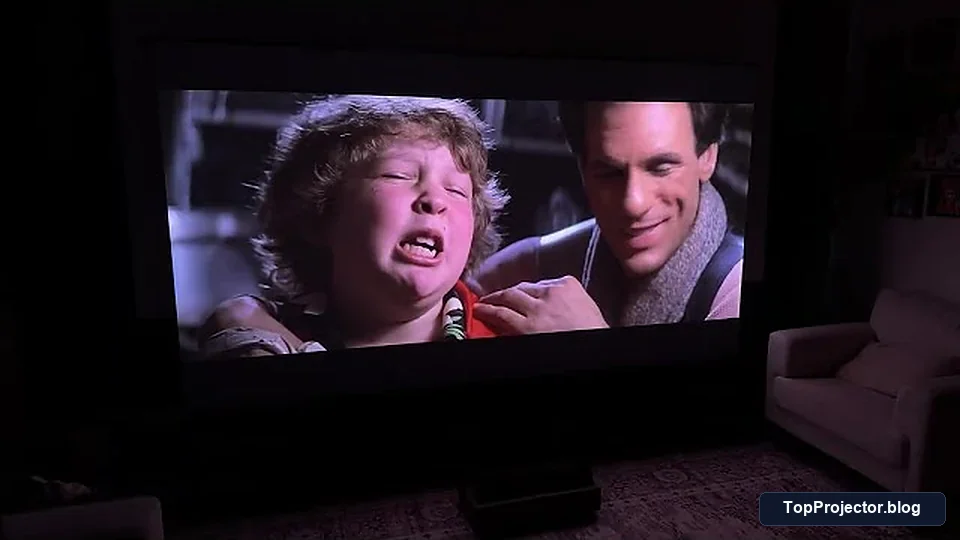
Traditional long-throw units struggle in bright spaces unless paired with high-gain angular reflective material. Conversely, modern ultra-short-throw models leverage micro-serrated surfaces rejecting overhead ceiling illumination effectively.
Ambient light destroys standard white walls by washing out black floors. Evaluating our best small movie projector options helps you find bright portable solutions featuring a 0.8 gain ALR screen.
Traditional flat-panel TVs maintain high perceived contrast via glossy glass panes. However, aggressive reflections from nearby apartment windows often create glaring hot spots during midday viewing sessions.
- Standard white walls ruin daytime contrast levels.
- ALR surfaces redirect ambient light away from viewers.
- Urban apartments with large windows demand high lumens.
- Specialized ambient light rejecting coatings maintain saturation.
- Matte optical surfaces diffuse stray window glare effectively.
Daylight Living Rooms vs Blackout Bedrooms
Urban living rooms flooded with natural sunlight destroy native contrast ratios on basic projection fabrics. You need at least 2500 ANSI lumens paired with optical rejection cloth.
Dedicated bedrooms with blackout cellular shades allow cinematic projection setups to thrive without suffering from washed-out grayscale tracking or severe shadow crushing during daylight hours.
- Sunlit rooms require dedicated optical rejection fabric.
- Blackout shades transform standard bedrooms into cinemas.
Evaluating Angular Reflection Characteristics
Specialized Fresnel ALR materials block overhead apartment lighting effectively. Selecting a 100-inch diagonal surface guarantees optimal light rejection while maintaining wide horizontal viewing angles for guests.
- Must match throw ratio precisely to avoid hot-spotting.
- Ceiling light rejection fabrics eliminate overhead apartment glare.
Black Level Performance and Native Contrast Ratios
Achieving inky black floors remains a primary engineering challenge for projection optics operating in reflective rooms. Stray light bouncing off white apartment ceilings washes out shadow detail instantly.
Flat-panel displays utilize self-emissive pixels or advanced local dimming zones to maintain profound black levels. This yields superior ANSI contrast vital for realistic cinematic depth.
OLED televisions achieve absolute zero-nit blacks through self-emissive pixels. Conversely, high-end three-chip DLP projectors struggle with stray internal light, yielding elevated black floors in untreated white rooms.
Dynamic iris algorithms help bridge this optical gap during dark cinematic sequences. Look for units boasting a 500,000:1 dynamic contrast ratio to preserve shadow detail in moody apartment dens.
- Reflective apartment walls degrade projection black floors.
- OLED and mini-LED panels offer vastly superior contrast.
- Laser dimming helps high-end projectors mitigate native limits.
- Dark room painting enhances perceived projection black levels.
- Laser dimming algorithms improve dark-scene performance.
Shadow Detail and ANSI Contrast Realities
Discerning dark cinematic scenes requires strong native contrast exceeding 2000:1 natively. Many budget models rely on dynamic iris adjustments that introduce pumping artifacts.
Flat-panel televisions deliver punchy shadow graduation without suffering from ambient room wash, preserving fine dark-scene textures even with apartment lamps turned fully on.
- Dynamic iris manipulation can cause visible brightness shifts.
- Flat panels preserve fine shadow details in lit rooms.
Dynamic Iris Versus Static Native Panels
Native LCOS optical engines deliver superior foundational black levels without mechanical iris noise. Following our guide on laptop projection helps you optimize signal handling for maximum ANSI contrast.
- Static native contrast dictates low-light shadow depth.
- Matte black paint prevents light bounce diffusion.
Peak Brightness, HDR Impact and Color Gamut Coverage
High dynamic range content demands intense specular highlights that push display optics to their absolute limits. Projectors must balance color accuracy against maximum lumen output carefully.
Flat panels excel at delivering high sustained nits directly to the viewer's eyes. This creates striking HDR punch that smaller projection lamps struggle to replicate fully.
Modern living room projectors push past 3000 ANSI lumens to combat ambient sunlight. Yet, real-world HDR mapping often compresses high-nit highlights compared to modern mini-LED living room televisions.
Wide color filters expand DCI-P3 coverage significantly during calibration. Unfortunately, engaging these cinematic filters usually sacrifices vital peak brightness, reducing overall HDR punch on massive projection screens.
- HDR metadata requires high peak luminance capabilities.
- Projector lamps dim gradually over thousands of operating hours.
- Flat panels maintain consistent calibration throughout their lifespan.
- Laser light engines maintain consistent color output over time.
- Color volume impacts vibrant daylight performance heavily.
Wide Color Filters and Laser Phosphor Engines
Modern triple-laser engines cover over 95 percent of the BT.2020 color space. Engaging wide color filters inevitably drops total lumen output on projection systems.
Quantum dot televisions achieve vibrant wide color gamuts while maintaining blistering peak brightness levels, ensuring HDR highlights pop with vivid realism in any room.
- Triple-laser engines deliver expansive cinematic color gamuts.
- Color filters reduce overall projector lumen output significantly.
Tone Mapping Performance in Small Spaces
Dynamic tone mapping processors analyze incoming metadata frame by frame. This ensures your 120-inch projection setup displays accurate luminance without clipping bright clouds or sunlit skies.
- Verify Rec.2090 color space coverage specs before buying.
- Avoid eco-mode lamp settings during daytime viewing.
Screen Scaling, Throw Geometry and Viewing Distances
The undisputed superpower of projection technology lies in massive image scaling capabilities. Apartment dwellers can easily enjoy a 120-inch diagonal cinematic view from short distances.
Flat panels are strictly limited by rigid physical dimensions and freight delivery constraints. Moving an 85-inch television into a tight urban apartment stairwell is exceptionally difficult.
Ultra-short throw laser models sit mere inches from the projection surface. This clever 0.21 throw ratio eliminates shadow interruptions in cramped apartment layouts lacking deep rooms.
Traditional long-throw units require substantial physical distance to project massive cinematic diagonals. Utilizing our screen size and viewing distance calculator prevents expensive mounting errors and frustrating optical alignment issues.
- Projectors deliver massive cinematic immersion affordably.
- Flat panel sizes are capped by physical transport limits.
- Ultra-short-throw units bypass long room throw restrictions.
- Motorized tensioned screens prevent corner curling.
- Check cabinet depth requirements for console placement.
Calculating Throw Ratios for Compact Floor Plans
Standard throw ratios require significant distance between the lens and screen surface. Ultra-short-throw projectors sit mere inches from the wall, fitting tight apartment layouts.
Measuring your specific room geometry prevents costly mounting errors when planning a large screen upgrade inside a restricted urban living space or studio apartment.
- UST models fit snugly against media console cabinets.
- Long-throw units require unobstructed ceiling or table space.
Calculating Lens Shift and Keystone Limits
Physical optical lens shift preserves native pixel geometry perfectly. Avoid digital keystone correction whenever possible because it permanently degrades resolution and introduces visible compression artifacts.
- Measure throw distance from lens glass to wall.
- Vertical lens shift simplifies awkward ceiling placements.
Motion Handling, Input Latency and Gaming Responsiveness
Modern gaming requires ultra-low input lag and fast response times to ensure competitive precision. Premium projectors now feature dedicated game modes dropping latency below 20 milliseconds.
Televisions remain the definitive choice for hardcore gamers demanding 4K at 120Hz, variable refresh rates, and lightning-fast pixel response times without processing artifacts.
Competitive gamers require ultra-low input lag for twitch-reflex titles. Modern gaming projectors now achieve a stellar 4ms response time at 240Hz, rivaling dedicated high-refresh desktop monitors.
Frame interpolation settings smooth out rapid cinematic camera pans effortlessly. However, purists should disable these processing modes to avoid introducing undesirable artifacting during fast-paced action sequences.
- Laser projectors handle casual console gaming brilliantly.
- Televisions offer superior high-refresh-rate gaming features.
- Motion interpolation settings can introduce unwanted soap opera effects.
- Low latency modes bypass complex image processing.
- High refresh rates reduce motion blur significantly.
Input Lag and High Frame Rate Performance
Competitive gaming demands rapid frame delivery and flawless synchronization. Advanced gaming TVs support native 144Hz refresh rates with near-zero latency for seamless inputs.
Projectors have closed the performance gap remarkably well, but high-end flat panels still dominate multi-player fast-twitch gaming scenarios requiring absolute frame accuracy.
- Low input lag keeps competitive twitch gaming responsive.
- High refresh rates eliminate screen tearing during motion.
High Refresh Rate Gaming Performance
HDMI 2.1 bandwidth capability enables uncompressed 4K gaming at 120 frames per second. Ensure your chosen display supports VRR to eliminate screen tearing during intense multiplayer gaming sessions.
- Check input lag metrics specifically at native resolutions.
- Auto Low Latency Mode streamlines console switching.
Installation Challenges, Mounting Realities and Maintenance
Apartment rental agreements often forbid drilling heavy ceiling mounts or running concealed cables through drywall. This makes traditional long-throw projectors difficult to install cleanly.
Flat panel televisions offer straightforward setup via standard media stands or lightweight wall brackets, minimizing permanent structural alterations in rented urban properties.
Ceiling mounting a heavy projection system requires locating structural concrete studs. Apartment renters must prioritize lightweight ultra-short throw consoles that sit safely on standard media furniture.
Solid-state laser light sources eliminate expensive annual lamp replacement routines. These robust engines provide over 20,000 hours of operation, ensuring maintenance-free performance throughout your lease term.
- Rental apartments restrict permanent ceiling drilling.
- Tabletop UST projectors bypass complex installation hurdles.
- Lamp replacements require long-term maintenance budgeting.
- Laser optics reduce total cost of ownership.
- Dust filters require periodic cleaning in urban apartments.
Maintenance Schedules and Laser Engine Lifespans
Traditional lamp-based projectors require bulb swaps every few thousand hours. Modern solid-state laser engines eliminate this chore by delivering 20,000 hours of reliable operation.
Televisions require virtually zero maintenance beyond occasional screen cleaning, making them exceptionally reliable plug-and-play entertainment hubs for busy apartment residents.
- Solid-state lasers offer maintenance-free operational longevity.
- Traditional lamps degrade and demand periodic replacement.
Thermal Management and Acoustic Noise
Powerful cooling fans prevent internal optical degradation during long movie marathons. Select models emitting under 26 decibels of noise to avoid distracting hums during quiet dialogue scenes.
- Clean intake air filters every three operating months.
- Ensure adequate ventilation clearance around console chassis.
Decisive Urban Scenarios: Which Display Wins Your Space?
Choosing the ideal display depends entirely on your daily lighting conditions and media consumption habits. Dedicated movie enthusiasts prioritizing cinematic scale will lean heavily toward projection.
Casual viewers watching daytime news, sports, and streaming shows in bright rooms will find a modern flat panel infinitely more practical and visually punchy.
Bright urban apartments with floor-to-ceiling windows strongly favor high-nit mini-LED televisions. Conversely, dedicated dark media dens reward large projection setups with unmatched cinematic immersion and scale.
Balancing your specific room lighting conditions dictates ultimate buyer satisfaction. Assess your daily viewing habits carefully before investing in permanent hardware for your compact living environment.
- Cinematic immersion favors large projection setups.
- Daytime casual viewing strongly favors bright televisions.
- Room geometry dictates your ultimate hardware winner.
- Evaluate windows and lighting before purchasing.
- Match display tech directly to primary room usage.
Final Verdict for Apartment Living Spaces
If your apartment features controlled lighting and you crave a true 100-inch theater experience, a modern laser projector delivers unmatched immersion.
For bright urban condos with intense sunlight and varied daily usage, a high-quality flat-panel TV remains the superior, hassle-free choice.
- Controlled rooms reward massive projector screens.
- Bright urban spaces demand reliable television brightness.
Final Decision Matrix for Renters
Renters valuing flexible layouts should explore our BenQ GP500 review detailing smart laser configurations. Homeowners with controlled lighting can permanently install an acoustically transparent screen for hidden multi-channel speakers.
- Prioritize TV panels for sunlit daytime media consumption.
- Choose projection systems for dedicated evening movie nights.
Frequently Asked Questions
Can I use a projector in a bright apartment living room?
Yes, but you must pair it with a high-lumen laser engine and an ambient light rejecting screen. Without these optics, daytime light severely washes out contrast and color saturation.
Are ultra-short-throw projectors better for small apartments?
They sit inches from the wall, eliminating complex ceiling mounting and cable management. This makes them ideal for rental spaces with limited floor plans.
Do televisions offer better black levels than projectors?
Televisions deliver vastly superior native black levels and local dimming control. Projectors struggle with ambient light bouncing off room walls to raise the black floor.
How long do modern projector light sources last?
Solid-state laser and LED engines easily last up to 20,000 hours. This removes the frequent bulb replacement hassle associated with older lamp-based systems.
Which option is better for apartment gaming?
Televisions remain superior for gaming due to extremely low input lag, rapid pixel response times, and high refresh rates. However, modern laser projectors handle casual console gaming well.