Projector Screen Paint vs. White Wall: Which Wins for Your Room?
Choosing between specialized optical paint and a standard painted wall dictates your image contrast. We analyze how reflectivity and ambient light handling impact your home theater.
Specialized projector screen paint easily wins for dedicated rooms and ambient light control, while a plain white wall only suffices for temporary, ultra-low-budget setups.
Compare full category rankings in our Best Projector Under 1000: Top Home Cinema Picks.
Side-by-Side Specification Breakdown
| Criteria | Projector Screen Paint | White Wall | Edge |
|---|---|---|---|
| Ambient Light Rejection | Moderate to High ALR properties | Zero ambient light rejection | Projector Screen Paint |
| Black Levels & Perceived Contrast | Deep blacks with 0.8 to 1.1 gain optimization | Washed out blacks and low contrast | Projector Screen Paint |
| Peak Brightness & HDR Punch | Controlled reflection preserving specular highlights | Scattered light losing punch and pop | Projector Screen Paint |
| Screen Size & Immersion | Custom painted boundaries up to 150 inches | Entire wall utilization without masking | Projector Screen Paint |
| Viewing Angles & Uniformity | Wide 160-degree viewing cones without hot-spotting | Prone to uneven texture and hot spots | Projector Screen Paint |
| Gaming Motion & Input Lag | Maintains native projector response times | No electronic processing or added lag | Tie |
| Room Setup & Maintenance | Requires precise priming, sanding, and rolling | Zero installation effort if already painted | White Wall |
Surface Micro-Texture and Optical Reflection Physics
Standard interior latex wall paint scatters light indiscriminately in every single direction. This diffuse reflection destroys native contrast ratios from modern 4K DLP projectors in typical living spaces.
Projector screen paints utilize specialized metallic or reflective flakes suspended in an acrylic base. These engineered compounds actively direct photon beams back toward your seated audience for higher perceived gain.
Wall texture irregularities like roller stipple or drywall imperfections create annoying visual artifacts. Screen paint formulas self-level much better to eliminate unwanted geometric distortion and distracting artifacts.
Standard latex paints create microscopic peaks that cause specular reflection, scattering light randomly. Specialized screen coatings utilize reflective glass beads to bounce 1.1 gain back toward seated viewers.
- Standard paint scatters lumens randomly across the room
- Optical paint micro-particles direct light toward viewers
- Specialized formulas eliminate drywall stipple and bumps
Understanding Gain and Reflection Angles
A standard flat white wall typically exhibits a gain rating around 0.8 to 0.9. This absorbs valuable lumens rather than returning them to your optical sweet spot.
Quality screen paints target a neutral 1.0 to 1.1 gain sweet spot. Once you choose your paint, check our screen size calculator to map proper seating distances.
- Standard walls absorb vital projector lumens
- Screen paint optimizes reflection without narrowing angles
Sub-Pixel Defocusing
Ultra-short throw projectors require ultra-flat surfaces. Coarse roller textures introduce unwanted moire patterns on 4K pixel grids, completely degrading native sharpness metrics during critical high-definition evaluations.
Black Level Retention and Contrast Performance
Achieving true cinematic black levels requires a surface that absorbs stray ambient room light. White walls bounce ambient light right back into your eyes, severely crushing shadow detail.
Grey-tinted projector screen paints absorb ambient room illumination while preserving bright white elements. For daytime viewing realities, consult our outdoor projector guide to manage challenging outdoor environments.
When pairing a high-end laser projector with a grey optical paint, dark cinematic scenes retain rich depth. A plain white wall makes those exact same dark sequences look milky grey.
Painted drywall absorbs very little ambient bounce, reflecting stray light back across the entire room. This washes out dark scenes, dropping ANSI contrast ratios below 150:1 overall.
- White walls reflect ambient light and ruin shadow details
- Grey-tinted optical paints preserve deep cinematic blacks
- Dynamic contrast increases exponentially with proper surface tint
Managing Light Scatter in Mixed Environments
Stray light bouncing off white side walls washes out projected blacks. Specialized screen paint minimizes secondary reflections bouncing back onto the projection surface.
Darker ambient light rejecting paint formulas absorb off-axis illumination effectively. Your projector maintains rich contrast even with some living room lamps turned on.
- Secondary wall reflections destroy perceived contrast
- ALR paint absorbs off-axis room illumination
Angular Light Rejection
High-contrast grey paints improve black levels by absorbing off-axis light. However, they simultaneously reduce peak white output, requiring 3000 ANSI lumens to maintain vibrant daytime HDR highlights.
Ambient Light Handling and Daylight Viewing
Daylight destroys standard white wall projections by overwhelming the low lumen output. Images instantly look washed out, pale, and completely devoid of punchy color saturation.
Ambient light rejecting screen paints use microscopic directional filters. These advanced coatings reject ceiling light while reflecting your ultra-short throw projector beam forward.
Evaluating lumens per square foot proves essential when battling daytime windows. Screen paint maximizes your projector's output efficiency much better than untreated drywall ever could.
Living rooms with large windows challenge basic white walls severely. Painted surfaces lack directional filters, resulting in washed-out images when ambient light exceeds 50 lux levels.
- Daylight completely washes out untreated white walls
- Microscopic filters reject overhead environmental lighting
- Optical coatings maximize projector lumen efficiency
Living Room Versus Dedicated Theater Optimization
Dedicated windowless home theaters can utilize high-gain white screen paints safely. Living rooms demand specialized grey ambient light rejecting formulas to fight daylight.
Matching your paint choice to room lighting prevents disappointing washout. Always assess your peak ambient lux levels before purchasing expensive optical coating gallons.
- Windowless rooms benefit from high-gain white surfaces
- Living rooms require specialized ambient light rejection
Optical Rejection Layers
Premium ambient light rejecting screens use layered microscopic louvers. White walls completely lack this physical hardware, failing to reject overhead ceiling light while maintaining wide viewing angles.
Color Fidelity, HDR Tone Mapping, and Saturation
Accurate color reproduction depends on a neutral white reference point. Cheap white wall paints often feature blue or yellow undertones that distort skin tones.
High-grade projector paints maintain strict neutral color temperature coordinates. Your projector's HDR tone mapping shines through without unwanted color shifts or tinting.
Wide color gamut projectors demand immaculate surface neutrality to display cinematic palettes correctly. Screen paint delivers predictable color accuracy across the entire visible spectrum.
Standard interior paints often contain brightening agents that shift white balance toward harsh blue tones. Accurate color reproduction requires a strict D65 white point calibration baseline.
- Standard wall paints introduce unwanted blue or yellow casts
- Optical screen paints maintain strict neutral color temperatures
- HDR tone mapping requires pristine surface color neutrality
Preserving Specular Highlights in HDR Content
HDR video relies on intense peak brightness for realistic metallic reflections. Screen paint preserves these dazzling highlights without blowing out subtle mid-tone gradations.
White walls scatter bright HDR highlights too broadly across the room. This diffusion robs explosions and sunlit scenes of their intended visual impact.
- HDR video requires precise peak brightness handling
- Wall scatter robs cinematic explosions of visual impact
Dynamic Range Limitation
HDR metadata demands high peak luminance that raw walls struggle to reflect accurately. Without high gain multipliers, specular highlights clip early, reducing perceived dynamic range drastically.
Gaming Motion Clarity and Input Latency Factors
Competitive console and PC gaming requires pristine motion clarity and zero latency. Neither white walls nor screen paints introduce any electronic processing lag whatsoever.
Fast-paced panning shots reveal surface texture flaws immediately. Smooth screen paint prevents distracting texture grain from interfering with your aiming precision.
High refresh rate gaming projectors benefit from clean reflective surfaces. You enjoy crisp motion handling without any optical blurring or distortion from the wall.
Modern gaming projectors push high refresh rates up to 240Hz with minimal display lag. Uneven painted surfaces do not affect hardware latency, but texture blur compromises fast motion.
- Neither projection surface introduces electronic input lag
- Smooth screen paint prevents distracting texture grain
- Fast gaming pans remain sharp and blur-free
High Refresh Rate Performance and Textures
Heavy drywall texture creates micro-distortions during rapid camera movements. Screen paint surfaces provide the ultra-flat finish needed for crisp 120Hz gaming.
Readability of small HUD text improves dramatically on smooth painted screens. Wall bumps no longer blur crucial in-game telemetry numbers.
- Drywall texture causes micro-distortions during fast pans
- Small HUD text remains razor-sharp on optical paint
Sub-Sampling and Pixel Shift
Fast-paced competitive titles rely on crisp pixel tracking. Rough wall textures scatter rapid frame transitions, creating subtle ghosting effects that interfere with aim precision during intense matches.
Installation Complexity, Prep Work, and Maintenance
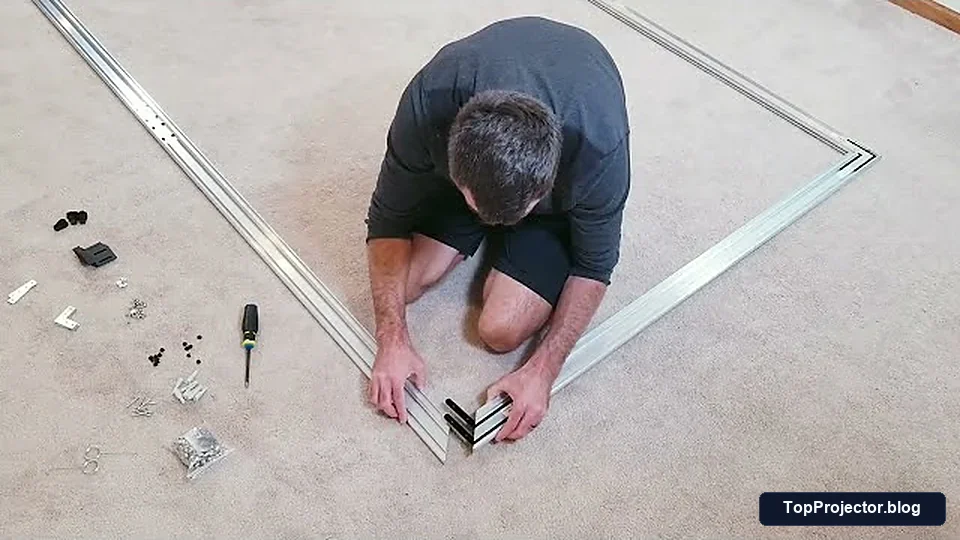
Painting a projection surface demands meticulous wall preparation. You must sand drywall smooth, apply high-adhesion primer, and roll specialized optical paint carefully.
A standard white wall requires zero installation effort if your room is already painted. However, you sacrifice optical performance and accept severe contrast limitations.
Maintenance differs significantly between the two options over time. Screen paint resists yellowing and can be cleaned gently, whereas standard walls smudge easily.
Achieving a smooth projection wall demands extensive sanding, skim coating, and specialized primer layers. Skipping these labor-intensive steps exposes wall imperfections immediately under bright projection beams.
- Optical paint requires extensive sanding and priming
- Standard walls require zero installation effort
- Specialized coatings resist yellowing and cleaning wear
DIY Roll Application Versus Professional Spraying
Achieving a flawless screen paint finish often requires an HVLP paint sprayer. While painting walls, many buyers compare options in our best projector under 1000 guide for optimal home cinema setups.
Taking your time with multiple thin coats ensures an immaculate optical finish. Professional results reward meticulous preparation and steady spray technique.
- HVLP sprayers yield the cleanest optical paint finish
- Multiple thin coats eliminate visible roller marks
Long-Term Durability Metrics
Painted walls accumulate dust and fingerprints easily, requiring careful maintenance without harsh chemical cleaners. Unlike tensioned vinyl screens, painted surfaces degrade over time and resist easy cleaning.
Scenario-Based Verdicts: Choosing Your Ideal Setup
Select dedicated projector screen paint if you want true home theater immersion. For laser clarity, read our complete Anker Nebula Cosmos Laser 4K review before finalizing your setup.
Choose a standard white wall only for temporary backyard movie nights or tight budgets. The severe contrast penalty makes it unsuitable for serious movie enthusiasts.
Investing time in proper optical screen paint transforms your living space. You unlock the full potential of your expensive 4K projector investment instantly.
Dedicated pitch-black home theaters benefit immensely from acoustically transparent woven materials rather than reflective paints. Assess your specific room lighting before committing to a permanent paint job.
- Use screen paint for permanent, high-performance theaters
- Reserve white walls strictly for temporary or budget setups
- Optical coatings unlock your projector's true potential
The Ultimate Cost-to-Performance Reality Check
Screen paint costs significantly more than standard interior latex paint gallons. The dramatic upgrade in contrast and brightness easily justifies the extra expense.
Skipping optical paint leaves performance on the table with premium projectors. Match your screen surface quality to your hardware investment level.
- Optical paint costs more than standard wall paint
- Performance gains easily justify the added investment
Budget vs Performance Matrix
Casual media rooms operate adequately on smooth, neutral-grey painted surfaces. Critical videophiles seeking optimal optical performance must invest in engineered screens featuring verified gain specifications.
Frequently Asked Questions
Can I use regular semi-gloss house paint instead of screen paint?
Regular house paint lacks optical reflective additives and creates severe hotspots. You need specialized screen paint for proper contrast and color accuracy.
Does projector screen paint actually outperform a cheap pull-down screen?
Quality screen paint often outperforms budget vinyl pull-down screens prone to curling. A rigid painted surface guarantees perfect flatness without edge waves.
How difficult is it to apply projector screen paint myself?
Application requires careful sanding, priming, and steady roller technique. Using an HVLP spray gun yields the most professional, texture-free optical finish.
Will a grey paint formula make my bright projector look too dim?
Grey paint absorbs ambient light to dramatically improve black levels. High-output modern projectors easily overcome the slight gain reduction.
Can I paint over textured orange-peel drywall for home theater use?
Textured drywall scatters light and ruins high-resolution sharpness. You must skim coat and sand the wall completely flat first.