Oled vs. Projector For Home Theater: Which Wins for Your Room?
Choosing between flat-panel self-emissive displays and projection optics requires balancing absolute contrast against massive screen scale for your specific room environment.

Choose flat-panel displays for bright living rooms with infinite contrast, but select dedicated projection systems when you demand a cinematic theater-scale image.
Compare full category rankings in our Best Projector With Built In Apps: Top Smart Picks.
Side-by-Side Specification Breakdown
| Criteria | Oled | Projector For Home Theater | Edge |
|---|---|---|---|
| Ambient Light Rejection | Superior native panel filtering | Requires specialized ALR screen fabric | Oled |
| Black Levels & Perceived Contrast | True zero-nit absolute blacks | Raised floor mitigated by laser dimming | Oled |
| Peak Brightness & HDR Punch | High nits on specular highlights | Massive lumen output across giant areas | Projector For Home Theater |
| Screen Size & Immersion | Fixed physical dimensions | Infinite scaling up to 150 inches | Projector For Home Theater |
| Viewing Angles & Uniformity | Perfect off-axis viewing uniformity | Dependent on screen gain and throw angle | Oled |
| Gaming Motion & Input Lag | Sub-10ms lag with 120Hz support | Low latency modes down to 15ms | Oled |
| Room Setup & Maintenance | Simple wall mounting and setup | Complex throw calculations and alignment | Oled |
Ambient Light Behavior and Optical Rejection Performance
Self-emissive technology fights room illumination using high-nit panels, whereas projection systems rely heavily on ambient light rejecting screen materials to preserve contrast under moderate indoor lighting conditions.
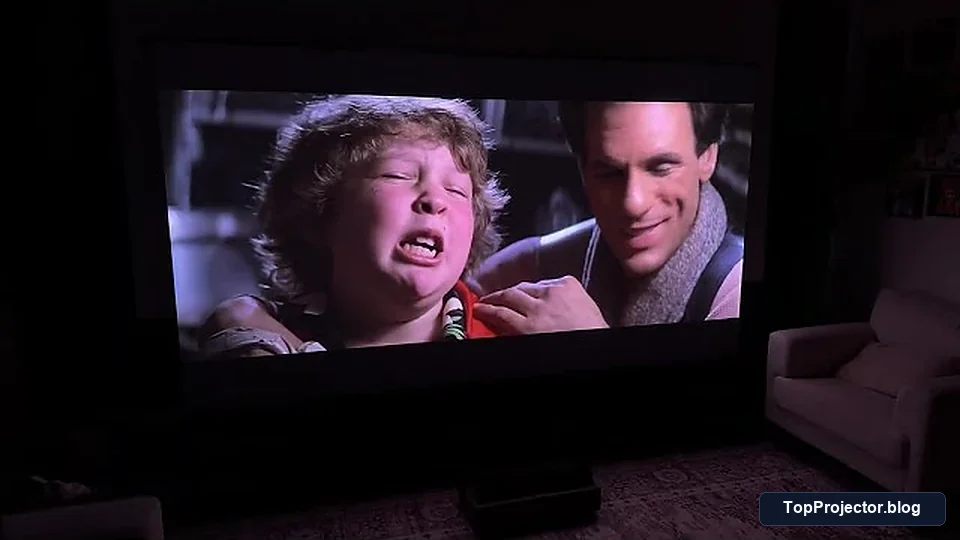
Standard white matte surfaces wash out instantly when ambient photons reflect back into the viewer's eyes, destroying the perceived black floor established by your projector's optical engine.
Specialized angular reflective materials successfully bounce off-axis overhead light away from seated viewers, retaining punchy saturated color output even during daytime viewing sessions.
Standard white walls bounce ambient illumination across the entire room, washing out projected images. ALR screens absorb off-axis light using specialized micro-sawtooth structures, preserving a solid 0.8 gain for daytime viewing.
- Panels maintain punchy contrast in daylight.
- Projectors demand specialized ALR screen fabric.
- Overhead light destroys black level performance.
- Dedicated bat-cave setups neutralize ambient spill.
Pitch-Black Theater vs Living Room Daylight
Controlled optical environments allow high-gain white surfaces to deliver pristine HDR luminance without introducing hotspotting artifacts across the primary seating positions.
Uncontrolled living spaces force optical engineers to compromise peak white output in exchange for tighter ambient rejection filters built directly into modern tensioned screens.
- Dark rooms maximize raw lumen efficiency.
- Living rooms require optical rejection filters.
Ceiling Light Rejecting Mechanics
Ultra-short throw setups require specialized CLR materials featuring layered optical filters. Use our throw distance calculator to map your exact screen placement for a 120-inch diagonal image.
Black Level Reproduction and Shadow Detail Dynamics
Organic pixel technology achieves true zero-nit absolute blacks by completely shutting off individual diodes, yielding infinite native contrast ratios for dark-room cinematic immersion.
Traditional projection relies on transmissive chips that leak minimal stray light, creating raised black floors during dark cinematic sequences. Read the Epson EF-22 review to see modern contrast performance.
Laser phosphor engines mitigate this native limitation via dynamic iris modulation and sophisticated black level algorithms that actively dim output during fade-to-black scene transitions.
Emissive OLED panels achieve true absolute zero black levels by turning off individual pixels. Projectors rely on absolute room darkness and high contrast optics to prevent stray light from destroying dark shadow details.
- Pixel-level dimming yields absolute zero blacks.
- Laser engines use dynamic iris modulation.
- Stray optical light raises projection floor.
- Shadow delineation tests optics precision.
Near-Black Gradation and Dynamic Range
Shadow detail handling separates premium cinema projectors from budget models, testing whether dark gray steps remain distinct without crushing subtle shadow textures.
Self-emissive pixels handle near-black transitions effortlessly, though aggressive local dimming algorithms can occasionally clip critical shadow details in complex HDR motion sequences.
- Premium optics preserve subtle shadow steps.
- Aggressive dimming can crush dark details.
ANSI Contrast Versus Dynamic Iris Systems
Dynamic iris mechanisms physically restrict lamp or laser output during dark movie sequences. This optical adjustment artificially boosts perceived contrast ratios, compensating for native laser projector limitations in mixed lighting environments.
Peak Brightness, HDR Punch and Specular Highlight Control
High-end flat panels deliver blinding specular highlights exceeding one thousand nits on small localized window patterns, maximizing high dynamic range visual impact.
Projection systems distribute their luminous output across massive screen areas, limiting absolute peak nits but delivering incredible immersion through scale rather than intense retinal punch.
Modern solid-state lasers now push past three thousand lumens, giving large screens enough muscle to reproduce convincing HDR tones on surfaces stretching beyond one hundred inches.
OLED displays deliver stunning pixel-level HDR punch, hitting brilliant specular highlights without blooming artifacts. High-end laser projectors compensate using sophisticated tone mapping algorithms to preserve highlight detail across massive projection surfaces.
- Panels excel at intense specular punch.
- Projectors trade nits for massive scale.
- Solid-state lasers boost ambient muscle.
- HDR tone mapping is critical here.
Tone Mapping Performance on Large Screens
Dynamic tone mapping processors evaluate incoming metadata frame by frame, optimizing highlight roll-off for lower projector luminance ceilings without washing out midtones.
Flat panels handle static metadata efficiently due to massive native color volumes and high peak luminance capabilities across every active video frame.
- Processors optimize projector highlight roll-off.
- Panels leverage massive native color volume.
Laser Phosphor Decay and Output Maintenance
Solid-state laser engines gradually lose raw lumen output over thousands of operating hours. Maintaining optimal HDR performance requires regular calibration adjustments and robust thermal management systems inside the projector chassis.
Screen Size Scaling, Viewing Geometry and Spatial Immersion
Flat panel dimensions remain rigidly fixed after unboxing, capping your maximum field of view unless you upgrade the entire physical chassis at considerable financial cost.
Projection optics offer infinite flexibility, letting you easily scale diagonal dimensions from one hundred to one hundred fifty inches to match exact THX viewing angles.
Achieving a true cinematic forty-degree field of view with flat panels requires massive wall space, whereas a motorized drop-down screen vanishes completely when idle.
Cinematic immersion scales dramatically when pushing past the hundred-inch threshold. Projectors effortlessly fill an expansive 135-inch screen, whereas large OLED panels remain financially prohibitive and structurally difficult to install.
- Fixed panels limit maximum diagonal size.
- Projectors scale flexibly for true cinema.
- Motorized screens hide away when idle.
- Viewing geometry dictates optimal distances.
Field of View and Spatial Presence
True cinematic immersion depends heavily on filling your peripheral vision, an optical feat that massive projection screens accomplish far more naturally than compact living-room displays.
Smaller flat panels force viewers to sit closer, which can distort spatial perspective and exaggerate compression artifacts in low-bitrate streaming video content.
- Peripheral filling enhances cinematic presence.
- Closer seating distances can expose compression.
Viewing Angles and Seating Distance Math
SMPTE guidelines recommend a 40-degree field of view for an authentic theatrical experience. Massive projection setups achieve this immersive angle effortlessly from standard living room seating distances without eye fatigue.
Color Accuracy, Wide Color Gamuts and Motion Processing
Professional calibration reveals that modern flat panels effortlessly cover nearly the entire DCI-P3 color space without relying on internal optical filters that reduce overall brightness.
High-end home theater projectors utilize cinema filters to hit wide color gamuts, trading precious ANSI lumens for pure color fidelity during demanding HDR film viewings.
Motion handling varies significantly, as instant pixel response times on flat panels can introduce sample-and-hold stutter, while projection motion appears naturally smoothed by optical persistence.
Modern laser projectors cover wide color gamuts exceeding DCI-P3 specifications using advanced phosphor wheels. OLED self-lit pixels provide flawless color volume saturation even at maximum brightness levels without losing color fidelity.
- Panels hit wide gamuts without losing brightness.
- Projectors require filters for cinema colors.
- Sample-and-hold stutter affects flat panels.
- Optical persistence softens projection motion.
Wide Color Gamut Implementation
Achieving accurate skin tones and saturated primaries requires robust color management systems capable of tracking Rec.709 and DCI-P3 targets with sub-delta errors.
Laser phosphor engines often use multi-primary color wheels or RGB laser diodes to bypass traditional filter penalties, maximizing color brightness saturation across large images.
- Robust CMS ensures accurate skin tones.
- RGB laser diodes bypass filter penalties.
Frame Interpolation and Cinematic Motion
Cinematic 24fps content frequently introduces judder on ultra-fast response OLED panels. Projectors naturally blend motion frames better, though custom black frame insertion modes help reduce motion blur during fast action scenes.
Input Lag, Refresh Rates and Competitive Gaming Performance
Modern flat panels dominate competitive gaming by offering blazing-fast variable refresh rates, ultra-low input lag under ten milliseconds, and crisp 4K 120Hz support.
Home theater projectors have made massive strides, with dedicated gaming modes dropping latency down to fifteen milliseconds while supporting high refresh rate console inputs.
Playing fast-paced shooters on a massive projection screen provides unmatched spatial awareness, though competitive players may still prefer the absolute response speed of panels.
Competitive gaming demands ultra-low latency to ensure instant visual feedback during fast-paced shooters. Premium gaming projectors now feature specialized 4ms input lag modes operating at high 240Hz refresh rates.
- Panels offer sub-10ms input lag.
- Projectors now feature dedicated gaming modes.
- Massive screens enhance shooter awareness.
- High refresh rates reduce motion blur.
Console Gaming on Massive Screens
Immersive RPG titles and racing simulators look astonishing when projected at massive scale, wrapping your entire field of view in vibrant virtual worlds.
Ensure your chosen projector includes low-latency processing pipelines to prevent input delay during twitch-reflex gaming sessions. Read our guide on connecting bluetooth speakers for wireless audio setup.
- Simulators shine on giant projection surfaces.
- Low-latency pipelines prevent controller delay.
HDMI 2.1 Bandwidth and VRR Implementation
Full 48Gbps bandwidth support enables variable refresh rate technology on modern display devices. This hardware capability eliminates screen tearing during intense gaming sessions on both high-end OLEDs and advanced gaming projectors.
Physical Room Requirements, Installation and Maintenance Realities
Flat panels demand simple wall mounting or heavy media console placement, requiring virtually zero ongoing optical maintenance beyond occasional dust-free screen wiping.
Projector setups require precise ceiling mounts, exact throw distance calculations, and careful alignment. Check out our best projector with built in apps picks for streamlined living room entertainment.
Solid-state laser light sources eliminate expensive lamp replacements, offering twenty thousand hours of reliable operation before luminous output degrades significantly over time.
Proper projector installation demands precise ceiling mount placement, lens shift calibration, and throw distance calculations. OLED televisions offer straightforward wall mounting but lack the flexible geometry adjustments of optical lens shift.
- Panels offer straightforward wall mounting.
- Projectors demand precise optical alignment.
- Lasers eliminate frequent lamp swaps.
- Professional calibration optimizes geometry.
Throw Ratios and Placement Flexibility
Ultra-short-throw models sit inches from the wall, making them ideal for traditional living rooms lacking ceiling mounting access.
Standard throw units require long rooms and clear optical paths, rewarding meticulous planning with a true commercial cinema experience at home.
- UST models fit tight living spaces.
- Standard throw requires dedicated room planning.
Acoustic Transparency and Speaker Placement
Dedicated home theaters utilize acoustically transparent woven screens to place front speakers directly behind the image. This precise positioning creates a realistic soundstage alignment that traditional flat panels cannot physically replicate.
Frequently Asked Questions
Which display technology offers better contrast for a dark home theater room?
Self-emissive panels deliver infinite native contrast with absolute zero blacks. However, calibrated laser projectors achieve breathtaking cinematic immersion in pitch-black rooms.
Can I use a home theater projector with ambient daylight in the room?
Standard projectors wash out instantly under bright ambient light. You must pair them with specialized ambient light rejecting screen materials to maintain decent contrast.
Are projectors better than flat panels for competitive console gaming?
Flat panels remain superior for competitive gaming due to sub-ten millisecond response times. Modern gaming projectors offer low input lag, but panels win speed.
How long do laser projector light sources last compared to flat panels?
Solid-state laser engines typically last twenty thousand hours before significant degradation. Premium flat-panel displays boast similar long-term operational lifespans under normal daily use.
What is the main advantage of choosing a projection system over a large panel?
Projection systems provide unmatched screen scaling flexibility from one hundred inches upward. This delivers true cinematic field immersion that flat panels cannot replicate affordably.