Epson Home Cinema 2150 vs. Benq Ht2050A: Which Wins for Your Room?
Choosing between these two legendary home theater projectors means balancing Epson's high-lumen optical engine against BenQ's superior native cinema contrast. Your room lighting and screen size dictate the right choice.
Choose the Benq Ht2050A for dedicated dark-room movie immersion with superior black levels. Opt for the Epson Home Cinema 2150 when tackling ambient light in flexible living room spaces.
Compare full category rankings in our Best Mini Projector For Android Phone: Top Picks for 2026.
Side-by-Side Specification Breakdown
| Criteria | Epson Home Cinema 2150 | Benq Ht2050A | Edge |
|---|---|---|---|
| Ambient Light Rejection | 2500 lumens handles modest light well | 2200 lumens requires controlled lighting | Epson Home Cinema 2150 |
| Black Levels & Perceived Contrast | Standard 3LCD black floor, decent shadow detail | Exceptional native dark chip contrast performance | Benq Ht2050A |
| Peak Brightness & HDR Punch | 2500 ANSI lumens delivers vibrant whites | 2200 ANSI lumens favors accurate cinema tones | Epson Home Cinema 2150 |
| Screen Size & Immersion | Wide zoom ratio aids flexible placement | Short throw optics suit smaller media rooms | Benq Ht2050A |
| Viewing Angles & Uniformity | 3LCD eliminates rainbow artifacts entirely | Single-chip DLP shows minor color separation | Epson Home Cinema 2150 |
| Gaming Motion & Input Lag | Acceptable casual gaming response times | 16ms input lag satisfies competitive players | Benq Ht2050A |
| Room Setup & Maintenance | Optical lens shift aids physical alignment | Stiff manual controls require precise mounting | Epson Home Cinema 2150 |
Evaluating Optical Engine Architecture and Native Contrast
Projector contrast fundamentally defines cinematic immersion, separating muddy gray shadows from stark twilight scenes. Understanding how these distinct light engines handle black floors reveals critical performance variances during dark movie sequences.
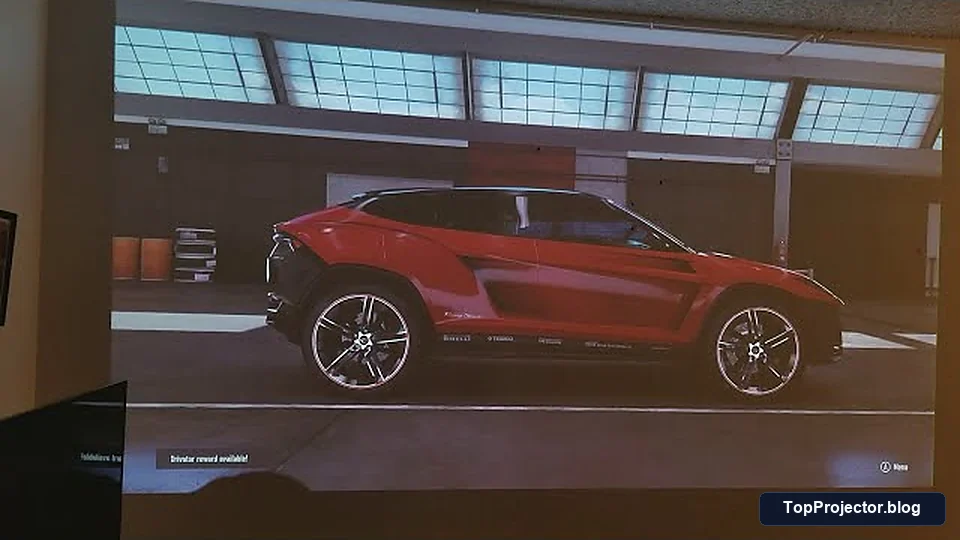
Single-chip DLP technology inside the BenQ utilizes a specialized RGBRGB color wheel to maximize dark-room contrast. This design achieves a deeper black floor than typical budget 3LCD competitors.
Epson counters with a robust 3LCD chip arrangement avoiding color-breakdown artifacts. Consult our screen size and viewing distance tool for optimal theater layout geometry.
- BenQ delivers superior native contrast for darkened theater environments.
- Epson avoids rainbow artifacts through its three-chip optical design.
- Shadow detail rendition varies noticeably between these two display technologies.
Pitch-Black Theater vs Living Room Control
Controlling your ambient room lighting fundamentally alters how these projectors perform on standard white screens. Dedicated home theaters benefit immensely from the deeper contrast of our DLP contender.
Living rooms with uncontrolled windows demand extra optical power to combat washout. The higher lumen output of our Epson rival cuts through moderate ambient light far more effectively.
- DLP black levels excel when room reflections are minimized.
- 3LCD lumen output preserves saturation in partially lit spaces.
Analyzing Ambient Light Performance and Brightness Limits
Achieving a vibrant image in a multipurpose family room requires careful evaluation of rated ANSI output. Both machines offer respectable luminance, but their real-world delivery differs due to technology traits.
The Epson model pushes 2500 ANSI lumens, providing that extra optical headroom needed for daytime sports viewing. Colors stay surprisingly bright even when sheer light strikes the projection surface.
Dropping slightly to 2200 ANSI lumens, the BenQ prioritizes color accuracy. Consult our best mini projector for android phone guide for ultra-compact alternatives offering smart features.
- Epson delivers higher raw lumen output for challenging rooms.
- BenQ balances brightness with cinematic Rec.709 color fidelity.
- Screen selection plays a massive role in daytime performance.
Daytime Sports and Casual Viewing Challenges
Watching afternoon football matches demands strong white luminance to overcome ambient living room illumination. Epson's high output prevents the picture from looking washed out and gray.
BenQ handles daytime television adequately if window blinds remain closed during peak daylight hours. Otherwise, shadow details tend to vanish into ambient glare rapidly.
- Daytime sports favor high-lumen optical engines.
- Window management remains critical for accurate color reproduction.
Color Fidelity Calibration and Cinematic Gamut
Accurate color reproduction transforms standard video feeds into cinematic masterpieces. Read our Sony VPL-XW5000 review detailing premium laser performance for dedicated dark-room home theaters.
BenQ factory calibration targets the Rec.709 color space with exceptional precision and minimal tweaking. Skin tones look natural and director intent is faithfully preserved without complex calibration.
Epson provides versatile color modes, though tuning is required to eliminate slight green or blue push. Once calibrated properly, color saturation remains stable across extended viewing sessions.
- BenQ offers phenomenal factory color calibration out of the box.
- Epson requires minor user adjustments for optimal cinematic tone.
- Extended color stability protects against premature lamp degradation.
Out-of-the-Box Color Modes vs Custom Calibration
Casual users appreciate presets that require zero professional calibration tools or deep menu diving. BenQ's cinema mode delivers reference-grade color right out of the shipping carton.
Advanced enthusiasts can utilize Epson's detailed menu management system to dial in custom gamma curves. This flexibility satisfies calibrators who demand exact color tracking performance.
- Factory presets save time for casual home theater owners.
- Advanced menus allow precise gamma and grayscale tuning.
Input Lag Responsiveness and Gaming Motion Handling
Modern projection enthusiasts demand low input lag for responsive console gaming and fast-paced action titles. Display latency can make or break competitive multiplayer sessions on massive screens.
The BenQ contender shines with a remarkable 16ms input lag measurement in fast game mode. This rapid response satisfies twitch-reflex gamers playing high-speed shooters and racing titles.
Epson offers respectable latency figures suitable for casual RPGs and cooperative platforming adventures. However, competitive players might notice a slight delay during split-second reaction scenarios.
- BenQ provides exceptional input lag for competitive console gaming.
- Epson handles casual gaming adequately for general family entertainment.
- Motion blur remains low across both optical display systems.
Console Gaming vs High-Speed PC Action
Connecting modern gaming consoles requires HDMI interfaces capable of handling rapid refresh signals smoothly. Both models support standard 1080p gaming inputs without major synchronization issues.
PC gamers utilizing high refresh rate monitors might need to adjust expectations for projector motion handling. Fast pixel response times mitigate trailing during panning camera movements.
- Standard 1080p console resolutions perform flawlessly on both units.
- Fast pixel response helps reduce motion blur during camera pans.
Physical Installation Flexibility and Throw Ratios
Mounting a projector in an existing living room requires understanding physical throw ratios and physical adjustment tools. Placement limitations can quickly complicate standard ceiling or shelf installation projects.
Epson features a generous 1.6x optical zoom range and vertical lens shift. Use our Epson 5050UB throw calculator for accurate ceiling placement and screen sizing.
BenQ utilizes a shorter throw lens design that fills large screens from closer mounting distances. However, restricted optical zoom requires precise physical measurement during ceiling installation.
- Epson lens shift simplifies physical alignment during setup.
- BenQ short-throw optics fit comfortably inside smaller rooms.
- Precise measurements prevent costly mounting mistakes during installation.
Shelf Mounting vs Dedicated Ceiling Placement
Placing your projector on a rear bookshelf simplifies power cable management and future lamp replacements. Generous zoom lenses make shelf placement viable across various room depths.
Ceiling mounts provide a permanent, clean aesthetic that keeps projection paths clear of foot traffic. Exact throw distance calculations ensure the image fills your screen perfectly.
- Bookshelf placement benefits from flexible optical zoom ranges.
- Ceiling mounts require careful throw distance math before drilling.
Fan Acoustics, Thermal Management, and Maintenance
Quiet cooling fans prevent annoying distraction during quiet movie dialogue scenes in small home theaters. Thermal management also dictates long-term lamp life and overall system reliability.
Operating noise levels remain manageable on both units during standard eco-lamp operation modes. Higher brightness settings inevitably increase fan speeds and audible background hum.
Lamp replacement procedures are straightforward, requiring minimal technical expertise when maintenance eventually becomes necessary. Air filters require periodic cleaning to prevent overheating in dusty environments.
- Eco modes maintain quiet fan operation during quiet cinematic scenes.
- Regular air filter maintenance protects internal optical components.
- Lamp replacement costs remain reasonable for both budget models.
Eco Mode Performance and Long-Term Reliability
Engaging eco mode reduces bulb output slightly while significantly lowering fan noise and extending lamp hours. This mode represents the ideal setting for evening movie watching.
Long-term reliability depends heavily on maintaining clean intake vents free of household dust. Proper ventilation prevents premature component degradation over years of service.
- Eco mode extends lamp life and lowers fan noise.
- Dust prevention safeguards internal LCD panels and color wheels.
Definitive Scenario-Based Winner and Final Recommendation
Selecting the ideal projector ultimately depends on your unique room geometry and lighting conditions. Matching technical strengths to your environment guarantees long-term entertainment satisfaction.
Choose the Benq Ht2050A if your primary goal is dark-room movie immersion with superior contrast and responsive gaming. Its dedicated theater qualities outperform competitors in controlled lighting.
Select the Epson Home Cinema 2150 when dealing with ambient living room light and complex mounting geometry. The added lumen output and lens shift simplify everyday family entertainment.
- BenQ wins for dark rooms, contrast, and competitive gaming.
- Epson wins for bright living rooms and installation flexibility.
- Analyze your room lighting before making a final purchase.
Making the Final Buyer Decision for Your Space
Evaluate your room's ambient light control before finalizing your investment decision today. Dedicated dark home theaters deserve the superior black levels of our DLP recommendation.
Multipurpose living spaces with windows benefit greatly from the bright optical engine and lens shift features. Prioritizing your environment ensures maximum cinematic enjoyment for years.
- Assess window placements and wall colors carefully.
- Match optical strengths to your primary viewing habits.
Frequently Asked Questions
Which projector handles ambient light better in a standard living room?
The Epson Home Cinema 2150 handles ambient light much better due to its higher 2500 ANSI lumen output. This extra optical power prevents daytime sports and casual television viewing from looking washed out and gray on standard projection screens.
Does the BenQ model suffer from the rainbow effect common in budget DLP units?
The Benq Ht2050A utilizes a high-speed RGBRGB color wheel that minimizes visible rainbow artifacts significantly. Most viewers will never notice color separation, though sensitive individuals should test single-chip DLP technology beforehand.
How does installation flexibility compare between lens shift and manual zoom?
The Epson Home Cinema 2150 features vertical lens shift and a wide zoom range for easy alignment. The Benq Ht2050A lacks lens shift, requiring precise physical placement during ceiling mount installation.
Which device is better suited for fast-paced console gaming sessions?
The Benq Ht2050A is the clear winner for gaming thanks to its ultra-low 16ms input lag performance. This rapid response time eliminates frustrating display latency during competitive multiplayer video games.
What is the primary optical difference between 3LCD and DLP technologies?
3LCD technology uses three separate chips to project all colors simultaneously without any color wheel artifacts. Single-chip DLP technology alternates colors rapidly, achieving superior native black levels and darker cinema contrast.