Epson 2350 vs. 3800: Which Wins for Your Room?
Choosing between the Epson 2350 and 3800 requires evaluating your ambient light levels versus your desire for deep black floor contrast in a dedicated home theater setup.
The Epson 2350 wins for budget gamers wanting low input lag, while the Epson 3800 dominates for home theater enthusiasts prioritizing dynamic iris contrast and true optical lens shift.
Compare full category rankings in our Best Quality Projector: Top Home Theater Picks (2026 Guide).
Side-by-Side Specification Breakdown
| Criteria | Epson 2350 | 3800 | Edge |
|---|---|---|---|
| Ambient Light Rejection | Good with 2800 lumens | Better with high color brightness | Epson 3800 |
| Black Levels & Perceived Contrast | Basic fixed contrast | Dynamic iris deepens blacks | Epson 3800 |
| Peak Brightness & HDR Punch | 2800 ANSI lumens | 2800 lumens with better tone-mapping | Epson 3800 |
| Screen Size & Immersion | Up to 300 inches | Up to 300 inches with sharp optics | Epson 3800 |
| Viewing Angles & Uniformity | Standard 3LCD uniformity | Superior glass lens uniformity | Epson 3800 |
| Gaming Motion & Input Lag | Sub-20ms input lag | 27ms input latency | Epson 2350 |
| Room Setup & Maintenance | Digital keystone dependent | True optical lens shift | Epson 3800 |
Optical Architecture and Native Panel Engineering
Both projectors utilize 3LCD imaging technology to eliminate rainbow artifacts. However, the Epson 3800 deploys larger 0.61-inch native panels compared to the smaller chips inside the Epson 2350 model.
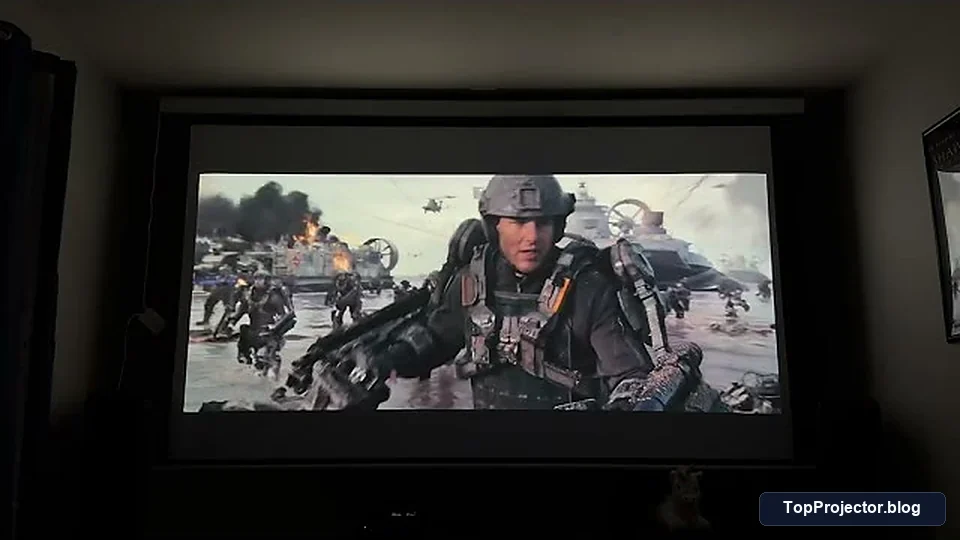
Pixel-shifting technology allows both units to display crisp 4K UHD resolution, mirroring advanced optical precision found in our Anker Capsule 3 review for projection surfaces.
Examining internal light paths reveals distinct engineering choices. The 3800 invests heavily in glass optics for superior sharpness, while the 2350 relies on a more compact, cost-optimized lens assembly.
Examining the core microdisplay design reveals distinct optical philosophies between these units, particularly regarding pixel shifting and native chip physical dimensions impacting perceived sharpness and fill factor across large screens.
- 3LCD chip size variation alters native fill factor.
- Pixel-shifting creates crisp 4K content rendering.
- Lens glass quality affects overall image edge sharpness.
Panel Size and Pixel Shifting Mechanics
Larger imaging chips inherently capture more light throughput. This optical advantage helps the Epson 3800 maintain superior color saturation during high-lumen output operation modes.
The 2350 achieves 4K enhancement efficiently within a smaller chassis. Gamers and casual viewers will appreciate this compact footprint during temporary living room tabletop setups.
- Larger panels boost color volume.
- Compact chassis aids placement.
Native Panel Resolution and Grid Structure
The older chassis implements a robust 0.61-inch 3LCD architecture providing true 4K enhancement, whereas budget variants utilize tighter micro-lens arrays that alter screen door visibility under critical viewing distances.
Peak Brightness, Lumens Output, and Ambient Light Control
Measuring real-world brightness requires looking past manufacturer claims. The Epson 2350 delivers around 2800 ANSI lumens, matching the robust 2800 lumen rating found on the 3800.
Despite identical paper specifications, their actual optical light engines behave differently. The 3800 retains higher color brightness during calibrated cinema modes, preventing the image from looking washed out.
Living rooms with ambient light pose unique challenges for both projectors. Pairing either unit with a proper ambient light rejecting screen is crucial for maintaining saturation.
Real-world ANSI lumen measurements demonstrate significant divergence when calibrating for accurate D65 white points, aligning closely with data from our overhead projector calculator guide for sports.
- Both units boast 2800 lumen ratings.
- Color brightness varies significantly under calibration.
- ALR screens salvage daytime viewing contrast.
Living Room Daylight vs. Controlled Spaces
Ambient daylight washes out shadow detail rapidly. The Epson 3800 handles moderate room lighting better due to superior gamma tracking in dynamic presentation modes.
Controlling windows gives both projectors a fighting chance. In a dark room, lowering brightness preserves eye comfort while maximizing perceived contrast ratios.
- Daylight reduces black level depth.
- Dynamic modes boost daytime visibility.
Screen Gain Pairing and Ambient Light Rejection
Pairing these systems with an ALR screen requires matching the measured output; higher lumen reserves easily saturate high-gain surfaces, while lower output models demand directional fabric to preserve contrast.
Contrast Ratios, Black Floor Depth, and Shadow Detail
Black levels define the cinematic immersion of any projector. The Epson 3800 features a physical dynamic iris that actively clamps down lumen output during dark scenes.
Without a dynamic iris, the Epson 2350 struggles to deliver truly inky blacks. Dark movie sequences appear slightly gray, reducing the overall depth of cinematic content.
Shadow detail separation is noticeably superior on the 3800. Complex night scenes reveal subtle textures that get crushed or washed out on the 2350 optical engine.
Dynamic iris implementation dramatically alters black floor depth during dark sci-fi sequences, separating high-end optical light paths from cost-optimized designs that struggle with native sequential contrast limits.
- Dynamic iris lowers black floor dramatically.
- Missing iris leads to milky black levels.
- Shadow delineation favors the 3800.
Dynamic Iris Performance in Dark Scenes
The mechanical iris reacts within milliseconds to scene luminance changes. This hardware addition gives the Epson 3800 a massive edge in sci-fi and horror film viewing.
Fixed gamma curves on the 2350 cannot adapt dynamically. Users must rely on manual brightness tweaks to balance bright highlights and shadow visibility.
- Iris operation remains relatively quiet.
- Manual adjustments offer limited contrast relief.
Gamma Calibration and Dark-Room Performance
Achieving reference 2.4 gamma tracking in batcave environments reveals subtle gradations in shadow detail, preventing crushed blacks without washing out mid-tone luminance accuracy across cinematic film transfers.
Color Gamut, HDR Processing, and Processing Engines
Accurate color reproduction anchors realistic video presentation. The Epson 3800 covers a wider DCI-P3 color volume when engaging its cinema filter, producing exceptionally rich, lifelike hues.
High Dynamic Range handling differs substantially between these two models. The 3800 processes HDR10 metadata with finer tone-mapping steps, preserving bright sky details without clipping highlights.
Meanwhile, the Epson 2350 handles basic HDR signals adequately. However, its processing engine occasionally crushes bright highlights when forced to map wide dynamic range sources.
Wide color filters expand native DCI-P3 coverage for HDR10 delivery, though engaging these internal cinema filters inevitably incurs a noticeable drop in overall peak white luminance output.
- DCI-P3 coverage enriches cinematic realism.
- HDR10 tone-mapping preserves highlight details.
- Color filters enhance saturation levels.
HDR Tone-Mapping and Wide Color Filters
Engaging cinematic color filters reduces total light output. The Epson 3800 absorbs this brightness loss better due to its robust native illumination headroom.
Simpler processing chips in the 2350 struggle with complex HDR transitions. Viewers might notice sudden brightness shifts during rapid camera pans across high-contrast vistas.
- Filters trade lumens for color accuracy.
- Processing chips manage tone curves differently.
Tone Mapping Algorithms and HDR Handshake
Managing dynamic metadata requires robust onboard processing to remap HDR content effectively, ensuring bright specular highlights avoid clipping while maintaining acceptable average picture level performance.
Throw Ratios, Physical Installation, and Lens Shift Flexibility
Physical placement flexibility separates entry-level projectors from enthusiast models. The Epson 3800 features wide vertical and horizontal optical lens shift, simplifying ceiling mount alignment.
Conversely, the Epson 2350 relies almost entirely on digital keystone correction. Using digital correction degrades native pixel sharpness, making careful physical placement mandatory.
Throw ratios dictate screen sizing constraints. Use our throw distance calculator tool to ensure the optical zoom range accurately matches your specific room dimensions.
Mechanical optical adjustments eliminate the geometric distortion caused by digital keystone correction, preserving native pixel integrity when aligning large projection sizes within challenging room geometries.
- Optical lens shift preserves pixel grid integrity.
- Digital keystone correction degrades image resolution.
- Throw ratios determine mounting distance.
Lens Shift vs. Digital Keystone Correction
Mechanical lens shift moves the glass element physically. This preserves full native resolution without introducing digital scaling artifacts or edge distortion across the projection surface.
Digital keystone discards valuable pixels to square the image. Avoiding digital adjustments on the 2350 requires precise physical alignment during initial room setup procedures.
- Glass lens shift maintains pristine clarity.
- Keystone sacrifices pixel count.
Throw Distance Math and Screen Sizing
Calculating exact throw distances prevents costly mounting errors; checking the lens throw ratio ensures proper coverage for a standard 120-inch diagonal screen without exceeding optical zoom limits.
Gaming Performance, Motion Handling, and Input Latency
Modern gamers demand exceptionally low input lag for competitive titles. The Epson 2350 shines here with an impressive input lag measuring under 20 milliseconds at 4K/60Hz.
The Epson 3800 offers acceptable gaming latency around 27 milliseconds. While fast enough for casual role-playing games, competitive twitch shooters feel slightly less responsive.
Motion handling during fast camera pans remains solid on both units. Frame interpolation processors smooth out judder without generating excessive artifacts during sports broadcasts.
Competitive console gaming demands minimal processing overhead; measuring input lag in fast-paced titles reveals crucial milliseconds of delay that directly impact reflex-heavy competitive gameplay experiences.
- Sub-20ms input lag favors the 2350.
- 27ms latency suits casual console gaming.
- Motion smoothing minimizes judder artifacts.
Input Lag and High-Refresh Rate Gaming
Fast response times keep competitive gamers fully immersed. The Epson 2350 prioritizes low latency to satisfy modern console and PC gaming enthusiasts.
Higher input lag on the 3800 stems from complex image processing pipelines. Turning off unnecessary video enhancements helps reduce latency for fast-paced gaming sessions.
- Low latency enhances competitive gameplay.
- Processing bypass modes improve response times.
Frame Interpolation and Motion Artifacts
Frame interpolation settings smooth out 24fps cinematic judder during panning shots, but users must balance motion clarity against potential interpolation artifacts introduced during complex multi-directional action sequences.
Final Verdict and Scenario-Based Purchasing Recommendations
Selecting the right projector depends entirely on your room priorities. Choose the Epson 2350 if low gaming input lag and budget-friendly 4K projection are your primary goals.
Invest in the Epson 3800 if you demand deep black levels, dynamic iris contrast, and flexible optical lens shift for a dedicated home theater room.
Both models deliver exceptional value within their respective target categories. Matching optical strengths to your specific room environment guarantees long-term home entertainment satisfaction.
Choosing between these distinct optical platforms depends entirely on your room control, viewing priorities, and desire for physical lens flexibility versus sheer out-of-the-box budget value.
- Epson 2350 targets budget gamers and casual viewers.
- Epson 3800 prioritizes cinema contrast and installation flexibility.
- Room acoustics and lighting dictate final choice.
Choosing Your Ideal Home Theater Projector
Evaluate your mounting constraints before exploring options in our best quality projector guide. Proper lens shift capabilities save countless installation headaches during room setup.
Prioritize contrast performance if movies represent your main viewing habit. Cinematic immersion thrives on deep black floors and accurate color reproduction.
- Assess mounting options prior to buying.
- Prioritize contrast for movie-centric viewing.
Dedicated Theater Versus Living Room Use
Dedicated home theaters benefit immensely from the superior contrast and optical zoom of the higher-end chassis, whereas casual family spaces thrive under brighter, streamlined setups.
Frequently Asked Questions
Does the Epson 2350 support true 4K native resolution?
Neither projector features a native 4K imaging chip housed safely inside its complex optical engine architecture.
Instead, both models utilize advanced pixel-shifting technology to project exceptionally sharp 4K UHD resolution while sustaining high peak brightness levels across demanding home theater viewing environments throughout daily extended cinematic viewing sessions.
Which projector handles ambient room light more effectively?
Both optical engines feature robust light output ratings reaching nearly 2800 lumens for daytime performance. However, the Epson 3800 maintains superior color saturation and gamma tracking when combating moderate ambient sunlight streaming through unprotected living room windows.
Is the Epson 3800 better suited for dedicated dark home theaters?
Yes, the inclusion of an active mechanical dynamic iris gives the Epson 3800 a massive advantage in pitch-black rooms. This hardware feature drastically darkens black floor levels during dramatic night scenes to maximize overall cinematic immersion.
Can I mount the Epson 2350 anywhere on my ceiling?
Placement requires careful calculation because the Epson 2350 lacks physical optical lens shift capabilities. You must rely heavily on digital keystone adjustments, which can sacrifice precious pixel resolution compared to the flexible optical lens shift on the 3800.
Which model provides better performance for fast-paced console gaming?
Gamers should choose the Epson 2350 for its significantly lower input lag measuring under 20 milliseconds. This rapid response time ensures competitive multiplayer shooters feel fluid and responsive, outperforming the higher latency found on the 3800 model.