Dlp vs. Lcd Vs Led Vs Laser Projector: Which Wins for Your Room?
Navigating projector technologies requires balancing optical light sources and display chips. Understanding ANSI lumens and throw ratios ensures peak home theater performance.
DLP projectors deliver unmatched pixel sharpness and motion fidelity for dark rooms, while Laser and LED light sources dominate longevity and color volume in ambient light.
Compare full category rankings in our Best Projector For Dnd: Top Tabletop Picks.
Side-by-Side Specification Breakdown
| Criteria | Dlp | Lcd Vs Led Vs Laser Projector | Edge |
|---|---|---|---|
| Ambient Light Rejection | Moderate ALR compatibility via high nativeANSI lumen output. | High-end laser units excel with specialized ALR screens. | Laser & LED |
| Black Levels & Perceived Contrast | Superior native contrast and deep shadow detail. | Varies by panel type; LCD often shows raised black floors. | DLP |
| Peak Brightness & HDR Punch | High lumen throughput with bright color wheels. | Solid-state lasers deliver consistent, sustained high lumens. | Laser |
| Screen Size & Immersion | Scalable throw ratios support massive 150-inch projection. | Flexible optics accommodate ultra-short throw living room setups. | Tie |
| Viewing Angles & Uniformity | Single-chip design eliminates convergence errors entirely. | Multi-panel LCD systems risk occasional panel misalignment. | Dlp |
| Gaming Motion & Input Lag | Sub-16ms response times with rapid micro-mirror switching. | Increasingly competitive, but traditional LCDs lag behind. | Dlp |
| Room Setup & Maintenance | Lamp replacements needed periodically on bulb models. | Solid-state diode engines offer virtually maintenance-free operation. | Laser & LED |
Fundamental Optical Architecture: DLP Chips Versus 3LCD Panels
Digital Light Processing utilizes microscopic aluminum mirrors to steer light efficiently, yielding incredible pixel sharpness and near-zero screen door artifacts compared to traditional multi-panel optical display engines.
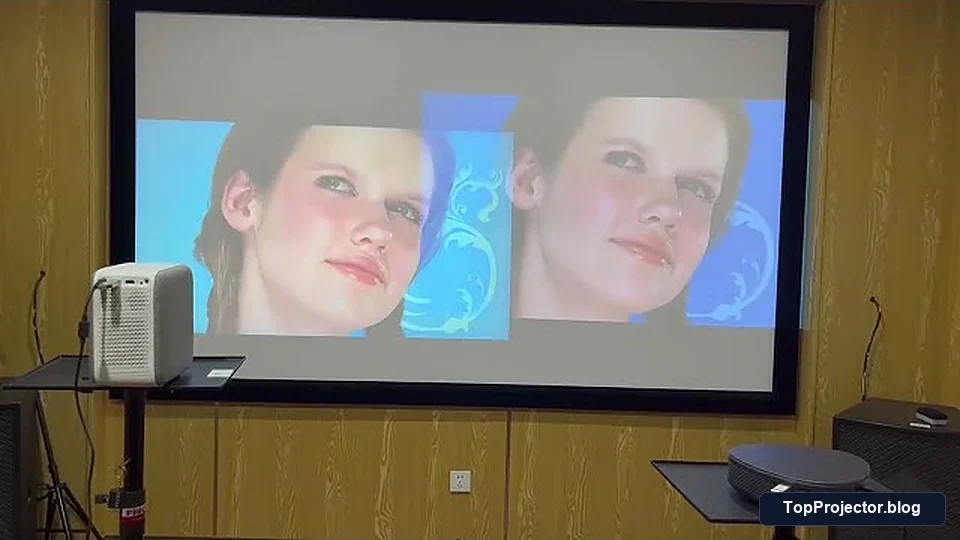
Conversely, three-panel liquid crystal display designs pass illumination through distinct red, green, and blue panels simultaneously, eliminating any risk of rainbow artifacts while sometimes sacrificing native contrast depth.
Choosing between these core imaging technologies dictates how your home theater handles fine text clarity, motion cadence, and overall optical efficiency during critical movie viewing sessions.
Single-chip DLP designs rely on a rapidly spinning color wheel to sequence RGB light, achieving exceptional pixel alignment but occasionally introducing visible rainbow artifacts for sensitive viewers during fast motion.
- Single-chip DLP provides razor-sharp pixel definition.
- 3LCD architectures eliminate sequential color breakup entirely.
- Optical engine choice determines fundamental black floor limits.
- Single-chip architecture eliminates convergence panels completely.
- Color wheels require precise synchronization timing.
Micro-Mirror Precision and Sharpness
DMD chips position millions of pivoting mirrors to reflect light toward the projection lens with nanosecond accuracy, creating exceptionally clean edges and high ANSI contrast ratios.
This micro-mirror switching speed underpins modern pixel-shift 4K resolutions, allowing compact optical blocks to resolve ultra-fine cinematic textures without heavy digital sharpening filters.
- Nanosecond mirror response ensures pristine geometry.
- Pixel shift delivers robust 4K detail affordably.
Three-Panel Transmissive LCD Mechanics
Transmissive liquid crystal panels split white light via dichroic mirrors, routing each primary color through dedicated glass panels before recombining them within a heavy glass prism block.
While this guarantees vibrant color brightness across white and colored scenes equally, the physical pixel fill factor can occasionally reveal faint grid lines on massive screens.
- Dichroic filters divide light into primary channels.
- Glass prism recombination ensures high color brightness.
Micro-Mirror Switching Speed
Digital micromirror devices toggle individual pixels thousands of times per second, creating precise grayscale modulation through high-speed pulse-width modulation rather than traditional liquid crystal voltage shifts.
- Mirrors tilt rapidly to modulate light intensity.
Light Source Engineering: Lamp, LED, and Laser Diode Comparisons
Traditional UHP mercury lamps offer high initial brightness at a low cost, but their luminous output degrades rapidly over a few thousand hours of intense home theater viewing.
Solid-state laser phosphor engines revolutionize longevity by providing tens of thousands of maintenance-free operational hours while maintaining consistent color saturation and strict brightness levels.
LED illumination bridges the gap for compact, budget-friendly projectors, delivering instant-on capabilities and wide color gamuts without requiring complex liquid cooling or high-pressure bulb housings.
Hybrid solid-state light engines combine blue laser diodes with phosphor wheels to generate high-output white light, bypassing the thermal degradation issues common in traditional ultra-high-pressure mercury lamps.
- UHP bulbs require periodic replacements after dimming.
- Laser diodes last up to 30,000 hours with minimal decay.
- LED sources offer instant power-on and eco-friendly operation.
- Laser diodes maintain consistent brightness over long lifespans.
- Phosphor degradation limits maximum operational hours.
Solid-State Laser Diode Advantages
Blue laser diodes paired with specialized phosphor wheels generate intense, pure light streams capable of piercing through moderately lit living rooms with stunning vibrancy.
Dynamic laser dimming modulates light output frame-by-frame, dramatically improving perceived black levels during dark cinematic sequences without crushing shadow details.
- Phosphor wheels convert blue laser light efficiently.
- Dynamic dimming enhances native contrast performance.
LED Illumination and Color Purity
Solid-state light-emitting diodes produce saturated primary colors natively, bypassing traditional color wheels and eliminating any possibility of visible color breakup artifacts.
Their lower thermal output makes these quiet models ideal choices from our best projector for dnd list, easily fitting into smaller media rooms and tabletop spaces.
- Native color generation removes spinning color wheels.
- Low heat output ensures whisper-quiet fan operation.
Laser Speckle Reduction
Coherent laser illumination frequently produces microscopic interference patterns known as speckle, requiring engineered diffuser screens or vibrating optics to smooth out fine text and solid color fields.
- Diffusers scatter coherent light waves evenly.
Contrast Ratios and Black Floor Performance in Dark Rooms
Achieving true cinematic immersion requires deep black floors that make bright highlights pop against a pitch-black dedicated home theater environment.
DLP projectors frequently win native contrast shootouts in controlled spaces, preserving dramatic ANSI contrast ratios that reveal subtle shadow textures in dimly lit film scenes.
Laser-driven systems utilize algorithmic light throttling to artificially lower black levels during dark sequences, bridging the gap between digital projection and traditional emissive displays.
Native contrast performance depends heavily on optical engine light leakage, where LCoS architecture consistently delivers superior native black floors compared to standard single-chip DLP units.
- Dedicated dark rooms demand high native contrast ratios.
- ANSI contrast measures mixed light and dark scene accuracy.
- Laser modulation deepens blacks during fade-to-black moments.
- Dynamic dimming enhances ANSI contrast during mixed scenes.
- Black floor levels dictate overall shadow detail visibility.
Native Contrast Versus Dynamic Iris Control
Native contrast relies entirely on optical engine efficiency, dictating the black-to-white ratio essential when evaluating performance in our guide on can you use a projector for gaming.
Dynamic irises and laser dimming algorithms physically restrict light output during dark scenes, artificially boosting contrast metrics on paper while managing perceived eye strain.
- Native contrast is unassisted by software processing.
- Dynamic irises lower light output for dark scenes.
Optimizing Room Surfaces for Maximum Contrast
Light bouncing off white living room ceilings and side walls can severely wash out projector black levels, degrading even the most expensive high-contrast optical engines.
Applying dark, matte acoustic treatments or velvet wall coverings ensures reflected light does not bounce back onto your projection screen, preserving rich contrast.
- Reflected room light degrades perceived black levels.
- Matte dark wall treatments maximize cinematic contrast.
Dynamic Iris Algorithms
Implementing a mechanical dynamic iris can significantly expand perceived sequential contrast ratios by physically restricting optical output during dark cinematic sequences without clipping highlight details.
- Irises physically restrict unnecessary optical output.
Ambient Light Rejection and Daytime Living Room Viewing Dynamics
Combating ambient living room light requires massive ANSI lumen output and specialized optical screen materials that reject off-axis ceiling illumination effectively.
High-output laser projectors excel in multi-purpose family spaces, pumping out over 3,000 lumens to maintain punchy, saturated images even with blinds wide open.
Pairing your projection system with a high-gain Ambient Light Rejection screen transforms daytime viewing by absorbing environmental light while reflecting direct projector beams.
Pairing high-lumen projectors with specialized angular reflective ambient light rejection screens prevents ceiling illumination from washing out dark shadow details in challenging daytime living room environments.
- High ANSI lumens overpower moderate ambient daylight.
- ALR screens absorb stray ceiling and side lighting.
- Living room setups require careful throw distance planning.
- ALR materials absorb off-axis ambient room lighting.
- Viewing cone restrictions affect wide seating arrangements.
Ultra-Short Throw Laser TVs in Bright Rooms
Ultra short throw laser models sit inches from the wall, requiring careful placement verified through our throw distance calculator to ensure precise screen geometry.
This configuration mimics flat-panel television usability while offering massive 100-inch diagonal images that anchor modern, minimalist living room entertainment centers.
- UST projectors sit directly below the projection screen.
- Fresnel ALR screens block overhead living room lights.
Long-Throw Projector Placement in Bright Spaces
Traditional ceiling-mounted long-throw projectors require precise throw ratios to fill large screens without suffering from severe ambient light washout.
Selecting high-gain white or silver fiberglass screens helps reflect maximum projector luminance directly toward seated viewers in moderately bright environments.
- Ceiling mounts demand careful throw ratio calculation.
- High-gain screens direct light toward seated audiences.
Gain Factor Optimization
Selecting a specialized screen material with a 1.1 gain rating preserves off-axis viewing angles while maximizing perceived punch from laser engines in partially controlled spaces.
- Gain ratings direct light toward viewer eyes.
Color Volume, Wide Color Gamuts, and HDR Tone Mapping
Modern HDR content pushes projectors to reproduce expansive color spaces like DCI-P3 without sacrificing the luminous output required for striking specular highlights.
Laser light sources achieve wide color gamuts effortlessly using multi-phosphor wheels or RGB laser diodes, bypassing the light-robbing color filters older UHP lamps required.
Effective onboard HDR tone mapping algorithms analyze incoming metadata in real time, balancing bright highlights and shadow details across varying screen sizes.
Achieving wide color gamuts often requires engaging internal cinema filters that reduce maximum ANSI lumens output by up to thirty percent to hit full DCI-P3 color space targets.
- DCI-P3 coverage delivers cinematic color saturation.
- Laser diodes maintain high brightness in wide color modes.
- Tone mapping preserves highlight detail in HDR movies.
- Laser engines achieve wider native color spaces easily.
- Tone mapping curves prevent crushed highlight details.
RGB Laser Color Purity and Specalized Filters
Pure red, green, and blue laser diodes eliminate the need for absorptive color filters, allowing projectors to display ultra-saturated hues at peak brightness levels.
This efficiency prevents the severe brightness drop historically associated with engaging wide color gamut modes on traditional lamp-based home theater projectors.
- RGB lasers produce pure primary light frequencies.
- Color filters no longer restrict peak lumen output.
Dynamic Tone Mapping for Projector Limits
Projectors inherently struggle with the extreme peak brightness targets mastered for 1,000-nit flat-panel televisions, necessitating intelligent dynamic tone mapping.
Advanced onboard processors remap HDR luminance curves dynamically, ensuring bright explosions and sunset highlights retain rich graduation rather than clipping.
- Projectors remap 1,000-nit mastering to lower lumens.
- Dynamic curves prevent harsh highlight clipping artifacts.
Dynamic Tone Mapping Metadata
Modern laser projectors analyze incoming HDR10 streams frame by frame, optimizing highlight roll-off curves to prevent overexposure in bright specular highlights across challenging master grades.
- Processors remap brightness levels in real time.
Input Lag, Refresh Rates, and Gaming Motion Handling
Competitive gaming requires ultra-low input lag and fast response times to ensure split-second controller inputs register instantly on the big screen.
Single-chip DLP projectors dominate gaming performance benchmarks, offering lightning-fast micro-mirror switching speeds that yield sub-16ms input lag at high refresh rates.
Modern hybrid light engines also feature optimized low-latency modes, a capability highlighted in our Nebula Cosmos Max review when testing responsive console gameplay.
Competitive gaming requires bypassing complex video processing algorithms to achieve ultra-low input lag measurements under twenty milliseconds at native 4K 60Hz resolution parameters.
- Sub-16ms input lag ensures responsive competitive gaming.
- DLP micro-mirrors deliver pristine motion resolution.
- Dedicated game modes bypass complex video processing.
- Low input lag modes disable advanced image processing.
- High refresh rates require robust HDMI 2.1 bandwidth.
High Refresh Rate Support and Motion Interpolation
Supporting 120Hz and 240Hz refresh rates allows modern projectors to handle fast-paced sports and competitive shooters with butter-smooth motion clarity.
Carefully tuned frame interpolation inserts synthetic intermediate frames to eliminate judder during panning shots, though purists often disable this for films.
- 120Hz refresh rates reduce motion blur significantly.
- Frame interpolation smooths rapid camera panning.
Minimizing Latency in Multi-Processing Pipelines
Complex keystone correction, edge blending, and advanced HDR tone mapping can introduce frustrating display latency if not disabled via game mode presets.
Disabling non-essential video processing routes raw HDMI signals straight to the display engine, cutting precious milliseconds off total input lag times.
- Keystone correction adds processing input delay.
- Game presets bypass heavy digital enhancement pipelines.
High Refresh Rate Support
Advanced home theater projectors now support high-speed 1080p 240Hz inputs, dramatically reducing motion blur and sample-and-hold persistence during fast-paced competitive esports titles.
- High refresh rates improve motion clarity.
Installation Flexibility, Throw Ratios, and Long-Term Maintenance
Calculating precise throw ratios and lens shift capabilities ensures your projector fits your room layout without requiring awkward physical placement or digital scaling.
Flexible optical zoom lenses and wide vertical and horizontal lens shift simplify ceiling mounting, letting you align images perfectly on your screen without distortion.
Solid-state laser and LED systems eliminate costly lamp replacements, offering virtually zero-maintenance operation for thousands of hours of worry-free home entertainment.
Calculating precise throw ratios ensures your optical lens shift capabilities can safely accommodate off-center ceiling mounts without relying on degraded digital keystone correction adjustments.
- Throw ratios dictate projector distance from screen.
- Lens shift allows flexible physical image alignment.
- Solid-state engines eliminate costly bulb replacements.
- Optical lens shift preserves full pixel resolution.
- Proper ventilation clearance prevents thermal throttling issues.
Lens Shift and Optical Geometry Control
Physical lens shift moves the projected image up, down, or sideways optically, preserving full pixel resolution unlike degrading digital keystone correction.
Generous optical zoom ranges provide installation latitude, accommodating rooms with varying ceiling heights and seating distance configurations seamlessly.
- Optical lens shift avoids digital resolution loss.
- Zoom ranges accommodate diverse room dimensions.
Thermal Management and Filter Maintenance
High-output projectors generate substantial heat, requiring robust cooling fans and washable electrostatic air filters to protect internal optical components from dust.
Regularly cleaning intake vents and monitoring internal operating temperatures ensures your laser or lamp-based projector maintains peak optical performance for years.
- Dust filters protect sensitive internal optical engines.
- Effective cooling prevents premature component degradation.
Cooling Fan Maintenance
Solid-state laser diodes generate substantial internal heat, demanding rigorous air filtration routines and periodic optical block cleaning to prevent premature degradation in dusty residential environments.
- Dust filters require regular preventative cleaning.
Frequently Asked Questions
Which projector technology is best for a dark dedicated home theater?
DLP projectors excel in dark rooms due to their superior native contrast ratios and sharp pixel definition. They deliver filmic shadow detail without sacrificing motion clarity.
Are laser projectors better than traditional lamp-based models?
Yes, laser light sources offer drastically longer lifespans up to 30,000 hours and consistent brightness. They eliminate the hassle of periodic bulb replacements completely.
How do 3LCD and DLP technologies differ in daily use?
Single-chip DLP offers razor-sharp pixel geometry but risks rainbow artifacts, while 3LCD systems eliminate rainbow effects entirely. Both provide exceptional home theater entertainment.
Can LED and laser projectors handle high ambient room lighting?
High-lumen laser projectors pair exceptionally well with ALR screens to combat daytime ambient light. Solid-state brightness keeps images punchy even in family living rooms.
What projector type offers the lowest input lag for gaming?
DLP systems generally deliver the lowest input lag thanks to fast micro-mirror switching speeds. They provide responsive control for fast-paced competitive gaming setups.