Dlp vs. Lcd Projector For Home Theater: Which Wins for Your Room?
Choosing between DLP and LCD projection defines your home theater's optical performance. Understanding ANSI lumens and native contrast ratios ensures optimal image fidelity.
DLP projectors dominate in dark rooms with superior motion handling and crisp pixel alignment. LCD projectors win in bright living spaces with higher color brightness and versatile placement flexibility.
Compare full category rankings in our Best Wireless Projectors: Top Picks for Home & Travel (2026).
Side-by-Side Specification Breakdown
| Criteria | Dlp | Lcd Projector For Home Theater | Edge |
|---|---|---|---|
| Ambient Light Rejection | Moderate performance requiring controlled lighting | High color brightness combating ambient light | Lcd Projector For Home Theater |
| Black Levels & Perceived Contrast | Superior native black floor and native contrast | Slightly elevated black levels in dark scenes | Dlp |
| Peak Brightness & HDR Punch | Balanced white and color lumen output | Exceptional color brightness via 3-LCD engines | Lcd Projector For Home Theater |
| Screen Size & Immersion | Exceptional micro-mirror pixel fill factor | Sharp images across massive projection sizes | Dlp |
| Viewing Angles & Uniformity | Consistent single-chip optical path geometry | Potential convergence drift requiring precise alignment | Dlp |
| Gaming Motion & Input Lag | Extremely low input lag for fast gaming | Good response times with slightly higher latency | Dlp |
| Room Setup & Maintenance | Sealed DMD chips requiring minimal filter upkeep | Regular air filter cleaning and lens shift needs | Lcd Projector For Home Theater |
Optical Architecture and Native Contrast Ratios
Digital Light Processing technology utilizes microscopic mirrors to reflect light efficiently. This single-chip architecture eliminates traditional panel convergence errors completely.
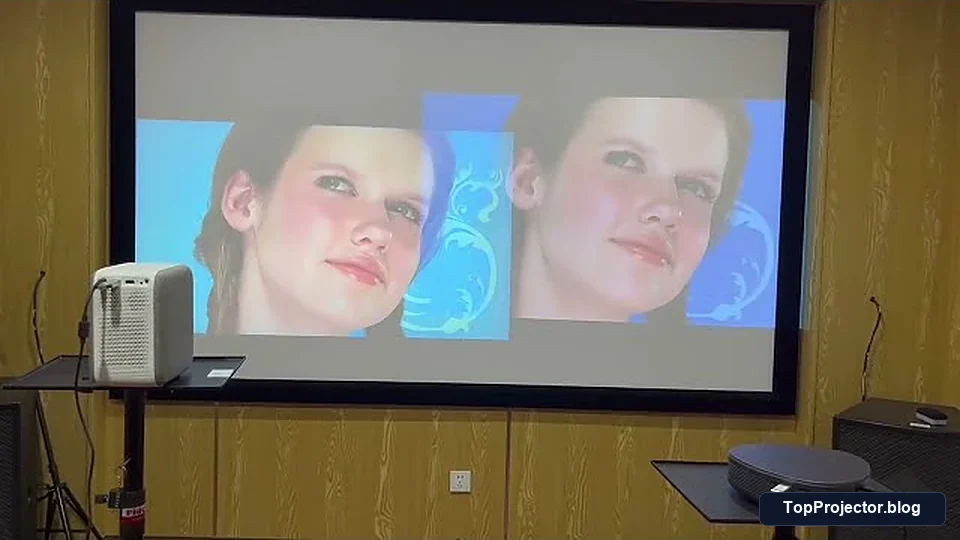
Native contrast ratios in modern DLP projectors frequently surpass LCD competitors. This optical advantage delivers deep black floors in dedicated theater rooms.
Light leakage remains a challenge in budget LCD designs. Premium 3-LCD models utilize advanced polarizers to improve dark scene reproduction significantly.
Understanding micro-mirror physics helps buyers evaluate true cinema performance. Single-chip DLP relies on color wheels to sequence images, yielding native contrast ratios hovering near 1000:1 to 2000:1 without dynamic iris assistance.
- Single-chip DLP prevents color fringing and convergence drift.
- Micro-mirror arrays maximize optical fill factor for sharpness.
- Native contrast directly dictates dark room shadow detail.
- Transmissive LCD panels suffer from light leakage, limiting native dark-room blacks.
- Reflective LCoS variants achieve superior native black floors exceeding 10000:1 contrast.
Single-Chip vs Three-Panel Design
Single-chip Dlp engines use color wheels to sequence red, green, and blue data rapidly. This sequential processing creates pristine pixel alignment without manual calibration.
Three-panel LCD systems split white light into primary color beams simultaneously. While this boosts color brightness, slight panel misalignments can soften fine text.
- Color wheels generate sequential RGB frames.
- Three panels project red, green, and blue concurrently.
Dual-Modulator DLP Implementations
High-end cinema models incorporate dual modulation strategies, driving native levels past 5000:1 ANSI contrast. This bridges the historical gap between traditional three-panel designs and single-chip implementations in dark environments.
- Advanced laser modulation lowers black levels effectively.
- Pixel transition speed remains exceptionally fast.
Ambient Light Rejection and Living Room Performance
Living room environments demand high ANSI lumens to combat intrusive ambient daylight. Use our ansi lumens room calculator to find high-output models tailored for non-dedicated home theater spaces.
Color brightness equals white brightness in 3-LCD configurations. This optical trait prevents washed-out highlights during daytime sports viewing.
DLP units often rely on high-speed color wheels that reduce overall light output. Pairing them with ambient light rejecting screens restores contrast effectively.
Battling daylight requires specialized screen matching. High-gain ALR materials boost perceived image punch, but viewing angles degrade rapidly if the throw distance fails to align with specific optical rejection coatings.
- High lumen output is essential for daytime viewing.
- Color brightness impacts overall perceived image vibrancy.
- ALR screens enhance black levels in bright rooms.
- Ambient light destroys perceived black levels on standard matte white walls.
- Directional rejection filters block over 85% of overhead room illumination.
Pitch-Black Theater vs Living Room Daylight
Dedicated home theaters benefit enormously from the superior native contrast of Dlp optical engines. Controlled lighting lets deep black floors shine.
Bright living rooms favor the robust color volume of 3-LCD projectors. High lumen throughput maintains punchy highlights under ambient illumination.
- Dark rooms reward high native contrast ratios.
- Daylight viewing requires substantial lumen output.
Micro-Perforated ALR Screen Coupling
Pairing LCD engines with angular reflective fabrics minimizes washing out. Achieving optimal saturation demands pairing high-lumen outputs with 0.8 gain surfaces to preserve deep shadow details during daylight viewing sessions.
- Sound-transparent weaves help hide front-channel speakers.
- Micro-perforations slightly alter gain characteristics.
Peak Brightness, Color Volume, and HDR Tone Mapping
High dynamic range content requires precise tone mapping and wide color gamuts. Consult our best wireless projectors list to find models that balance peak highlights with shadow detail effectively.
Three-panel LCD architectures excel at delivering high color volume without color breakup. This benefits vibrant animated films and bright HDR masters.
Advanced Dlp projectors utilize dynamic laser dimming to boost contrast during dark scenes. This processing helps bridge the gap against OLED displays.
Dynamic range mastery depends on processing headroom. Modern solid-state light sources deliver expansive color volumes, yet accurate HDR tone mapping often requires 2000 ANSI lumens to properly illuminate large projection screens.
- HDR tone mapping preserves highlight and shadow details.
- Wide color gamuts render cinematic color accuracy.
- Laser dimming enhances perceived contrast dynamically.
- Dynamic laser dimming algorithms dramatically improve perceived contrast during dark scenes.
- Rec.2020 color space tracking stresses the limits of standard phosphor wheels.
Color Gamut Coverage and Laser Light Sources
Laser phosphor engines provide stable light output over thousands of hours. These solid-state light sources maintain accurate color calibration over long periods.
Lamp-based systems degrade gradually, requiring periodic bulb replacements to maintain peak HDR performance and target luminance levels.
- Solid-state lasers offer extended operational lifespans.
- Lamp degradation impacts long-term color accuracy.
Laser Phosphor Engine Calibration
Calibrators must balance color point accuracy against maximum white luminance. Achieving DCI-P3 coverage frequently sacrifices total light output, dropping total brightness by 30% once calibration filters engage for REC.709 targets.
- Filter placement alters peak white output significantly.
- WCG filters ensure accurate cinematic skin tones.
Screen Size, Throw Ratios, and Optical Installation Geometry
Projector placement depends heavily on throw ratios and available optical zoom. Selecting the correct lens ensures your projected image fills the screen perfectly.
Many Dlp models feature fixed or limited optical zoom ranges. Careful measurement is necessary when mounting the projector in tight spaces.
LCD projectors frequently include generous horizontal and vertical lens shift. This flexibility simplifies installation on tricky ceilings or living room shelves.
Calculating projection math prevents costly mounting errors. Standard throw lenses require deep rooms, whereas short-throw configurations demand precise bracket alignment to prevent geometric keystone distortion across the entire viewing surface.
- Throw distance determines maximum achievable screen size.
- Lens shift simplifies off-axis projector placement.
- Optical zoom offers flexible positioning adjustments.
- Always verify throw calculator outputs before drilling into ceiling joists.
- Motorized zoom lenses simplify aspect ratio changes for cinemascope screens.
Throw Ratio Calculations for Custom Rooms
Short-throw Dlp units project massive images from inches away. These specialized lenses eliminate shadows from walking viewers in compact spaces.
Standard throw ratios in LCD projectors require longer distances for large screens. Dedicated theater rooms easily accommodate these traditional throw distances.
- Short-throw models suit tight media rooms.
- Standard throws require adequate room depth.
Lens Shift Flexibility and Offset Tolerances
Vertical and horizontal lens shift capabilities preserve pixel integrity. Premium optical assemblies allow extreme positioning without digital scaling, maintaining sharp 1:1 pixel mapping across complex custom home theater ceiling mounts.
- Optical shift prevents digital resolution loss.
- Wide shift ranges simplify difficult room geometries.
Gaming Motion, Response Times, and Input Lag Benchmarks
Competitive gaming demands extremely low input lag and fast pixel response times. Projector technology directly influences your reflexes and motion clarity.
Single-chip Dlp projectors consistently deliver stellar input lag figures below twenty milliseconds. This swift response satisfies fast-paced console and PC gamers.
LCD projectors have narrowed the latency gap significantly in recent firmware updates. However, complex processing can occasionally introduce minor motion blur.
Competitive gaming demands uncompromising responsiveness. Fast micro-mirrors excel at native motion handling, dropping input lag below 16ms at 4K/60Hz to ensure twitch-reaction accuracy during fast-paced competitive multiplayer shooting titles.
- Low input lag prevents frustrating control delays.
- Fast pixel response ensures crisp fast motion.
- Gaming modes bypass heavy video processing.
- Avoid heavy video processing modes while gaming to prevent latency spikes.
- Auto Low Latency Mode streamlines signal switching for modern consoles.
High Refresh Rates and Motion Handling
Modern gaming projectors support high refresh rates like 120Hz at 1080p resolution. As noted in the nebula cosmos laser review, this capability delivers exceptionally smooth motion during fast action sequences.
Motion interpolation features help smooth out cinematic 24fps panning shots. Purists often disable this processing to avoid artificial soap-opera effects.
- High refresh rates improve competitive gaming smoothness.
- Motion interpolation reduces judder in panning shots.
High Refresh Rate Panel Scaling
Modern gaming projectors now support 1080p at 240Hz refresh rates. This dramatically reduces ghosting artifacts, though users must verify HDMI bandwidth limitations before connecting high-end gaming rigs or next-generation consoles.
- High refresh rates reduce motion blur noticeably.
- HDMI 2.1 ports are mandatory for 4K high frame rates.
Panel Convergence, Uniformity, and Long-Term Maintenance
Long-term reliability depends on optical block sealing and maintenance routines. Read our guide on playing ps4 on projectors to understand how dust accumulation degrades unsealed projector engines over time.
Dlp light paths are largely sealed against dust intrusion, preventing annoying speckles. This design minimizes routine maintenance requirements for homeowners.
LCD projectors require regular air filter cleaning to prevent overheating. Neglected filters can lead to permanent panel degradation and uneven color uniformity.
Multi-panel designs introduce optical alignment challenges over time. Thermal expansion can cause panel drift, requiring manual convergence adjustments to eliminate annoying color fringing artifacts around high-contrast white text elements.
- Sealed optical engines prevent internal dust buildup.
- Regular filter cleaning ensures projector longevity.
- Panel uniformity guarantees even brightness distribution.
- Sealed optical engines eliminate the risk of internal dust contamination.
- Single-chip architectures naturally bypass convergence drift issues entirely.
Dust Blobs and Optical Engine Longevity
Dust particles landing on LCD panels create noticeable spots on screens. Resolving these dust blobs often requires professional interior cleaning services.
The absence of internal polarizers in single-chip DLP designs avoids common degradation issues. This structural simplicity translates to consistent performance over time.
- Dust blobs create distracting spots on LCD screens.
- DLP architecture avoids polarizer thermal degradation.
Air Filter Degradation and Dust Blobs
Transmissive panels remain vulnerable to microscopic particulate accumulation. Regular filter cleaning prevents permanent optical engine blemishes, protecting your long-term investment against intrusive dust blob formations on projected images.
- Clean filters regularly to maintain proper thermal management.
- Electrostatic filters catch smaller particles effectively.
Final Scenario-Based Recommendations for Dedicated Rooms
Choosing the ideal projector requires matching optical strengths to your specific room geometry. Dedicated media rooms prioritize contrast over raw lumen output.
Select a Dlp projector if your room is dark with controlled lighting. You will enjoy superior black levels and razor-sharp motion handling.
Opt for an Lcd Projector For Home Theater if your space features ambient light. High color brightness ensures vibrant viewing experiences.
Choosing the right technology dictates your final viewing experience. Dedicated dark rooms reward the deep native blacks of LCoS or high-end DLP, while bright living spaces demand high lumen output from robust LCD engines.
- Match projector tech to your ambient light levels.
- Prioritize native contrast for dark theater spaces.
- Select high color lumen output for bright rooms.
- Prioritize native contrast if your viewing sessions happen exclusively at night.
- Focus on absolute light output when ambient control is completely impossible.
Summary Checklist for Home Theater Buyers
Evaluate your throw distance, screen size, and ambient lighting before purchasing. Proper planning guarantees a satisfying cinematic home entertainment setup.
Consult professional throw calculators and expert reviews to finalize your model selection. Investing in the right optical technology prevents costly upgrade mistakes.
- Measure room dimensions and lighting conditions carefully.
- Use throw calculators to verify screen placement.
Tailoring Hardware to Ambient Light Realities
Assess your room's light control before purchasing hardware. Dedicated theater spaces with velvet-treated walls maximize contrast potential, whereas multipurpose family rooms require specialized ambient screens to salvage washed-out daytime viewing sessions.
- Blackout curtains transform mediocre rooms into stellar cinemas.
- Dark paint finishes improve intra-frame contrast performance.
Frequently Asked Questions
What causes the rainbow effect in DLP projectors?
Sequential color wheels flash red, green, and blue frames rapidly. Sensitive viewers perceive this color separation as fleeting flashes of light.
Are LCD projectors better for bright living room setups?
Three-panel LCD engines deliver exceptional color brightness without sacrificing white light. This robust output combats ambient daylight effectively in multipurpose rooms.
Which technology offers better native black levels?
Single-chip DLP projectors achieve superior native contrast ratios naturally. This optical advantage produces deeper black floors in dark home theaters.
Do LCD projectors require more routine maintenance?
LCD models feature removable air filters that require regular cleaning. Neglecting maintenance can cause internal dust blobs and thermal overheating.
Which projector type is better for fast video gaming?
DLP projectors consistently deliver lower input lag and swift response times. These metrics provide a responsive gaming experience for competitive players.