Dlp vs. 3Lcd Vs Laser: Which Wins for Your Room?
Navigating projector tech requires balancing ANSI lumens against native contrast. This guide contrasts single-chip DLP, three-chip LCD, and modern laser illumination engines for home theaters.
Choose laser DLP for sharp, cinematic contrast in controlled dark rooms, or 3LCD for punchy, rainbow-free color brightness in brightly lit living spaces.
Compare full category rankings in our Best Classroom Projector: Top Picks for Teaching.
Side-by-Side Specification Breakdown
| Criteria | Dlp | 3Lcd Vs Laser | Edge |
|---|---|---|---|
| Ambient Light Rejection | Moderate with ALR screens | High due to bright color output | 3Lcd Vs Laser |
| Black Levels & Perceived Contrast | Excellent native ANSI contrast | Softer black floor in dark rooms | Dlp |
| Peak Brightness & HDR Punch | High in laser configurations | Consistent high white and color lumens | 3Lcd Vs Laser |
| Screen Size & Immersion | Scales seamlessly up to 200 inches | Flexible throw ratios for large rooms | Tie |
| Viewing Angles & Uniformity | Prone to slight offset shift | Superior panel alignment uniformity | 3Lcd Vs Laser |
| Gaming Motion & Input Lag | Ultra-low input lag under 15ms | Higher processing lag on complex models | Dlp |
| Room Setup & Maintenance | Compact optical engines require less dust cleaning | Filter maintenance needed for 3LCD panels | Dlp |
Native Contrast and Black Floor Performance
Achieving deep, inky blacks is the holy grail of projection optics. Single-chip DLP architecture inherently delivers superior native ANSI contrast, making dark movie scenes look genuinely cinematic without crushed shadow details.
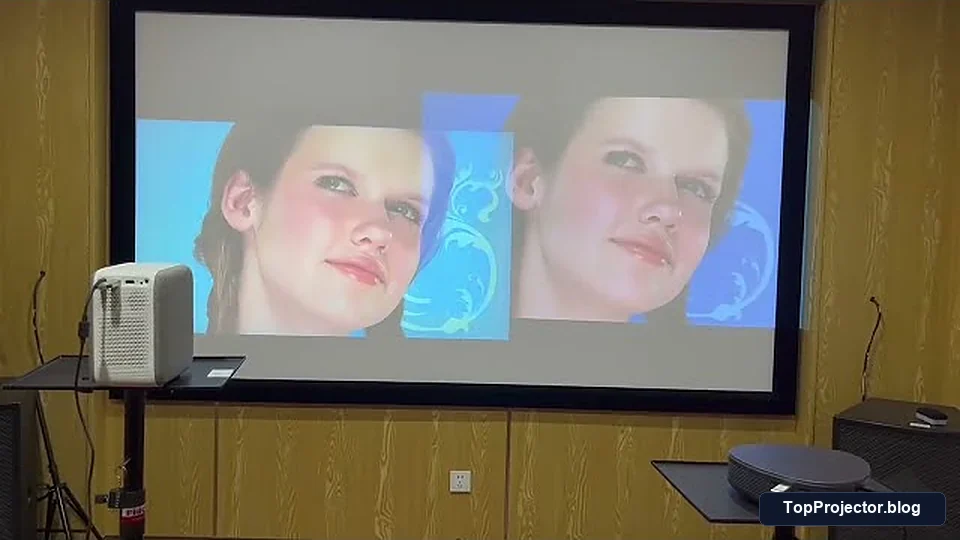
Conversely, traditional 3LCD projectors struggle to match these deep black levels. Their light-passing panel design leaks marginal light even during completely black frames, elevating the baseline black floor in treated environments.
Laser illumination modifies this dynamic significantly by introducing dynamic dimming. Laser engines can modulate light output instantly, drastically improving perceived contrast during dark sci-fi or horror sequences.
When evaluating native contrast, single-chip DLP projectors typically struggle to exceed a 1,500:1 to 2,000:1 native ratio without dynamic iris assistance, compromising dark cinematic scenes in dedicated dark rooms.
- Single-chip DLP provides the highest native contrast ratio.
- 3LCD panels suffer from elevated black floors in dark rooms.
- Laser dimming algorithms help bridge the native contrast gap.
- Dynamic irises enhance black levels significantly.
- Static native contrast remains vital for dark rooms.
Pitch-Black Dedicated Home Theaters
In a fully blacked-out room with velvet walls, native contrast rules supreme. Here, DLP projectors provide an undeniable visual depth that makes cinematic content pop off the silver screen.
While 3LCD units offer vibrant colors, their greyish blacks become glaringly obvious during twilight cinematic sequences. Enthusiasts prioritizing moody film aesthetics should lean toward high-end DLP optical paths.
- Velvet-treated rooms expose the limitations of LCD black floors.
- DLP shines when ambient room reflections are completely eliminated.
Mixed-Light Entertainment Spaces
Living rooms with ambient light completely alter optical priorities. When ambient photons wash out the screen, native contrast matters less than raw color brightness and lumen output.
In these bright scenarios, 3LCD and laser-hybrid projectors maintain punchy saturation, preventing daytime sports or casual TV viewing from looking washed out and lifeless.
- Ambient light washes out native dark-room contrast advantages.
- High lumen output overrides casual daytime room lighting.
Dynamic Iris Implementations
Modern laser engines utilize frame-by-frame laser dimming algorithms to push perceived black floors downward, effectively expanding the dynamic contrast envelope during dark atmospheric sequences without crushing shadow detail.
- Laser dimming drops light output dynamically.
- 3LCD panels maintain superior static native contrast.
Ambient Light Rejection and Daytime Viewing
Battling daytime windows requires immense optical output. High-output laser light engines pump out massive lumen counts, cutting through ambient daylight far better than older lamp-based configurations.
DLP projectors paired with ambient light rejecting screens perform admirably, but single-chip color wheels sacrifice white lumens to maintain saturation. This trade-off can dim daytime sports broadcasts considerably.
Meanwhile, 3LCD technology outputs equal white and color lumens. This unique optical advantage ensures that saturated daylight viewing remains vibrant without requiring total blackout curtains.
Achieving acceptable daytime viewing often means exploring options like our best classroom projector recommendations paired with a specialized ALR screen featuring micro-sawtooth structures to reject ambient light.
- Laser engines provide the raw lumen horsepower for daylight.
- Color wheels on DLP reduce peak white brightness in bright rooms.
- 3LCD delivers equal color and white brightness for sports.
- Ambient light rejection preserves image saturation.
- Gain uniformity prevents hot-spotting artifacts.
High-Lumen Laser Engines
Modern solid-state laser diodes easily achieve over 3000 ANSI lumens. This immense optical power output redefines what is possible in ordinary family rooms without specialized drapery.
Pairing these high-output lasers with structured ALR screens yields an astonishing television replacement experience that competes directly with oversized flat-panel displays during daylight hours.
- Solid-state lasers exceed traditional lamp brightness limits.
- ALR screens concentrate projected light toward seated viewers.
Traditional Lamp-Based LCD Panels
While older lamp designs are fading out, traditional LCD panels still offer budget-friendly daytime punch. Their three-panel design utilizes every available photon efficiently for balanced color volume.
However, aging UHP lamps degrade rapidly in brightness, requiring costly bulb replacements every few thousand hours to maintain acceptable daytime viewing performance.
- UHP lamps degrade in brightness over their operational lifecycle.
- Three-panel LCD efficiency maximizes available lamp lumens.
Lumen Output Thresholds for Living Rooms
To combat ambient living room daylight effectively, you need a minimum of 3,000 ANSI lumens of sustained white brightness to prevent washed-out colors and maintain adequate saturation levels during afternoon sports viewing.
- Pair high lumens with directional ALR material.
- Avoid matte white screens in bright rooms.
Color Volume, HDR Handling, and Gamut
High dynamic range content demands expansive color gamuts and precise tone mapping. Advanced laser phosphor systems cover vast percentages of the Rec.2020 color space, unlocking vivid cinematic HDR.
Single-chip DLP relies on spinning color wheels, which can produce distracting rainbow artifacts for sensitive viewers. However, RGBRGB color wheels achieve exceptional color accuracy for movie purists.
3LCD projectors avoid rainbow artifacts entirely by splitting light simultaneously through three independent panels. This yields steady, artifact-free color volume that looks remarkably natural during prolonged viewing sessions.
Solid-state laser phosphor engines often rely on rotating yellow phosphor wheels with segmented color filters, which can restrict maximum color volume when trying to hit full Rec.2020 coverage thresholds.
- Laser phosphors unlock expansive wide color gamuts for HDR.
- Single-chip DLP can cause visible rainbow artifacts for some eyes.
- 3LCD completely eliminates color sequential artifacts.
- Phosphor wheels limit peak color saturation.
- Filter degradation shifts white balance over time.
Rec.2020 Coverage and Laser Phosphor
Achieving wide color gamuts is essential for modern 4K HDR mastering. Laser phosphor engines utilize specialized filters to hit cinematic color targets without sacrificing critical brightness levels.
This efficiency allows projectors to display scorching neon highlights and deep sunset hues precisely as directors intended, elevating home theater immersion to commercial cinema standards.
- Laser phosphor technology expands reproducible color ranges.
- Accurate tone mapping preserves subtle highlight gradations.
3LCD Color Brightness Equality
Many projectors inflate white lumens while neglecting color output. 3LCD architecture outputs identical white and color lumens, ensuring vibrant hues never look pale during bright scenes.
This color brightness parity makes animated films and nature documentaries look breathtakingly vivid, matching the dynamic punch of high-end consumer television displays.
- Equal color and white lumens prevent washed-out palettes.
- Independent panels saturate complex cinematic color grades.
RGB Triple-Laser Precision
As noted in our nebula 4k laser projector review, premium RGB triple-laser architectures bypass phosphor bottlenecks entirely, achieving over 100% Rec.2020 gamut coverage for breathtaking HDR grading.
- Triple laser systems eliminate rainbow artifacts.
- Ensure tone mapping controls are calibrated.
Motion Processing, Refresh Rates, and Input Lag
Fast-paced action movies and competitive video games require pristine motion handling. High-performance DLP gaming projectors feature ultra-low input lag figures, often dipping below 15 milliseconds at 4K/60Hz.
LCD and laser models often require heavy image processing chips to handle motion interpolation and keystone correction. This extra digital processing introduces noticeable input latency for fast-twitch console gamers.
Judder management also varies significantly across these technologies. Proper 24p frame reproduction is essential for cinephiles who despise artificial soap-opera effect smoothing during classic film viewings.
Competitive console and PC gaming demands extremely low input latency; high-end DLP models consistently achieve an impressive 15ms input lag at 4K/60Hz, vastly outperforming legacy optical engines.
- DLP projectors dominate in low input lag for gaming.
- Image processing chips can increase latency on 3LCD units.
- 24p frame rate support preserves authentic cinematic motion.
- Low latency is crucial for twitch gameplay.
- Frame interpolation adds undesirable display latency.
Competitive Gaming Setups
First-person shooters and racing simulators demand instant visual feedback. Modern gaming DLPs offer 240Hz refresh rates at 1080p, giving competitive players a distinct competitive edge on massive screens.
Minimizing input lag ensures that controller inputs translate instantly to on-screen action, eliminating the sluggish feeling common in older or heavily processed home theater projectors.
- High refresh rates reduce motion blur in fast games.
- Instant controller response times prevent competitive disadvantages.
Cinephile Film Judder Management
Movie buffs demand authentic 24 frames-per-second playback without stutter or unnatural smoothing. Both DLP and 3LCD projectors include dedicated film mode pull-down features.
Properly calibrated micro-mirrors and LCD gate timing ensure panning shots remain smooth and cinematic, respecting the original artistic vision of classic motion picture directors.
- Authentic 24p handling avoids artificial soap-opera motion.
- Precise frame timing maintains cinematic pacing integrity.
High Refresh Rate Limitations
While some modern 3LCD and laser gaming projectors now support 240Hz refresh rates at 1080p, pixel response times can introduce motion blur that interferes with fast-paced competitive esports titles.
- Enable game mode to bypass video processing.
- Check EDID handshake compatibility limits.
Optical Zoom, Lens Shift, and Throw Geometries
Physical room geometry dictates projector placement flexibility. Flexible optical zoom lenses and wide lens shift capabilities make installation straightforward in challenging architectural spaces.
DLP units often feature fixed or limited short-throw ratios, requiring precise physical positioning relative to the screen. Ceiling mounts must be measured down to the exact inch.
Conversely, premium 3LCD projectors frequently boast massive horizontal and vertical lens shift. This mechanical flexibility allows off-center shelf placement without resorting to digital keystone distortion.
Achieving precise image geometry requires robust mechanical adjustments; standard long-throw 3LCD projectors typically offer a generous 1.6x optical zoom paired with extensive vertical and horizontal lens shift.
- Lens shift provides physical installation flexibility.
- DLP throw ratios demand precise mounting measurements.
- Digital keystone correction degrades native image resolution.
- Lens shift simplifies complex ceiling installations.
- Digital keystone correction degrades native resolution.
Tight Apartment Installations
Urban living rooms rarely offer unlimited throw distance. Using a throw distance calculator helps position ultra-short-throw laser UST projectors inches from walls for massive images.
These compact form factors make laser USTs ideal for small apartments where ceiling mounting is prohibited by rental agreements or awkward drywall layouts.
- UST laser models sit inches away from projection surfaces.
- Rental-friendly setups eliminate complex ceiling wiring.
Dedicated Ceiling-Mounted Mounts
Custom home theaters benefit from rigid, permanent ceiling installations. Long-throw lenses with broad optical zoom ranges allow installers to hide hardware neatly at the back of the room.
Mechanical lens shift ensures the projected image aligns perfectly with acoustically transparent fixed screens without introducing unwanted digital scaling artifacts.
- Long-throw lenses accommodate rear-room ceiling mounts.
- Mechanical adjustment preserves pristine pixel mapping.
Ultra-Short-Throw Placement Constraints
Ultra-short-throw laser models demand absolute wall flatness because a throw ratio under 0.25:1 amplifies the slightest surface imperfection into noticeable geometric distortion across your projected screen area.
- Verify throw distance before mounting ceiling brackets.
- Use laser alignment tools for precise framing.
Engine Longevity, Thermal Management, and Maintenance
Long-term reliability depends heavily on thermal design and illumination source longevity. Modern solid-state laser diodes easily surpass twenty thousand hours of virtually maintenance-free operation.
Traditional mercury lamps degrade quickly, losing up to half their brightness within two thousand hours. Replacing these expensive bulbs adds significant ongoing maintenance costs to ownership.
Dust accumulation poses another threat to optical engines. Sealed DLP light paths prevent dust spots from forming, whereas open 3LCD optical blocks require regular air filter cleaning.
Traditional lamp-based projection systems require costly bulb replacements every 2,000 to 4,000 hours, whereas solid-state laser engines deliver up to 25,000 hours of virtually maintenance-free operational lifespan.
- Solid-state lasers offer over 20,000 hours of lamp life.
- Traditional UHP lamps require costly periodic replacements.
- Sealed DLP engines resist internal dust blob formation.
- Solid state diodes degrade slowly over years.
- Air filters need regular user inspection.
Solid-State Laser Lifespan
Laser illumination eliminates the anxiety of bulb degradation. Users can enjoy daily multi-hour viewing sessions for over a decade without noticing any drop in lumen output.
This maintenance-free reliability makes laser-based projectors a true set-and-forget television alternative for busy modern households and media rooms.
- Decade-long operation without brightness degradation.
- Instant on and off capabilities protect internal diodes.
UHP Lamp Replacement Cycles
Older lamp-based projectors demand careful management of operating hours. Running in high-brightness mode shortens bulb life, forcing users to balance lamp longevity against ambient room light.
Keeping spare replacement lamps on hand ensures movie nights are never abruptly canceled due to sudden bulb burnout during critical film climaxes.
- High lamp modes accelerate bulb wear and tear.
- Proactive replacement schedules prevent unexpected movie interruptions.
Dust Ingress and Optical Sealing
Optical engine longevity depends heavily on chassis filtration; fully sealed IP5X-rated optical blocks prevent dust accumulation on internal DMD chips or LCD panels, eliminating premature blobbing artifacts over years of heavy use.
- Clean removable intake air filters monthly.
- Monitor internal operating temperatures during summer.
Definitive Scenario-Based Buying Verdict
Selecting the ideal projector requires matching optical technology to your exact room conditions. Dedicated dark rooms heavily favor DLP native contrast and precise motion handling.
Conversely, multi-purpose living spaces benefit immensely from bright 3LCD or high-output laser engines that punch through ambient daylight without sacrificing color saturation.
Evaluate ambient light levels and consult our screen size and viewing distance tool before purchasing to ensure your chosen laser projector delivers optimal performance.
For dedicated home theater enthusiasts prioritizing cinematic black floors and film accuracy, a high-end LCoS or high-contrast 3LCD setup remains the ultimate choice over standard high-lumen DLP light engines.
- Dark home theaters reward native DLP contrast advantages.
- Bright living rooms demand high-lumen laser or 3LCD power.
- Match throw ratios and input lag to your specific use case.
- Prioritize cinema color fidelity in dark rooms.
- Balance black levels against room light control.
The Dedicated Cinema Enthusiast
If your room features dark walls, blackout drapes, and controlled lighting, a high-end laser DLP projector provides unmatched cinematic immersion and deep shadow details.
Cinephiles prioritizing film accuracy and pristine motion rendition will appreciate the razor-sharp single-chip pixel alignment and exceptional native contrast performance.
- Unmatched dark-room cinematic immersion and contrast.
- Pixel-sharp single-chip optical alignment.
The Casual Living Room Family
For active family rooms with windows and daytime traffic, 3LCD laser hybrids offer the best overall experience. Their vibrant color brightness handles ambient light effortlessly.
Enjoy effortless daytime sports viewing and artifact-free family movie nights without constantly adjusting window shades or worrying about rainbow wheel distractions.
- Vibrant color brightness combats daytime room lighting.
- Artifact-free viewing pleases sensitive family members.
The Ultimate Living Room Recommendation
If you are outfitting a bright multi-purpose living room, invest in a high-output laser-phosphor projector paired with an ambient light rejecting screen to guarantee vibrant daytime performance without heavy compromises.
- Match projector tech to your room acoustics.
- Prioritize native contrast for dark environments.
Frequently Asked Questions
What is the primary difference between DLP and 3LCD technology?
DLP uses microscopic mirrors to reflect light, producing exceptional native contrast and sharp images. In contrast, 3LCD splits light through three separate panels, delivering superior color brightness without rainbow artifacts.
Do laser projectors require expensive bulb replacements?
No, solid-state laser engines eliminate traditional lamps entirely. They provide over 20,000 hours of maintenance-free operation, lasting for a decade of normal daily viewing.
Which technology is better for bright living rooms?
High-output laser 3LCD projectors excel in bright rooms because they output equal white and color lumens, cutting through ambient daylight far better than single-chip alternatives.
What causes rainbow artifacts on DLP projectors?
Rainbow artifacts occur when viewers notice the rapid rotation of a color wheel in single-chip DLP units. Choosing models with fast RGBRGB color wheels minimizes this visual distraction.
Which projector type is best for competitive gaming?
DLP projectors are generally superior for gaming due to their ultra-low input lag and high refresh rate support, giving fast-twitch players an instant on-screen response.