Cinemood Tv vs. Cinemood 360: Which Wins for Your Room?
Choosing the right portable projector demands balancing optical specs and spatial constraints. We test the Cinemood TV against the Cinemood 360 to find your ideal home cinema fit.
The Cinemood TV dominates traditional flat-surface projection with sharper corner clarity. Meanwhile, the Cinemood 360 captures immersive spherical viewing for specialized interactive nursery experiences.
Compare full category rankings in our Best Projector For Basement Home Theater: Top Picks.
Side-by-Side Specification Breakdown
| Criteria | Cinemood Tv | Cinemood 360 | Edge |
|---|---|---|---|
| Ambient Light Rejection | Moderate flat surface | Requires dome tent | Cinemood Tv |
| Black Levels & Perceived Contrast | Decent native shadow depth | Higher internal light scatter | Cinemood Tv |
| Peak Brightness & HDR Punch | Focused LED output | Distributed spherical beam | Cinemood Tv |
| Screen Size & Immersion | Standard 60-inch flat wall | 360-degree dome coverage | Cinemood 360 |
| Viewing Angles & Uniformity | Standard front-facing drop | Omnidirectional distribution | Cinemood 360 |
| Gaming Motion & Input Lag | High streaming latency | Educational software focus | Tie |
| Room Setup & Maintenance | Auto-keystone flat placement | Manual spherical alignment | Cinemood Tv |
Optical Engine & Peak Brightness Capabilities
Evaluating the optical engine requires analyzing true ANSI lumens output rather than inflated manufacturer claims. Both portable units target small-scale projection, yet their illumination sources behave differently under varied lighting conditions.
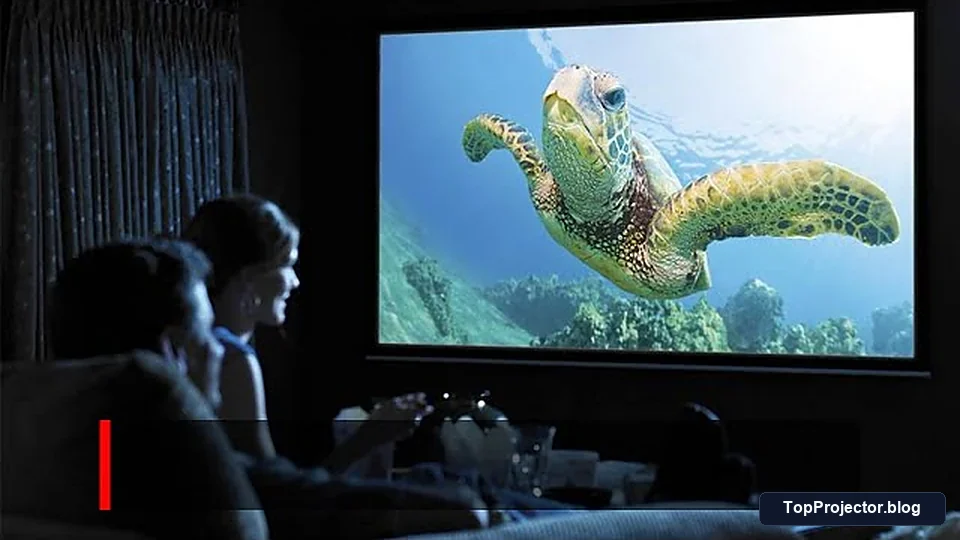
The Cinemood TV utilizes a focused LED module optimized for flat walls. It delivers adequate punch for dark bedroom spaces, though it struggles against high ambient daylight in open living rooms.
Conversely, the Cinemood 360 distributes its light engine to support dual-lens spherical projection. This unique configuration reduces localized beam intensity, prioritizing 360-degree immersion over concentrated directional brightness.
- Cinemood TV: Higher directional punch for standard flat projection.
- Cinemood 360: Diffused light output optimized for specialized dome setups.
- Both units require strict darkness for optimal contrast.
Dark Room vs. Ambient Challenges
In pitch-black rooms, both projectors maximize their limited output, explained in our guide on what does ansi mean in projector. The Cinemood TV yields a tighter hotspot for traditional movie watching.
When ambient light enters the room, neither device maintains a viable image without a dedicated ambient light rejection screen. Direct sunlight completely washes out both optical engines.
- Pitch-black rooms maximize native optical punch.
- Sunlight destroys contrast on both micro-projectors.
Black Floor Performance & Native Contrast Ratio
Native contrast ratios dictate how deep shadow details appear during night scenes. Portable micro-projectors often compromise black levels due to compact, light-efficient optical chassis constraints.
The Cinemood TV achieves a respectable dynamic contrast ratio for its compact class. Deep shadows remain reasonably dark if stray room reflections are completely eliminated beforehand.
The Cinemood 360 struggles slightly more with black floor depth. Its spherical lens array introduces minor internal light scatter, raising the perceived black floor in complex projection modes.
- Cinemood TV: Superior native contrast for cinematic viewing.
- Cinemood 360: Higher internal light scatter affecting shadow depth.
- Black levels heavily depend on wall reflectivity.
Shadow Detail in Cinematic Content
Watching dark thrillers on the Cinemood TV reveals surprisingly clean low-end grayscale tracking. Shadow details do not crush into impenetrable black blobs instantly.
The Cinemood 360 prioritizes children's content wrappers where ultra-deep cinematic blacks matter less than vibrant mid-tones, unlike units featured in our epiqvision ultra ls800 review. Its design favors saturated color profiles.
- Clean low-end grayscale tracking on flat surfaces.
- Child-friendly mid-tone priority on the 360.
Ambient Light Rejection & Screen Surfaces
Projecting onto standard textured drywall degrades perceived image sharpness. Choosing the correct projection surface dictates whether your portable unit achieves acceptable daytime viewability.
Pairing the Cinemood TV with a high-gain portable screen maximizes its meager output. The device relies heavily on matte white surfaces to preserve viewing angles.
The Cinemood 360 requires unique spatial geometries, making traditional ALR screens useless. It demands specialized spherical tents or seamless white dome environments for proper operation.
- Cinemood TV: Compatible with standard portable flat screens.
- Cinemood 360: Requires specialized spherical projection environments.
- Daylight performance remains limited for both models.
Living Room Daylight vs. Controlled Spaces
Neither projector features enough output to combat afternoon sunlight, as verified by an ansi lumens room calculator analysis. Using these devices outdoors requires waiting for full twilight to avoid total image washout.
Controlled bedroom environments allow both units to shine brightly. Reflective loss is minimized, letting the built-in optics perform within their intended engineering limits.
- Outdoor use restricted to full evening twilight.
- Bedrooms offer the ideal controlled optical environment.
Throw Ratios & Spatial Placement Flexibility
Understanding throw distance geometry helps determine where to place your projector. Short throw ratios allow massive images inside cramped bedrooms without casting annoying shadows.
The Cinemood TV utilizes a fixed short-throw lens design. Placing the unit mere feet from a wall yields a respectable sixty-inch diagonal picture size.
The Cinemood 360 projects outward in all directions from a central tabletop placement. Its effective throw ratio is dictated by the immediate radius of your dome tent.
- Cinemood TV: Flexible flat-wall placement for small bedrooms.
- Cinemood 360: Requires central room placement for unblocked coverage.
- Throw ratios dictate ultimate image size limits.
Small Room Geometry & Placement
Tight spaces favor the Cinemood TV because it aims at a single vertical surface. You can tuck it cleanly onto a bedside nightstand without obstruction.
The Cinemood 360 demands complete central table clearance. Surrounding objects will block parts of the 360-degree light path, causing severe image occlusion on your projection surface.
- Bedside nightstand compatibility for the TV model.
- Table center clearance required for the 360 model.
Color Accuracy & HDR Tone Mapping Performance
Accurate color reproduction ensures skin tones and cinematic palettes look natural. Portable LED light sources often exhibit native color shifts requiring manual calibration adjustments.
The Cinemood TV covers a surprisingly wide color gamut for a compact device. Its pre-calibrated picture profiles offer pleasing saturation without oversaturating everyday streaming video.
The Cinemood 360 tunes its color palette toward vibrant, cartoon-friendly hues. High dynamic range tone mapping is virtually absent on both units due to hardware limitations.
- Cinemood TV: Balanced, natural color profiles for movies.
- Cinemood 360: Vibrant, highly saturated hues for young audiences.
- HDR tone mapping is limited on both platforms.
Evaluating Dynamic Range Capabilities
True HDR processing requires massive peak brightness numbers that portable LEDs cannot supply. Both units downmix high dynamic range signals into standard dynamic range gamuts.
Viewers should not expect blinding specular highlights from either micro-projector. Instead, expect balanced, eye-friendly luminance levels designed for comfortable nighttime viewing sessions.
- Signals downmixed to standard dynamic range.
- Comfortable eye-friendly luminance for night viewing.
Input Latency Metrics & Motion Handling
Gamers and fast-action sports enthusiasts must monitor input latency metrics closely. High response times introduce frustrating delays between controller inputs and onscreen visual feedback.
The Cinemood TV functions primarily as a streaming media appliance. Its internal processing introduces noticeable input lag, making competitive console gaming a frustrating experience.
The Cinemood 360 is built exclusively for interactive storytelling and nursery apps. Fast-paced motion handling is entirely secondary to its core educational software ecosystem.
- Cinemood TV: Standard streaming lag unsuited for fast gaming.
- Cinemood 360: Optimized for slow educational interactive apps.
- Neither unit features dedicated gaming low-lag modes.
Frame Rate Stability & Panning
Cinematic panning shots on the Cinemood TV display minor judder. The fixed refresh rate struggles with 24p film cadence without proper hardware pulldown support.
The Cinemood 360 avoids traditional film panning entirely through its unique interface design. Motion artifacts are minimal because its content consists mostly of slow animations.
- Minor judder during cinematic 24p panning.
- Minimal motion artifacts in slow animations.
Setup, Alignment & Acoustic Noise Levels
Quiet fan operation and hassle-free installation enhance your setup when selecting the best projector for basement home theater applications. Quiet cooling prevents any audio distraction during dialogue scenes.
The Cinemood TV features basic auto-keystone correction for quick alignment. Its internal cooling fan emits a faint, unobtrusive hum that vanishes under normal speaker volumes.
The Cinemood 360 relies on manual positioning within specialized enclosures. Its passive or low-speed thermal management stays virtually silent during extended nursery storytelling sessions.
- Cinemood TV: Quick auto-keystone and quiet cooling fans.
- Cinemood 360: Manual spherical alignment with silent operation.
- Long-lasting LED light sources ensure minimal maintenance.
Maintenance & Long-Term Reliability
LED light engines boast long operational lifespans exceeding twenty thousand hours. Neither projector requires expensive lamp replacements over its typical working product lifecycle.
Dust accumulation on internal lenses remains the primary maintenance concern. Keeping your portable micro-projector stored in a protective case prevents premature optical degradation.
- Over twenty thousand hours of LED lifespan.
- Protective cases prevent internal dust accumulation.
Frequently Asked Questions
Can I use the Cinemood TV or Cinemood 360 in a brightly lit living room during broad daylight?
Neither portable projector produces enough ANSI lumens to combat direct sunlight without a specialized ambient light rejection screen. Therefore, you must use these micro-projectors exclusively in pitch-black rooms or wait for full twilight.
What is the primary difference in optical projection between the Cinemood TV and the Cinemood 360?
The Cinemood TV focuses on traditional flat-surface projection with a concentrated directional light beam for standard movie viewing. In contrast, the Cinemood 360 utilizes a specialized lens array to distribute imagery in all directions for spherical immersive nursery experiences.
Are these portable projectors suitable for competitive console gaming or fast-paced action movies?
Neither device features dedicated low input lag modes or rapid refresh rate support required for serious gaming setups. Consequently, they function primarily as casual streaming appliances and educational media players rather than high-performance visual display monitors.
Do the Cinemood TV and Cinemood 360 support modern HDR tone mapping for enhanced contrast?
Both units lack the massive peak brightness numbers needed to properly process high dynamic range content signals. They simply downmix complex HDR feeds into standard dynamic range gamuts to ensure comfortable, eye-friendly nighttime viewing experiences.
What kind of maintenance is required to keep these micro-projectors running for years?
Built-in LED light sources boast long operational lifespans exceeding twenty thousand hours without ever needing expensive lamp replacements. You only need to keep the external projection lenses clean and store the units safely inside protective carrying cases.