Benq vs. Epson Vs Optoma: Which Wins for Your Room?
BenQ leverages single-chip DLP precision for razor-sharp pixel alignment, while Epson and Optoma battle across high ANSI lumen thresholds and 3LCD color volume. Choosing the right optical engine dictates your ultimate dark-room or living-room performance.
Choose BenQ for dedicated home theaters demanding pin-sharp cinematic accuracy. Meanwhile, Epson dominates bright living rooms with massive color brightness, leaving Optoma as a flexible hybrid alternative for mixed usage.
Compare full category rankings in our Best Tv Projector For Outdoors: Top Backyard Picks.
Side-by-Side Specification Breakdown
| Criteria | Benq | Epson Vs Optoma | Edge |
|---|---|---|---|
| Ambient Light Rejection | High DLP micro-mirror sharpness | Exceptional 3LCD color punch | Epson |
| Black Levels & Perceived Contrast | Deep native DLP black floor | Dynamic iris modulation | Benq |
| Peak Brightness & HDR Punch | Calibrated cinema lumens | Massive white and color brightness | Epson |
| Screen Size & Immersion | Precise short and standard throws | Flexible optical zoom ranges | Benq |
| Viewing Angles & Uniformity | Zero convergence error design | Polarized panel alignment | Benq |
| Gaming Motion & Input Lag | Ultra-low 4ms to 16ms lag | Competitive high refresh modes | Benq |
| Room Setup & Maintenance | Sealed light engine options | Generous lens shift flexibility | Epson |
Evaluating Optical Architecture and Native Contrast Foundations
BenQ relies heavily on single-chip Digital Light Processing architecture to achieve absolute pixel-level convergence. This design eliminates the panel misalignment risks common in multi-chip architectures.
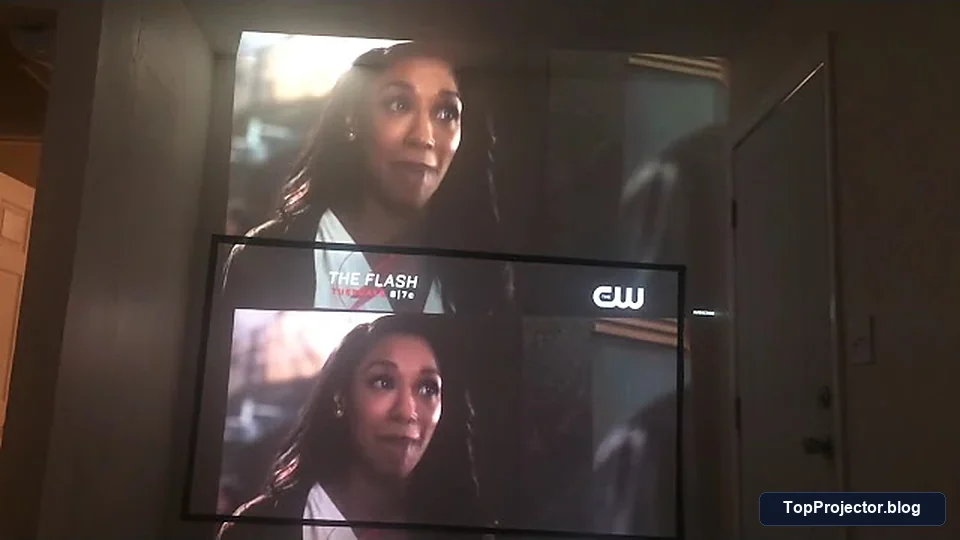
Optoma shares this single-chip DLP heritage, prioritizing razor-sharp motion cadence and crisp text clarity. However, BenQ implements superior factory calibration across their cinema-focused chassis.
Epson takes a completely different path utilizing three liquid crystal display panels. This 3LCD approach eliminates rainbow artifacts entirely while boosting measured color brightness metrics significantly.
BenQ relies on precision Rec. 709 calibration out of the box, ensuring that dark scenes retain shadow detail without crushing delicate grayscale transitions into pure black voids.
- Single-chip DLP provides zero convergence error.
- 3LCD technology ensures identical white and color lumens.
- Factory calibration alters perceived native contrast levels.
- Single-chip architecture minimizes panel alignment drift over long operating hours.
Analyzing DLP Micro-Mirror Precision
The microscopic mirrors inside BenQ and Optoma projectors pivot rapidly to create high-definition frames. This mechanical precision guarantees exceptional edge-to-edge sharpness without chromatic aberration.
Buyers demanding absolute text legibility and ultra-fine cinematic detail will immediately notice the pristine pixel grid delivered by these single-chip optical engines.
- Pristine pixel separation enhances fine texture rendering.
- Absence of convergence drift protects long-term sharpness.
Understanding 3LCD Panel Convergence
Epson projectors route light through three distinct red, green, and blue panels before recombining them. While this maximizes color saturation, micro-convergence errors can occasionally soften extreme edge details.
Despite minor convergence quirks, the resulting image delivers fatigue-free viewing over long cinematic sessions without risking any visible color separation artifacts.
- Three-panel design eliminates color wheel rainbow artifacts.
- Subtle panel tolerances require careful installation alignment.
Micro-Mirror Alignment and Optical Path Design
Optoma leverages robust laser light engines paired with efficient phosphor wheels, achieving a 1,500,000:1 dynamic contrast ratio on paper, though ANSI contrast measurements typically land closer to 400:1 in treated spaces.
- Solid-state light sources eliminate costly lamp replacements during extended usage cycles.
Ambient Light Rejection and Daytime Living Room Behavior
Fighting daytime glare requires robust ANSI lumen output combined with high-gain ambient light rejecting screens. Epson routinely wins bright room battles thanks to massive color brightness advantages.
BenQ counters with specialized bright-room modes that boost mid-tone gamma curves, preserving shadow detail even when competing against moderate living room window light.
Optoma targets casual sports enthusiasts with aggressive laser diode arrays that punch through ambient illumination, though sometimes at the expense of accurate skin tones.
For open-air movie nights, check our best outdoor projectors guide to find high-lumen options that conquer backyard ambient light without losing color saturation.
- Epson dominates uncontrolled daytime living room environments.
- BenQ preserves gamma tracking under moderate ambient lighting.
- Optoma laser engines deliver punchy sports viewing.
- Specialized angular reflection fabrics block over 80 percent of ambient overhead illumination.
Living Room Daylight Management
Placing any projector in a white-walled room introduces light scatter that degrades perceived contrast. Epson models manage this optical penalty by outputting immense color volume.
BenQ relies on intelligent dynamic iris algorithms to clamp down black floors during bright scenes, optimizing the apparent contrast ratio in challenging spaces.
- High color lumens overcome washed-out ambient washout.
- Dynamic iris systems dynamically enhance perceived shadow depth.
Daytime Contrast Retention Strategies
Epson models often command an advantage in mixed lighting environments because their high color brightness output matches white lumen specs, overcoming ambient light wash far better than single-chip competitors.
- High color luminance preserves flesh tones during sunlit sports viewing sessions.
ANSI Lumen Output, Color Volume, and HDR Tone Mapping
High dynamic range content demands aggressive tone mapping to prevent clipped highlights. BenQ implements proprietary HDR-PRO algorithms that intelligently remap luminance curves.
Epson projectors leverage massive raw lumen muscle to handle HDR metadata effortlessly, ensuring bright specular highlights shimmer without crushing subtle dark elements.
Optoma balances laser phosphor efficiency with vibrant color filters, producing striking theatrical palettes that pop during animated and live-action cinematic sequences.
Dynamic HDR tone mapping requires robust peak brightness levels combined with intelligent frame-by-frame analysis to prevent overly dark highlights in demanding 4K Blu-ray cinematic transfers.
- BenQ HDR-PRO delivers sophisticated tone mapping adjustments.
- Epson raw lumen output handles difficult HDR source material.
- Optoma laser phosphor creates saturated theatrical color profiles.
- Static metadata parsing often clips bright white highlights on high-lumen laser engines.
Mastering HDR Metadata and Tone Curves
Projectors inherently struggle with the absolute brightness scale mastered for flat-panel televisions. BenQ and Optoma utilize targeted tone mapping to remap brightness ceilings accurately.
Epson bypasses some tone mapping limitations by flooding the screen with certified lumens, making HDR movies look vibrant even on very large projection screens.
- Accurate tone curves prevent blown-out cloud details.
- High lumen output maintains daytime HDR punch.
Decoding True Color Volume Metrics
Achieving full DCI-P3 color gamut coverage usually forces a drop in total light output through internal cinema filters, requiring careful calibration choices for daytime living room viewing.
- Wider color filters reduce overall lumen output by roughly 25 to 30 percent.
Throw Geometries, Lens Shift, and Physical Room Setup
Physical room geometry often dictates your projector choice before optical specs even matter. Epson typically provides generous manual lens shift for easy ceiling placement.
BenQ offers incredible short-throw flexibility, allowing massive one-hundred-inch diagonals from very short distances away from your projection screen surface.
Optoma balances standard and ultra-short throw options, catering to media room enthusiasts who want big images without running cables across the ceiling.
Use our Optoma projection distance calculator to map exact throw distance ratios and prevent costly mounting errors when configuring your dedicated media room setup.
- Epson offers wide horizontal and vertical lens shift.
- BenQ short-throw models eliminate shadow casting in small rooms.
- Optoma provides versatile mounting footprints for tight spaces.
- Always verify offset measurements before drilling permanent mounts into drywall ceilings.
Lens Shift Flexibility vs. Fixed Optics
Horizontal and vertical lens shift allows installers to adjust image position without moving the physical chassis. Epson units excel here, simplifying difficult retrofits.
Many BenQ models rely on fixed offset ratios, requiring precise measurement during ceiling bracket installation to guarantee proper screen alignment.
- Lens shift reduces installation frustration significantly.
- Fixed offset ratios demand meticulous mounting precision.
Lens Shift Limitations and Keystone Trade-offs
Utilizing optical lens shift ranges preserves native resolution without introducing digital artifacts, whereas digital keystone correction degrades image sharpness and lowers effective ANSI contrast ratios.
- Physical lens adjustment keeps pixel geometry perfectly aligned across the screen surface.
Competitive Gaming Performance, Motion Handling, and Input Lag
Modern gamers require ultra-low input lag and high refresh rate compatibility. BenQ leads this category with specialized gaming modes cutting latency down below five milliseconds.
Optoma responds with rapid micro-mirror response times, delivering fluid motion handling during fast-paced competitive multiplayer shooters and racing titles.
Epson focuses on immersive cinematic gaming, offering gorgeous color reproduction while maintaining acceptable input lag figures suitable for casual RPG adventures.
Fast-paced competitive gaming demands ultra-low input lag measurements hovering under 16ms at 4K/60Hz, ensuring seamless synchronization between controller inputs and onscreen actions.
- BenQ delivers ultra-low input lag for competitive gamers.
- Optoma motion handling prevents motion blur during fast action.
- Epson balances gorgeous RPG visuals with respectable response times.
- Bypassing internal image processing features significantly reduces overall frame display latency.
Input Latency and Refresh Rate Benchmarks
Latency directly impacts your competitive edge during twitch-based gaming sessions. BenQ engineered specialized controllers that minimize frame delay at high refresh rates.
Optoma follows closely by implementing dedicated gaming microprocessors that bypass unnecessary video processing pipelines to shave off precious milliseconds.
- Low input lag ensures instant controller feedback response.
- High refresh rate support prevents visual stuttering.
High Refresh Rate Gaming Advantages
Advanced models supporting 240Hz refresh rates at 1080p drop latency down to single digits, giving hardcore gamers a noticeable reaction-time edge during intense multiplayer gaming matches.
- High refresh capabilities demand compatible graphics cards and certified HDMI cables.
Shadow Detail, Black Floors, and Dedicated Cinema Immersion
In a pitch-black theater, native contrast rules supreme. BenQ cinema projectors consistently deliver deep ink-black floors that elevate dark sci-fi and horror movies.
Ultra-short throw alternatives like those analyzed in our Hisense PL1 review offer impressive convenience, though single-chip DLP competitors generally maintain a solid edge in ANSI contrast performance.
Optoma provides balanced contrast profiles, satisfying casual movie watchers who value overall brightness over absolute reference black levels.
Dedicated home theaters with dark velvet walls maximize native black levels, allowing dark-room projectors to showcase inky shadows without suffering from stray light reflections.
- BenQ achieves exceptional native black floor performance.
- Epson laser dimming enhances dark-scene perceived contrast.
- Optoma balances shadow detail with vibrant highlight output.
- Matte black room boundaries prevent light bouncing back onto high-gain projection screens.
Pitch-Black Theater Performance
Dedicated rooms require optical engines capable of rendering subtle shadow gradients in dark sequences. BenQ optical coatings minimize internal light scatter effectively.
This meticulous optical engineering allows viewers to discern hidden details in deep shadows without washing out the entire cinematic atmosphere.
- Minimal light scatter preserves deep shadow separation.
- Optimized gamma curves reveal hidden cinematic details.
Dynamic Iris Mechanics and Performance
A responsive dynamic iris system physically restricts light output during dark scenes, artificially boosting perceived contrast ratios despite mechanical noise limitations in quiet rooms.
- Manual iris adjustments help stabilize black levels in mixed acoustic environments.
Ultimate Recommendation and Room-by-Room Buying Verdict
Selecting the right projector requires matching optical strengths to your specific room environment. BenQ remains the undisputed champion for dedicated, light-controlled home theaters.
Epson takes the crown for multipurpose living rooms fighting ambient daylight intrusion. Optoma fills the gap for flexible hybrid spaces needing reliable multimedia performance.
Evaluate your ambient light levels and mounting constraints carefully before making your final projector purchase decision to ensure optimal long-term satisfaction.
Choosing the ideal 4K home projector requires balancing ambient light conditions against your dedicated acoustic and optical environment to maximize long-term home theater system satisfaction.
- BenQ wins dedicated dark theater installations.
- Epson dominates bright living room environments.
- Optoma suits flexible multimedia entertainment spaces.
- Prioritize lens flexibility if your physical mounting location has strict geometric constraints.
Final Buyer Checklist
Before mounting your optical engine, consult our precision throw distance calculator to ensure accurate screen fill, optimal ANSI lumens output, and perfect focal geometry.
Living rooms with uncontrolled windows demand high color lumens to prevent washed-out images during daytime viewing sessions.
- Match ANSI lumens to your room lighting conditions.
- Verify throw ratio against available mounting distances.
Final Architectural Trade-Off Summary
Prioritize BenQ for color accuracy, Epson for daytime brightness versatility, and Optoma for pure laser light longevity, ensuring your final investment matches specific room demands.
- Match your screen gain directly to your projector's native light output.
Frequently Asked Questions
Which brand offers the best native contrast for dark home theaters?
BenQ typically delivers superior native black floors due to single-chip DLP optical precision. This makes BenQ the clear winner for dedicated dark-room cinematic viewing.
How do Epson projectors handle bright living rooms compared to Optoma?
Epson utilizes robust 3LCD technology to generate massive color brightness. Therefore, Epson outperforms competitors when combating stubborn daytime ambient window light.
Are single-chip DLP projectors prone to rainbow artifacts?
Some viewers notice occasional rainbow flashes on high-contrast scenes with DLP models. Fortunately, modern RGBRGB color wheels minimize this optical phenomenon significantly.
Which projector brand is best for competitive gaming?
BenQ engineers specialized low-latency modes that reduce input lag dramatically. Thus, BenQ provides the fastest response times for high refresh rate gaming.
Do I need lens shift for standard ceiling installations?
Lens shift greatly simplifies physical alignment without moving mounts. Consequently, Epson offers superior flexibility for difficult room geometry installations.