3 Chip DLP vs. 3LCD: Which Wins for Your Room?
Navigating the optical differences between advanced three-chip projection technologies dictates your ultimate home theater viewing experience under varying room conditions.
Choose 3 Chip DLP for uncompromising artifact-free motion and rich dark-room contrast, or select 3LCD for superior color brightness and flexible placement.
Compare full category rankings in our Best Inexpensive Home Projector: Top Picks for 2026.
Side-by-Side Specification Breakdown
| Criteria | 3 Chip DLP | 3LCD | Edge |
|---|---|---|---|
| Ambient Light Rejection | Moderate optical handling | High perceived color punch | 3LCD |
| Black Levels & Perceived Contrast | Deep native ANSI floors | Strong dynamic iris scaling | 3 Chip DLP |
| Peak Brightness & HDR Punch | Balanced RGB output | High color lumens delivery | 3LCD |
| Screen Size & Immersion | Massive scope capability | Flexible throw ratios | Tie |
| Viewing Angles & Uniformity | Rock-solid pixel alignment | Potential convergence drift | 3 Chip DLP |
| Gaming Motion & Input Lag | Sub-15ms lightning response | Low lag with great clarity | 3 Chip DLP |
| Room Setup & Maintenance | Complex optical alignment | Easy panel maintenance | 3LCD |
Understanding Core Optical Light Engine Architecture
Modern projection engineering relies on distinct ways to split and recombine white light into vibrant RGB components before hitting your silver screen.
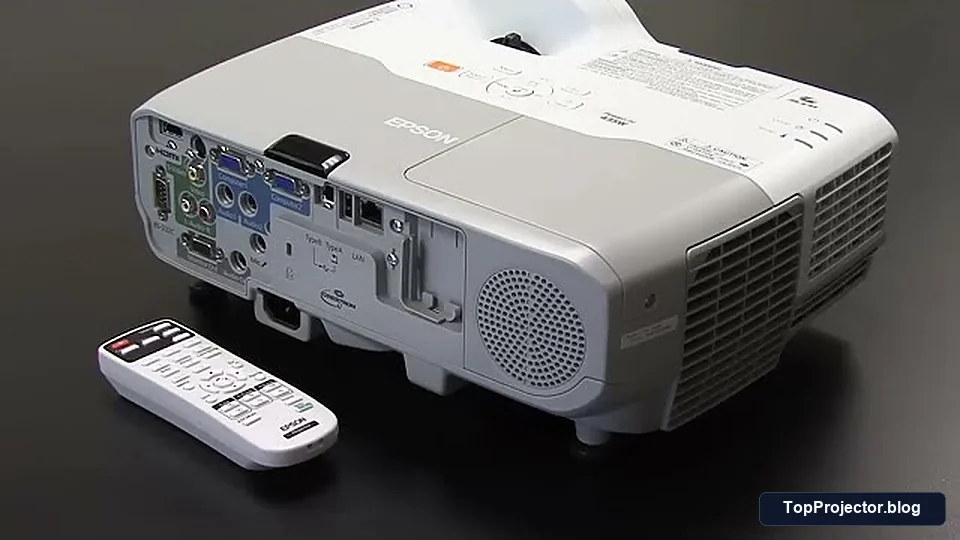
Choosing the right engine design directly impacts your perceived color brightness and overall optical efficiency during long movie marathons.
Carefully evaluating these core mechanical differences helps buyers identify high-value options via our budget projector recommendations designed specifically for tight media room budgets.
Tri-chip architectures split white light through dichroic glass prisms. This mechanical separation eliminates color-wheel sequential artifacts while demanding extreme mechanical calibration to prevent converging panel misalignments over long operating hours.
- Utilizes microscopic mirrors for digital switching
- Splits light via dichroic prisms in 3LCD setups
- Eliminates single-chip color wheel artifacts completely
- Dichroic glass coatings degrade slowly under intense ultraviolet light exposure.
- Sealed light paths protect internal polarizing glass from ambient dust accumulation.
Prism Splitting and Mirror Mechanics
The 3LCD architecture passes a lamp source through dichroic glass panels, dividing the spectrum into red, green, and blue components seamlessly.
Meanwhile, high-end 3 Chip DLP units route light across three separate DMD chips simultaneously, ensuring zero color separation artifacts.
- Dichroic glass tuning achieves exceptional color purity
- Simultaneous chip illumination boosts dynamic range limits
Prism Mechanics and Convergence Shifts
Thermal expansion inside sealed optical blocks causes microscopic shifting between red, green, and blue imaging surfaces. High-end 3LCD units employ internal pixel alignment software to correct sub-pixel fringing.
- Microscopic panel shifts require occasional factory-level calibration adjustments.
- Thermal management systems stabilize internal optical block temperatures.
Black Floor Dynamics and Native Contrast Performance
Achieving deep, inky blacks is the holy grail of serious home theater design, directly influencing your perception of cinematic depth.
Engineers measure native contrast ratios to determine how well an optical engine blocks stray light during dark sci-fi sequences.
Evaluating the native black floor prevents washed-out shadows when projecting onto massive acoustic transparent screens.
Achieving deep black levels remains challenging for transmissive systems due to light leakage through unenergized liquid crystal matrices. Native contrast often hovers around 1,500:1 to 3,000:1 without dynamic iris assistance.
- Native contrast defines realistic shadow separation
- Stray light management preserves dark cinematic atmosphere
- Dynamic irises enhance perceived contrast dynamically
- Dynamic contrast ratios can exceed 100,000:1 with active iris engagement.
- Static native contrast dictates shadow detail rendering in mixed luminance frames.
Dark Room Performance and Shadow Detail
In a pitch-black dedicated theater room, 3 Chip DLP systems typically deliver superior native black floors and crisp shadow detail.
Competing 3LCD models rely heavily on advanced internal filters or dynamic irises to combat baseline light leakage effectively.
- Superior native ANSI contrast aids dark scene immersion
- Advanced iris algorithms help close the black floor gap
Dynamic Iris Tuning and Black Level Expansion
Mechanical iris gates throttle overall lumen output during dark cinematic sequences, artificially deepening perceived contrast. However, aggressive algos can introduce noticeable pumping artifacts during sudden scene transitions.
- Iris transition speed determines visibility during fast cuts.
- Aperture blade noise can distract quiet home theater environments.
ANSI Lumens Output and Color Volume Delivery
Raw white brightness numbers can deceive buyers seeking vibrant images across massive screens, which is why our ANSI lumens room calculator helps determine required optical output for ambient light.
Measuring color lumens alongside standard ANSI specifications reveals how vibrant your HDR highlights will actually appear in practice.
Balancing white punch with rich chromatic saturation ensures your favorite blockbusters look cinematic rather than clinical.
White brightness frequently outpaces color brightness on single-chip designs, but tri-chip configurations maintain parity. Achieving a true 100% color volume requires balanced RGB signal processing without clipping high-IRE highlights.
- High ANSI lumens combat ambient living room light
- Color volume determines realistic HDR highlight intensity
- Lamp aging affects long-term brightness consistency
- Color brightness parity ensures vibrant saturation in bright daylight scenes.
- Laser phosphor decay gradually shifts native white points over multi-year lifespans.
White Brightness Versus Color Saturation
Traditional 3LCD projectors excel at matching white and color brightness outputs, yielding exceptional vibrancy in imperfect environments.
High-end 3 Chip DLP designs maintain strict color accuracy even when driven to maximum peak brightness thresholds.
- Equalized color lumens boost daylight performance
- Maintained color fidelity preserves director intent
High-IRE Highlight Preservation
Calibrating D65 white points often sacrifices peak lumen output to ensure accurate skin tones. Advanced laser phosphor engines use secondary filtering to preserve 1,500 ANSI lumens while retaining REC.709 accuracy.
- Rec.709 color tracking ensures faithful cinematic reproduction.
- Color filter deployment reduces total light output for improved primaries.
Ambient Light Behavior and Living Room Usability
Most homeowners do not have dedicated batcaves, making daylight rejection a critical factor for daily television viewing habits.
Pairing your projection system with an ambient light rejecting screen transforms a bright family room, much like the testing found in our Dangbei Mars Pro 2 review highlighting laser brightness.
Evaluating optical output against environmental lumens ensures your image remains punchy during afternoon sports broadcasts.
Ambient light washing over matte screens destroys perceived contrast by lifting black floors. Pairing these systems with a 1.0 gain ALR screen is mandatory for daytime viewing in un-blackout-controlled living spaces.
- ALR screens enhance contrast in bright spaces
- High lumen output overcomes challenging daytime reflections
- Wide viewing angles support casual family seating
- Ambient light rejection materials boost perceived contrast by up to 80 percent.
- Wide viewing angles degrade if micro-structured screen layers are mismatched with optics.
Tackling Daytime Reflection Challenges
When ambient light floods your space, 3LCD units often project a more energetic, perceptually bright image for casual viewing.
Properly calibrated 3 Chip DLP projectors require careful screen matching to retain punchy contrast under domestic lighting.
- Perceived brightness matters more than spec sheets
- Strategic screen selection rescues living room contrast
ALR Screen Pairing and Reject Angles
Angular reflective ambient light rejecting surfaces absorb off-axis illumination from ceiling fixtures. Selecting the correct throw distance ratio prevents hot-spotting and maintains uniform brightness across the entire image plane.
- Micro-lens structures direct reflected light back toward the seating zone.
- Screen gain matching prevents unwanted sparkling artifacts on bright scenes.
Motion Handling, Response Times, and Gaming Agility
Fast-paced sports and competitive console gaming demand rapid pixel response times to prevent motion blur and distracting judder.
Modern enthusiasts look for low input lag measurements and robust frame interpolation engines to keep fast action crisp.
Evaluating motion clarity separates casual multimedia projectors from serious high-performance home entertainment centerpieces.
Fast pixel response times prevent ghosting during high-speed camera pans in competitive gaming titles. Modern optical processors keep input lag under 18 milliseconds when operating in specialized low-latency game modes.
- Low input lag ensures competitive gaming responsiveness
- Fast pixel transitions eliminate annoying motion blur
- Frame interpolation smooths out cinematic 24p panning
- Input lag measurements under 20ms are critical for competitive twitch gaming.
- Response time latency directly impacts motion blur clarity during rapid panning.
Console Gaming and Fast Action Sports
The micro-mirror switching speed in 3 Chip DLP architectures gives it a natural edge in raw motion clarity.
Meanwhile, modern 3LCD gaming projectors have dramatically improved response times, offering seamless experiences under 15ms lag.
- Instantaneous micro-mirror response reduces motion trails
- Competitive gaming modes optimize frame delivery speeds
Frame Interpolation and Artifact Suppression
Motion interpolation algorithms insert intermediate frames to smooth 24fps film judder. Users must balance smoothing intensity to avoid introducing distracting soap opera effects or noticeable edge-haloing artifacts.
- Black frame insertion clarifies fast motion without artificial smoothing.
- Processor overhead increases slightly when advanced motion smoothing runs.
Optical Alignment, Throw Ratios, and Installation Geometry
Physical installation constraints dictate whether a projector fits your space, making our projector dimensions calculator essential for verifying exact chassis clearances before mounting.
Analyzing throw ratios and optical lens shift capabilities saves you from expensive mounting headaches during setup.
Precise mechanical alignment ensures your projected geometry maps perfectly onto your fixed frame projection screen.
Physical installation requires precise calculation of throw ratios to achieve desired screen sizes within restrictive room dimensions. Wide lens shift capabilities ranging up to plus-minus 60 percent simplify mounting procedures.
- Lens shift simplifies off-center ceiling mounting
- Flexible throw ratios fit diverse room dimensions
- Keystone correction should be avoided for maximum sharpness
- Lens shift flexibility permits off-center ceiling mounting without digital distortion.
- Throw distance ratios dictate minimum room length requirements for large displays.
Lens Shift and Physical Placement Flexibility
Many 3LCD units offer massive motorized lens shift ranges, making precise image alignment remarkably straightforward.
High-end 3 Chip DLP chassis require careful calculation to ensure exact geometry without digital correction artifacts.
- Motorized lens memories ease scope screen setups
- Precise optical placement preserves native pixel sharpness
Keystone Distortion and Optical Resolution Loss
Digital keystone correction scales pixel grids, discarding resolution and introducing severe scaling artifacts. Installers must rely entirely on physical lens shift hardware to maintain pixel-perfect 4K geometric integrity.
- Optical clarity preservation avoids scaling artifacts from digital correction.
- Motorized lens controls allow precise micro-adjustments during setup.
Ultimate Scenario-Based Winner Evaluation
Selecting the absolute best projector technology ultimately depends on your unique room environment and viewing priorities.
Weighing optical trade-offs guarantees long-term satisfaction whether you prioritize dark-room immersion or daytime flexibility.
Let your specific room lighting and content preferences guide your final purchasing decision for maximum cinematic impact.
Dedicated dark rooms favor high native contrast configurations for cinematic immersion, while bright living spaces demand maximum color brightness. Weighing lumen output versus black levels dictates the optimal hardware selection.
- Dedicated theaters reward native contrast advantages
- Multi-purpose rooms benefit from high color lumens
- Personal viewing habits determine your ideal technology
- Dedicated home theaters prioritize contrast over peak output for cinematic depth.
- Multipurpose living spaces require robust lumen output to combat daylight reflections.
The Final Verdict for Your Specific Room
Choose 3 Chip DLP if you demand pristine motion and reference-grade dark-room black levels for movie nights.
Opt for 3LCD if your space features ambient daylight and you need balanced color brightness for daily entertainment.
- Match optical strengths to your room lighting
- Prioritize key features like contrast or color output
Dedicated Cinema Versus Media Room Criteria
Dark theater environments reward exceptional shadow detail rendering over sheer brightness. Conversely, multipurpose media rooms require high ambient light resilience to overcome uncontrolled daylight intrusion effectively.
- Controlled lighting environments maximize the benefits of deep black floors.
- Uncontrolled ambient light requires high lumen output and specialized screens.
Frequently Asked Questions
Which technology offers better black levels for a dedicated dark home theater?
High-end 3 Chip DLP systems typically deliver superior native black floors and shadow detail in pitch-dark environments. This makes them the preferred choice for serious cinema enthusiasts seeking maximum dark-room depth.
Do 3LCD projectors suffer from the rainbow effect seen in older single-chip DLP units?
No, 3LCD projectors use three distinct liquid crystal panels to render all colors simultaneously. This completely eliminates any possibility of the rainbow artifacts found in older designs.
How do color lumens differ from standard ANSI white brightness ratings?
Color lumens measure the chromatic output of a projector rather than just pure white light. 3LCD models excel here by matching white and color output for vibrant daytime viewing.
Are 3 Chip DLP projectors suitable for competitive console gaming and fast sports?
Yes, their microscopic mirror switching speeds provide exceptional motion clarity and very low input lag. Gamers will experience crisp, responsive action without annoying motion trails.
Which projector type is easier to install in a standard living room ceiling mount?
Units powered by 3LCD often feature generous motorized lens shift ranges that simplify physical placement. This flexibility helps installers achieve perfect screen geometry with minimal fuss.